

GEORGE TOWN, July 26 — Putrajaya needs to synchronise its conflicting business policies, Penang’s investment advisor has said as he warned that Malaysia’s industrial sector could end up a victim of its own appetite in the hunt for foreign direct investment (FDI).
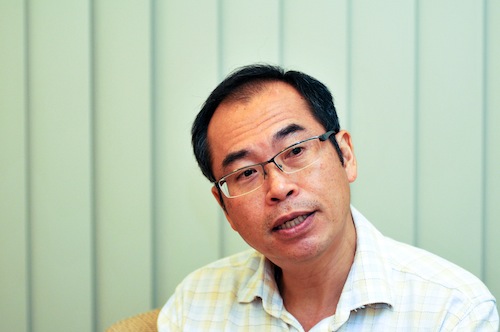
InvestPenang director Datuk Lee Kah Choon said Southeast Asia’s third largest economy lacks a conducive business environment and needs to put its “house in order” first if it was serious about staying competitive in the increasingly heated race to pull in foreign money.
“We do not want to keep getting more FDIs into the state if we do not have the environment, human resource or infrastructure to sustain it or else the industry may end up cannibalising itself,” he said in a recent interview with The Malay Mail Online.
Lee pointed out that so long as the federal government did not standardise its policies on business matters — including human resources issues such as the minimum wage policy that came into force in January — potential investors may be more attracted to parking their money in the other emerging markets neighbouring Malaysia, such as the Philippines, Indonesia and Vietnam.
To illustrate his point, he said one investor may apply to bring in 5,000 employees and the authorities will approve only 2,500; but for another investor, a different number of workers was approved.
“There is no proper policy to govern all this and if we look at the minimum wage issue, it is creating unnecessary animosity between workers and employers when the terms are not agreed upon, which could turn away investors,” he said.
It was one of the reasons why InvestPenang steered clear of binding itself to the figures released by the federal Malaysian Investment Development Authority (MIDA) even though the northern state ranked third for the first quarter of the year, after capturing RM850 million in investments, he said.
Penang had topped the investment lists in 2010 and 2011 when it recorded investments of RM12.24 billion and RM9.11 billion respectively but its total investments dropped to RM2.47 billion last year.
Lee, however, was unperturbed by the drop, insisting the figures do not reflect the actual economic situation of the state or the growth of industry in the state.
“Continuing to chase after figures can only damage ourselves in the long term so our focus now is more on sustainability so that we remain competitive in the long run,” he said.
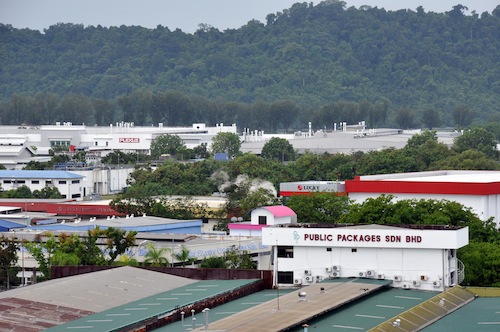
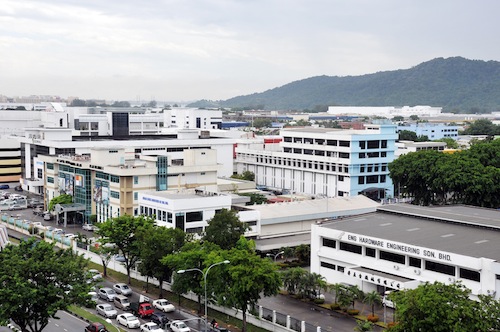
With its dozens of computer parts and chip-making factories, Penang has long kept a chokehold on the country’s electronics and electrical industry.
Of the RM850 million that poured into the state for the first three months of the year, domestic investments made up the larger number, amounting to RM739 million compared to just RM111 million in FDIs.
Rather than pursuing more FDIs, the Pakatan Rakyat (PR) state is turning its focus towards building up domestic small and medium industries (SMI) and small and medium enterprises (SME) as part of its long-term plan to rise above growing competition, Lee said.
“They are the backbone of the industry and I believe a healthy composition of investments should be a balance of investments from both domestic and foreign investors,” he said.
Lee said one of the main factors that have kept multinational companies investing in the state is due to the strong supply chain featuring the local SMIs and SMEs.
Penang has more than 26,000 SMEs and out of these, about 2,500 are in the manufacturing sector while 23,000 are in the services sector.
To help build on this domestic supply chain, the Penang government has also set up an SME centre and an SMI Park on both sides of the channel that separates the state.
Lee believes that with a thriving supply chain, backed by the proper infrastructure and human resources, FDIs will automatically follow.
“It is to our long-term benefit to have a strong supply chain base as this is one of the deciding factors that MNC look at before setting up base in any country,” he said.