

















NEW YORK, Sept 4 ― Benchmark 10-year US Treasury yields fell yesterday to their lowest since July 2016 and all three major US stock indexes lost ground in a risk-off session driven by heightened trade worries and an unexpected contraction of US factory activity.
European shares also dipped over global economic slowdown worries and uncertainties surrounding Britain's chaotic exit from the European Union.
New tariffs on Chinese goods took effect over the US holiday weekend. Hopes appear to be dimming that the world's two largest economies will reach a near-term resolution to their long-running trade war, which has shaken markets for months and strained world economies.
US President Donald Trump said bilateral trade talks with China were going well, but warned he would be “tougher” if negotiations extend beyond the 2020 US presidential election and he is re-elected.
US manufacturing output shrank in August for the first time in 3-1/2 years, according to the Institute for Supply Management's Purchasing Managers Index (PMI), stoking fears that the global economic slowdown has reached American shores.
“Today we had economic data that's providing reinforcement to bearish economic argument, and it's the first trading day since new tariffs were put in place,” said Chuck Carlson, chief executive officer at Horizon Investment Services in Hammond, Indiana. “People are seeing global economic slowdown coming to fruition and taking money off the table.”
But Carlson cautioned against giving too much weight to market behaviour on the first trading day following the unofficial end of summer.
“It's the first day back after August and you're getting the students back to class,” Carlson added. “You'll have a better read next week.”
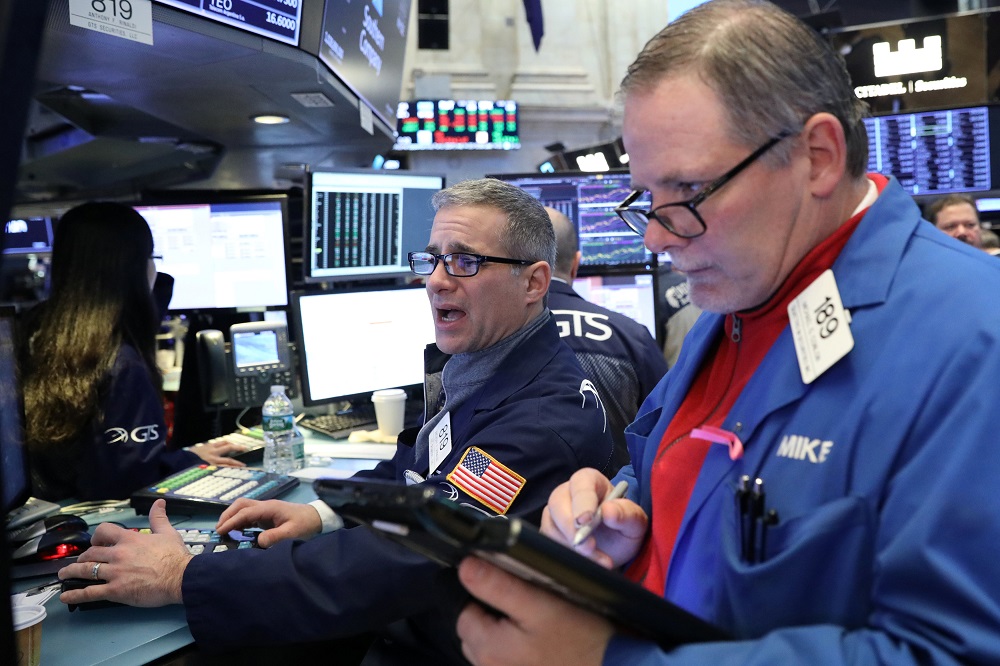
The Dow Jones Industrial Average fell 285.26 points, or 1.08 per cent, to 26,118.02, the S&P 500 lost 20.19 points, or 0.69 per cent, to 2,906.27 and the Nasdaq Composite dropped 88.72 points, or 1.11 per cent, to 7,874.16.
European stocks backed off from 1-month highs after the disappointing US PMI data fuelled worries of global economic softness, while uncertainty over Britain's hard exit from the European Union put an end to the FTSE 100's four-day winning streak.
The pan-European STOXX 600 index lost 0.23 per cent and MSCI's gauge of stocks across the globe shed 0.52 per cent.
US Treasury yields fell, with the benchmark 10-year yield dipping to its lowest since July 2016 after the downbeat ISM report exacerbated worries about a weakening global economy in the shadow of the US-China trade war.
Benchmark 10-year notes last rose 11/32 in price to yield 1.4708 per cent, down from 1.506 per cent late on Friday.
The 30-year bond last rose 7/32 in price to yield 1.9639 per cent, down from 1.973 per cent late on Friday.
Trade and Brexit concerns drove the dollar to its highest level against a basket of major currencies since mid-May 2017, but the greenback erased its gains following the dismal ISM factory data.
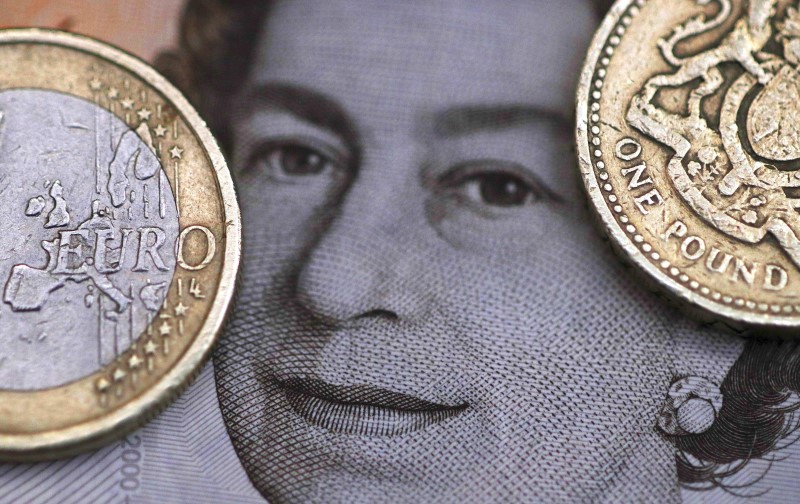
The dollar index rose 0.1 per cent, with the euro down 0.01 per cent to US$1.0965 (RM4.615).
The Japanese yen strengthened 0.14 per cent versus the greenback at 106.08 per dollar, while Sterling was last trading at US$1.2079, up 0.11 per cent on the day.
The disappointing US factory data also drove oil prices lower, as concerns over the weakening global economy undermined the demand outlook.
US crude oil futures settled at US$53.94 per barrel, down 0.68 per cent, while Brent crude futures settled down 2.11 per cent at US$58.26 per barrel.
Gold prices surged more than 1 per cent, with the safe-haven precious metal hovering within shouting distance of its more- than-six-year high of US$1,554.56 per ounce.
Spot gold added 1.0 per cent to US$1,544.95 an ounce.
Copper lost 0.18 per cent to US$5,610.00 a tonne.
Three-month aluminum on the London Metal Exchange rose 0.34 per cent to US$1,755.00 a tonne. ― Reuters