












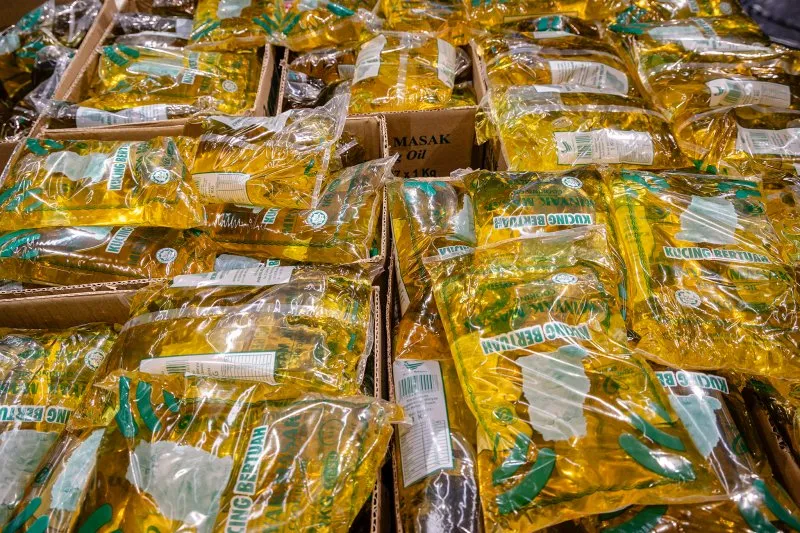


KUALA LUMPUR, Nov 26 — The Public Accounts Committee (PAC) today urged Putrajaya to further reduce the monthly subsidised cooking oil quota to match actual domestic consumption, warning that excess supply leaves the RM12.138 billion programme vulnerable to smuggling and leakages.
The bipartisan panel recommended that the monthly quota be capped at between 19,000 and 30,000 metric tonnes to align with consumption data.
The Domestic Trade and Cost of Living Ministry (KPDN) and the Finance Ministry (MOF) had previously lowered the monthly quota ceiling from 60,000 to 55,000 metric tonnes in June.
“The PAC is of the view that this quota must continue to be assessed periodically based on actual transaction data from the eCOSS system so that it aligns with estimated actual domestic demand, which is lower — between 19,000 and 30,000 metric tonnes per month,” PAC chairman Datuk Mas Ermieyati Samsudin told reporters in Parliament.
“Supply assessments are important to prevent oversupply that can open doors to leakages and smuggling.”
The follow-up stems from the committee’s original July 16 report (D.R. 27/2026), which examined serious enforcement and monitoring failures flagged in the Auditor-General’s Report 2/2025.
KPDN submitted its final follow-up report on October 1 before senior officials from both ministries were summoned to proceedings on October 8.
The committee acknowledged progress by both ministries but said sustained reforms were critical across eight key areas, including digitising targeted subsidies.
The panel also welcomed the ban on non-citizens buying packet cooking oil under the Control of Supplies (Prohibition of Sale and Purchase of Controlled Goods) Regulations 2026 (P.U.A. 104/2026) and the eCOSS mobile app pilot.
However, the committee recommended integrating the system with MyDigital ID or existing assistance platforms such as Sumbangan Asas Rahmah (SARA), BUDI RON95 and BUDI Diesel.
“KPDN must table an effectiveness report on the pilot project before any nationwide rollout, particularly to address manual record-keeping leakages in areas with poor internet coverage,” Mas Ermieyati, the Masjid Tanah MP, said.
The ministry was also told to expedite document verification and follow-up cost audits with refineries after a survey showed repackagers’ operating costs had risen by 9.63 per cent to RM2,982 per metric tonne.
The PAC said any claims of cost reductions must be verified before subsidy rates are finalised.
It also urged the ministry not to rely solely on dated assessments such as a 2022 KPMG study, and instead to regularly submit updated economic evaluations and market projections to the Cabinet based on current crude palm oil (CPO) price movements.
Addressing supply chain loopholes, the PAC noted the enforcement of procedures for handling waste and damaged cooking oil since May 1 but urged tighter cross-checking of records among repackagers, wholesalers and retailers to prevent manipulation of spoiled-stock reports.
It also called for stringent legal action against parties diverting subsidised cooking oil into the used cooking oil (UCO) supply chain.
The committee noted KPDN’s decision to withdraw 1,370 metric tonnes of repackager quota from foreign-owned refineries from January 1, 2027, stressing that the transition to local refiners must be managed transparently to maintain stable distribution chains and market supply.