









ISKANDAR PUTERI, Nov 24 — The Johor government is stepping up efforts to extend the economic spillover of the Johor-Singapore Special Economic Zone (JS-SEZ) to northern Johor by strengthening supply chains across other districts.
The initiative is being implemented in phases through the Johor Economic Transformation Plan (JETP), which is anchored in the Maju Johor 2030 Agenda. It views northern and southern Johor as complementary parts of a single economic ecosystem.
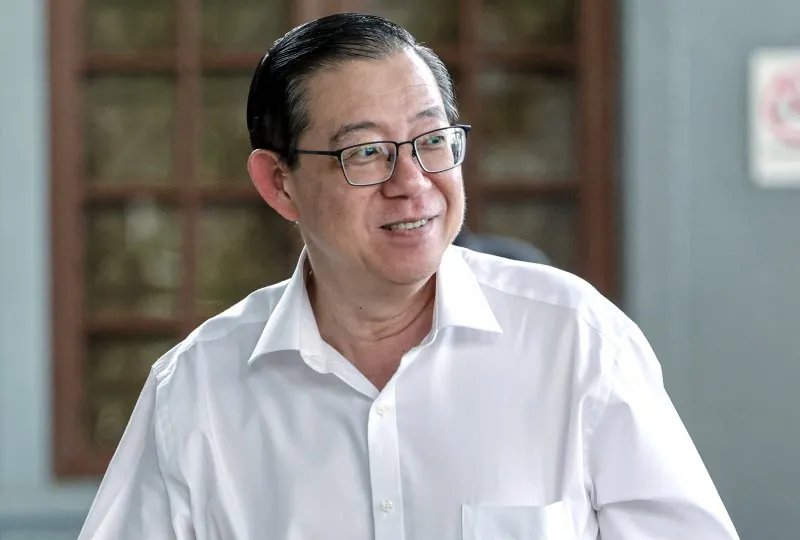
State Investment, Trade, Consumer Affairs and Human Resources Committee chairman Lee Ting Han said strengthening supply chains would create opportunities for small and medium enterprises (SMEs), local entrepreneurs and service providers in the northern region.
“The state government does not view the development of northern and southern Johor as two separate agendas, but rather as parts of a single, complementary state economic ecosystem,” he said.
He was responding to a question from Mohd Azahar Ibrahim (BN-Tenang) on the state government’s short-, medium- and long-term action plans to narrow the gaps in economic development, infrastructure, employment and public amenities between northern and southern Johor during the Johor State Legislative Assembly sitting here today.
Lee said the sectors with the potential to benefit from the spillover effects included manufacturing, agro-food processing, agriculture, logistics, trade and industrial support services.
In the short term, the focus is on the approximately 2,000-hectare Segamat Food Security Zone, an allocation of RM32.12 million for 27 agro-food projects in Johor in 2026, and the Segamat JETP Action Plan for 2026-2030.
In the medium term, the state government is focusing on the development of the Segamat Inland Port and the Segamat JETP Talent & TVET Programme to strengthen logistics capabilities and develop local talent.
Attention is also being given to the RM130 million IOI Coconut Oil Sdn Bhd project (Phase 2), which is expected to produce 360,000 metric tonnes annually from 2027, as well as the 866 MWp Lestra-Hexa JV Sdn Bhd solar farm, together with a Battery Energy Storage System (BESS), worth RM3.3 billion in Mukim Sermin, Segamat. The project is scheduled to begin in the first quarter of 2027 and commence operations in the fourth quarter of 2028.
In the long term, development will be driven through the Johor State Structure Plan (RSNJ), including a review of the RSNJ 2040, besides projects under Rolling Plan 1 of the 13th Malaysia Plan for 2026. These include flood mitigation works along the Sungai Chaah and Muar River basins, the Muar-Tangkak-Segamat road project and tourism development initiatives.
On the income gap, Lee said Johor’s median monthly gross household income increased by 12.1 per cent, from RM6,879 in 2022 to RM7,712 in 2024, according to the Household Income Survey Report 2024 published by the Department of Statistics Malaysia (DOSM).
During the same period, several northern districts recorded higher growth rates: Muar (28.1 per cent), Segamat (21.3 per cent, from RM5,318 to RM6,451), Batu Pahat (19.0 per cent) and Tangkak (13.4 per cent). This compared with an increase of 9.1 per cent in Johor Bahru (from RM8,232 to RM8,977).
These developments have narrowed the median income gap between Segamat and Johor Bahru from 35.4 per cent in 2022 to 28.1 per cent in 2024.
The state government emphasised that economic success must ultimately be measured by improvements in the standard of living of the people across all 10 districts of Johor. — Bernama