


SEPANG, Oct 22 — The government has urged Malaysians to uninstall Waze over concerns that users’ personal and movement data could fall under Israeli jurisdiction.
National Security Council director-general for National Security Raja Datuk Nushirwan Zainal Abidin, however, said there will not be a blanket ban issued to preserve individual freedom of choice.
“The government is balancing national security considerations with human rights, freedom of expression and the freedom to choose.
“We always need to strike a balance between security and human rights consideration and freedom of expression, freedom to choose,” Nushirwan told a press conference at the National Cyber Security Agency (Nasca), National Security Council (NSC) headquarters.
Nushirwan said the concerns went beyond technology and instead concerned the legal framework governing the collection and use of personal data, pointing to Waze Mobile Ltd’s terms of use, which stipulate that the agreement is governed by Israeli law.
He said the government would not compromise on the use of Malaysians’ data and the sovereignty of national information.
To illustrate the importance of controlling data, Nushirwan compared it to fuel for a car, saying applications and artificial intelligence platforms depended on data to function.
“If we look at a car, no matter how great the model is, without fuel you cannot use the car, so this fuel is similar to data — data is actually the fuel for any application or AI platform, including Waze.
“If we supply data indiscriminately, it is as though we are relying on a source of fuel that we cannot trust,” he said.
Nushirwan said Malaysia needed to own and control its citizens’ data to protect national information sovereignty.
As of yesterday, the government has issued a ban on the usage of Waze by all civil servants when performing official duties.
“They have been encouraged to uninstall the application from their personal devices as well.
“The application could continue collecting data even when users were not actively using it, depending on its permissions and device settings.
“So the government is also encouraging the public to consider uninstalling Waze and switch to local navigation applications such as TuJu, developed by the Malaysian Highway Authority (LLM), or other available alternatives,” Nushirwan said.
When asked why the government would not ban Waze entirely, Nushirwan said a blanket prohibition would place greater emphasis on security at the expense of personal freedom.
By leaving the decision to individual users, he said, the government hoped Malaysians would make informed choices after understanding the potential implications of sharing their data with platforms governed by foreign laws.
“If they are willing for their data to go to Israel, and any legal disputes to be decided by Israeli courts, that is a matter of their own discretion,” he said.
Nushirwan described the increased public attention on cybersecurity and locally developed applications following the announcement as a positive development, adding that greater control over data was important to Malaysia’s ambition to become an AI-producing nation.
He additionally stressed that the implementation of the directive on civil servants’ usage of Waze is effective immediately.
“The directive is effective immediately. In terms of implementation, there are procedures in place.
“In general, we leave it to the respective departments’ discretion.
“In any case, a breach of any directive from the Chief Secretary to the Government (KSN) carries implications for disciplinary action,” Nushirwan said.
He was responding to reporters’ questions regarding how the government will monitor the execution of the ban on Waze for civil servants.
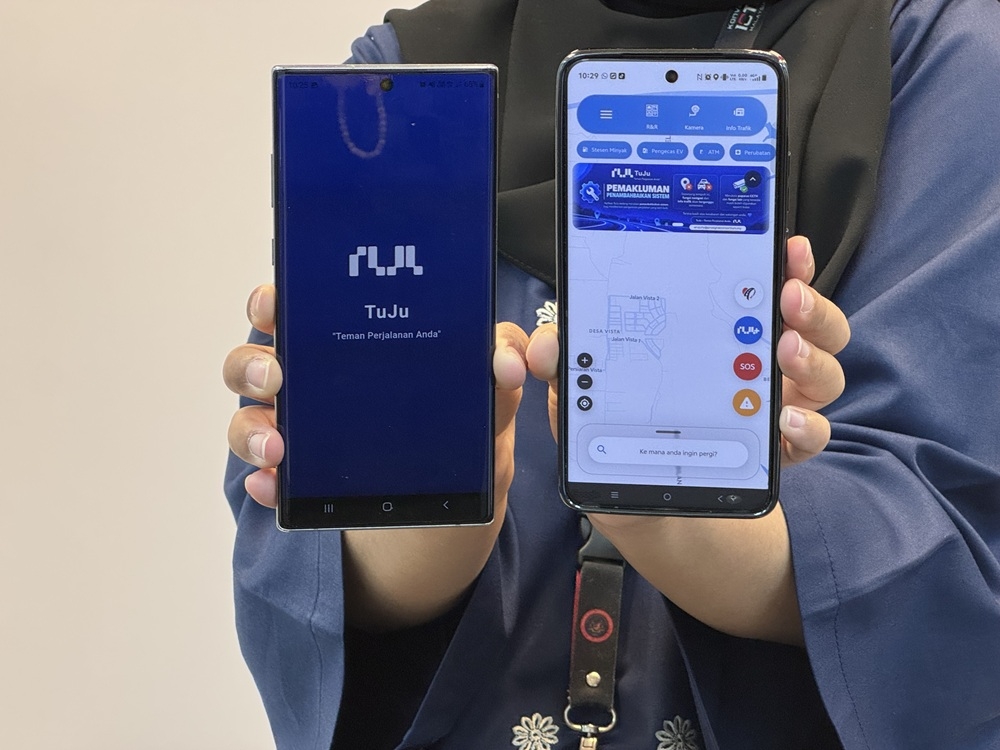
TuJu on the way
According to LLM deputy director general (operation) Mohammed Ridzuan Jahidin, TuJu offers an alternative for motorists seeking a locally developed navigation application.
“Its first version was launched in November 2025, offering navigation, CCTV-related functions and traffic feedback to alert users to incidents along their journeys.
“The second version adds features including information on electric vehicle-related facilities, roadblocks and saved destinations.
“It also allows users to identify where they have parked their vehicles, including in large parking areas,” he said.
He added that TuJu is in the midst of making its upgraded version 2.0 available to all mobile phone operating systems.
“The iOS version is currently undergoing final testing before its release on the App Store.
“It will likely be released by end of this year,” Mohammed Ridzuan said when met separately.
Nushirwan said the government hoped the approach would raise public awareness of cybersecurity and encourage Malaysians to consider locally developed technology.
Civil servants have been banned from using the Waze navigation app with immediate effect, following a decision by the National Cyber Security Committee (JKSN) at its meeting yesterday.
In a letter dated October 20, Chief Secretary to the Government (KSN) Tan Sri Shamsul Azri Abu Bakar said the JKSN Meeting No. 3 of 2026 was chaired by Prime Minister Datuk Seri Anwar Ibrahim.
Shamsul Azri said all secretaries-general and department heads must ensure the decision is communicated to officers under their supervision, including related agencies and departments, for immediate implementation.
On Tuesday, the Prime Minister encouraged the public to use the local TuJu app, developed by the Malaysian Highway Authority (LLM), as an alternative for road navigation.
Anwar said the recommendation followed security risks to users’ information and movement data from using Waze, which is bound under Israeli government laws.
TuJu was developed by LLM in collaboration with Prosignal Consortium Sdn Bhd and launched by Works Minister Datuk Seri Alexander Nanta Linggi last November.


