


AUGUST 15 — One of the greatest dangers in Malaysian politics is the temptation to convert institutional wrongdoing into collective political guilt.
This is particularly important when Pakatan Harapan (PH) discusses Umno and the controversies associated with previous Barisan Nasional administrations.
The principle should be straightforward: not all of Umno can be guilty simply because some Umno leaders, office-holders or political appointees may have been implicated in wrongdoing.
If Malaysia is serious about becoming a mature constitutional democracy, responsibility must be compartmentalised. Investigations must identify particular decisions, particular offices, particular individuals and particular periods. Evidence must determine culpability. Political affiliation cannot substitute for proof.
This distinction becomes especially important when Malaysia confronts controversies involving institutions such as Tabung Haji, Felda, the Littoral Combat Ship programme and other episodes of alleged financial or administrative malfeasance.
Where wrongdoing occurred, it should be investigated rigorously. Where criminal liability can be established, prosecution should follow. Where administrative negligence occurred, institutional reforms should be undertaken.
But none of these propositions logically establishes the guilt of an entire political party consisting of millions of members and generations of leaders.
Umno is not one person.
Nor is Umno one administration, one faction or one historical episode.
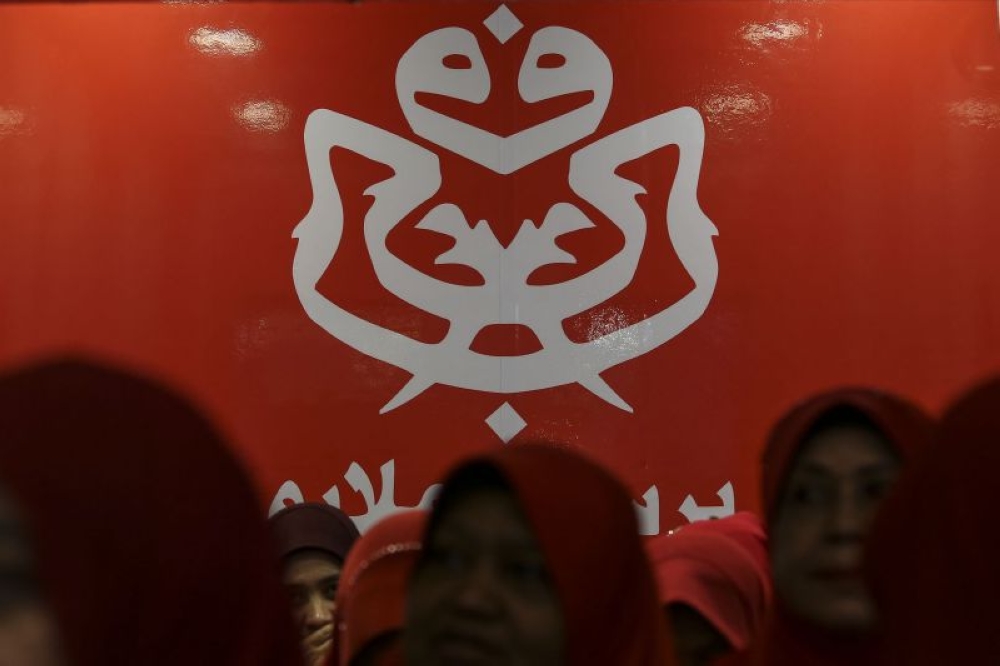
It contains reformists and conservatives, government leaders and backbenchers, veterans and younger members, federal and state politicians, as well as ordinary members who could not conceivably have known what senior officials were doing inside ministries, government-linked companies or statutory bodies.
To treat them as collectively responsible would reproduce precisely the kind of politics PH has long argued Malaysia should transcend.
There is also a constitutional principle involved. Malaysia’s criminal justice system recognises individual culpability. A person is not guilty because of association.
Political parties themselves may face legal consequences under appropriate circumstances, but the misconduct of particular office-holders cannot automatically be transferred to every member of an organisation.
The distinction between political responsibility, administrative responsibility and criminal responsibility must therefore remain clear.
Political responsibility can be broad. A government can legitimately be criticised for allowing poor governance to flourish under its watch.
Ministers can be held politically accountable for failures within their portfolios even when they did not personally commit criminal offences.
Criminal responsibility, however, requires something much more specific.
Who authorised the transaction? Who knew about it? Who benefited? Who concealed information? Who ignored professional warnings? Who exercised fiduciary responsibility? Who violated the law?
These are evidentiary questions. They cannot be answered merely by saying “Umno.”
This is why PH should be particularly careful about using overly generic language when discussing previous scandals. PH presently governs Malaysia through a coalition arrangement in which Barisan Nasional is an important partner.
If PH simultaneously depends upon Umno for governmental stability while rhetorically portraying Umno as collectively responsible for every historical controversy associated with BN governments, it creates a contradiction that will eventually become politically unsustainable.
There must instead be legal compartmentalisation.
Those who committed offences should answer for them. Those who facilitated wrongdoing should be investigated.
Those who failed in their fiduciary responsibilities should explain themselves. Those who attempted to obstruct investigations should face the appropriate consequences.
But those who were not involved must not be politically convicted through association.
Indeed, this approach can strengthen rather than weaken the campaign against corruption.
When accusations become excessively broad, the genuinely culpable can hide within the collective.
They can claim that investigations are merely partisan attacks against Umno, Malays or previous governments.
Specificity removes that defence.
A forensic approach says something very different: this is not an attack against Umno.
It is an investigation into particular decisions made by identifiable individuals under particular legal responsibilities.
That distinction is enormously important.
It also creates space for Umno itself to support institutional cleansing. Party members who had nothing to do with past misconduct should have every reason to support investigations that distinguish them from those responsible.
Indeed, Umno’s long-term rehabilitation may depend partly upon its willingness to accept such differentiation.
PH should therefore resist transforming accountability into political demonisation.
Malaysia cannot progress by replacing one form of partisan triumphalism with another.
The country needs institutions capable of distinguishing between allegation and evidence, negligence and criminality, political responsibility and legal liability.
This becomes even more important as Malaysia approaches another electoral cycle. If every controversy is converted into collective condemnation, politics becomes an endless process of mutually assured accusation.
Umno blames DAP. PAS blames DAP and PH. PH blames Umno or PN.
Each political organisation then constructs an entire community of villains.
Such politics eventually destroys the centre.
Malaysia needs the opposite: accountability without collective persecution and reconciliation without impunity.
PH therefore has an opportunity to establish a higher standard. It should insist that every credible allegation of corruption, abuse of power or institutional malfeasance be investigated thoroughly while simultaneously rejecting the proposition that membership of a political party constitutes evidence of wrongdoing.
This principle must apply equally to Umno, PKR, DAP, Amanah, Bersatu, PAS or any other political organisation.
No party should receive immunity.
But no party should be subjected to collective guilt either.
The rule of law becomes meaningful precisely when it refuses both extremes.
Malaysia does not need fewer investigations. It needs better investigations: forensic, independent, evidence-driven and directed towards those actually responsible.
Not all of Umno can possibly be guilty of every wrongdoing associated with governments in which Umno once played the dominant role.
PH should understand this distinction clearly. The objective must be to isolate wrongdoing, prosecute culpability and repair institutions – not to criminalise an entire political tradition.
That is not merely good coalition politics.
It is the essence of constitutional government.
* Phar Kim Beng is professor of Asean Studies, and director at the Institute of International and Asean Studies, International Islamic University Malaysia.
** This is the personal opinion of the writer or publication and does not necessarily represent the views of Malay Mail.


