


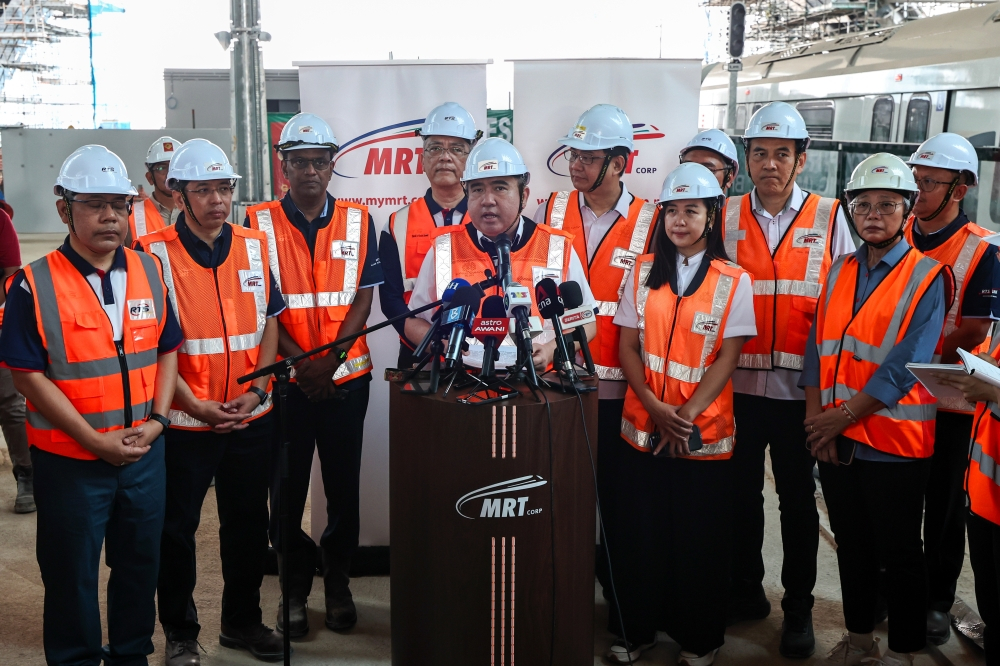
JOHOR BAHRU, April 3 — The global energy crisis triggered by the conflict in the Middle East has not impacted the progress of the Johor Bahru-Singapore Rapid Transit System Link (RTS Link), Transport Minister Anthony Loke confirmed today.
The minister said that the project remains on schedule, with no requests for cost revisions from contractors despite prevailing economic uncertainties.
“So far, I am confident that costs remain within original estimates. The RTS Link is entering a critical phase this year ahead of its launch in January 2027,” Loke told reporters following a briefing at the Bukit Chagar Customs, Immigration and Quarantine (CIQ) complex.
He noted that physical construction is nearly finished, and the project has transitioned to system installation and integration testing. These phases are expected to be completed by the end of 2026.
Loke detailed the upcoming technical stages, which include system installation, acceptance testing, and dynamic testing. These will lead to the Final Field Readiness (FFR) stage.
“Based on current progress, I am confident that FFR can begin as early as September, paving the way for the project’s launch target by year-end,” he said.
In terms of on-site progress, the installation of e-gates is complete. The setup of body screening equipment and baggage scanners has also commenced — two months ahead of the original May schedule.
Once operational, the RTS Link will feature 10 security screening lanes, 18 baggage scanners, and 100 e-gate lanes, including dedicated lanes for passengers without luggage.
Loke said that open communication between Malaysia and Singapore has been a vital factor in addressing potential issues promptly.
He also noted that train testing, which began several months ago, will continue in stages until full operations commence.
The four-kilometre RTS Link will connect Bukit Chagar station in Johor Bahru to Woodlands North station in Singapore.
With a capacity of 10,000 passengers per hour in each direction, the service is expected to handle approximately 40,000 commuters daily upon its official opening in January next year.


