


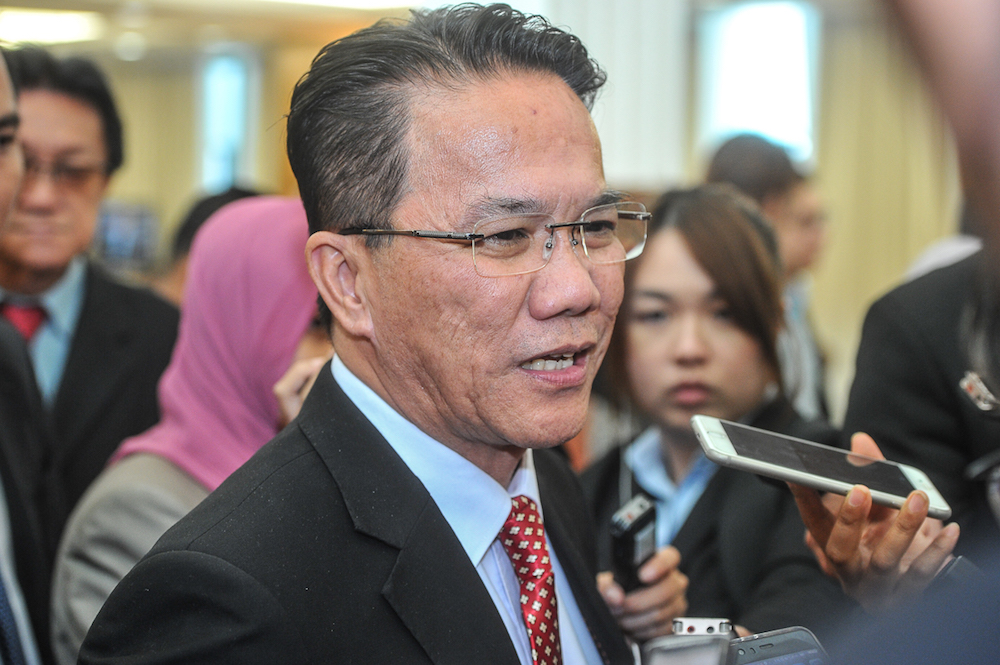
KUALA LUMPUR, Oct 24 — Datuk Liew Vui Keong said today that the previous Barisan Nasional (BN) government had taken a selective approach when it came to abolishing the death penalty, which made it tough for judges to commute the sentences of convicts.
Parliament had last year approved the BN government’s proposal to scrap the mandatory death penalty, but only for offences under the Dangerous Drugs Act (DDA) 1952 and give discretionary powers to judges to decide on alternative punishments.
“The BN administration only wanted to repeal the death sentences under the Dangerous Drugs Act 1952, but they made it difficult for judges to commute the death cases in those instances,” the de facto law minister told reporters after opening the United Nation’s 73rd anniversary celebrations here.
Liew cited the case of Muhammad Lukman, 29, as example.
Lukman was convicted and sentenced to hang by the High Court on August 30 for possessing, processing and distributing cannabis oil under Section 39B of the DDA because a certificate indicating that he had cooperated in investigations that could be used as a basis to commute his death penalty to life imprisonment was not issued.
Liew said the new Pakatan Harapan government is looking at repealing eight laws with 32 offences involving the death penalty.
He added that the proposed abolition will most probably take place in the March 2019 meeting of Parliament.
He added that the Cabinet has asked him to issue a moratorium to the Pardons Board for cases involving the death sentence.
Earlier in his speech, Liew said 142 out of 193 countries had abolished the death penalty around the world.


