















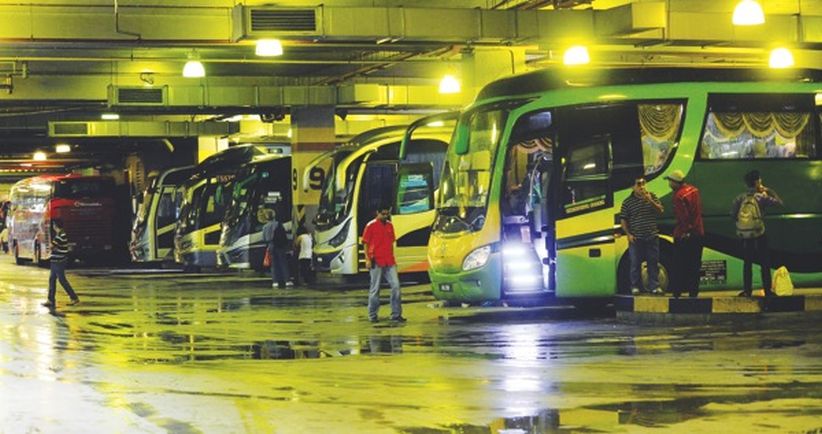


JOHOR BARU, May 3 — Stage bus operators in the state may stop services by Friday.
Johor Bus Operators Association (JBOA) president Jotisrop Suchdav said yesterday they can no longer cope with losses incurred in operating stage buses.
“If stage buses stop operating in Johor, don’t blame us,” he said.
Jotisrop said the government used to subsidise losses sustained by operators over the past two years with amounts ranging from RM10,000 to RM30,000 a month.
Since December last year, payments under the Interim Stage Bus Scheme Fund (ISBSF) stopped with the Land Public Transport Commission (SPAD) telling the association funds would no longer be given.
“We cannot go on under such circumstances. We operate along what we call the social routes. There is no profit from such services as they serve less travelled routes with few passengers,” he said, adding the routes include Gelang Patah to Johor Baru, Pontian to Pekan Nanas and Endau to Mersing.
Jotisrop said his company, S&S, had 100 stage buses operating in the state besides an express bus service to major towns nationwide.
“The losses will keep mounting for our members if we continue to operate stage buses without financial help from the government. We cannot afford to incur such losses any longer since the payment under the ISBSF stopped four months ago.
He estimated that the association members carried about 100,000 passengers including schoolchildren daily.
He said the government’s reluctance to allow bus companies to increase fares was the root of the problem.
“The last fare increase was in 2008. Since then, the price of diesel has gone up, wages have increased and inflation has hit us. There is also the six per cent GST we have to absorb when buying spare parts and tyres,” he said.
Jotisrop said fares should increase by 24 per cent taking into account that inflation was at three per cent a year besides other accumulated costs over the past eight years.
He said it cost at least RM8,000 a month to maintain a bus excluding monthly instalments for the purchase of the vehicle.
Jotisrop said the fares ranged from 90 sen to RM3.
“Our operating costs are higher than the fares we collect. We cannot go on like this.”
Pan Malaysia Bus Operators Association president Datuk Mohamad Ashfar Ali said in Petaling Jaya that bus operators were on the brink of closing down due to losses.
He said among the worst affected were Metrobus Nationwide Sdn Bhd and Konsortium Transnasional Sdn Bhd (KTB).
He said bus companies could not cope without funds from the ISBSF.
“The government has delayed payments. They pay for a month and stop for two to three months,” he said.
Ashfar said bus operators were dependent on the interim funds which helped overcome the shortfall in income from social routes.
On the Stage Bus Services Transformation (SBST), where contract-based routes for stage buses have been awarded to raise the quality of service, he said it will force bus companies in small towns to shut down.
“Passengers in smaller towns would suffer in the long run,” he said.
Ashfar said a few stage bus companies had ceased operations in Pahang, Kedah, Penang and Kelantan, and several bus companies in those areas would be forced to retrench drivers.
He blamed problems faced by bus companies due to a lack of centralised planning.
“Local authorities are also buying more buses and offering passengers free shuttle bus services. This has affected stage bus operators,” he said.
In Kota Baru, Syarikat Kenderaan Melayu Kelantan Transliner said Cityliner stage buses will be back on the road in the state today after 19 routes were suspended on Sunday due to high operating costs.
This was after KTB agreed to provide the company with interim funding.