


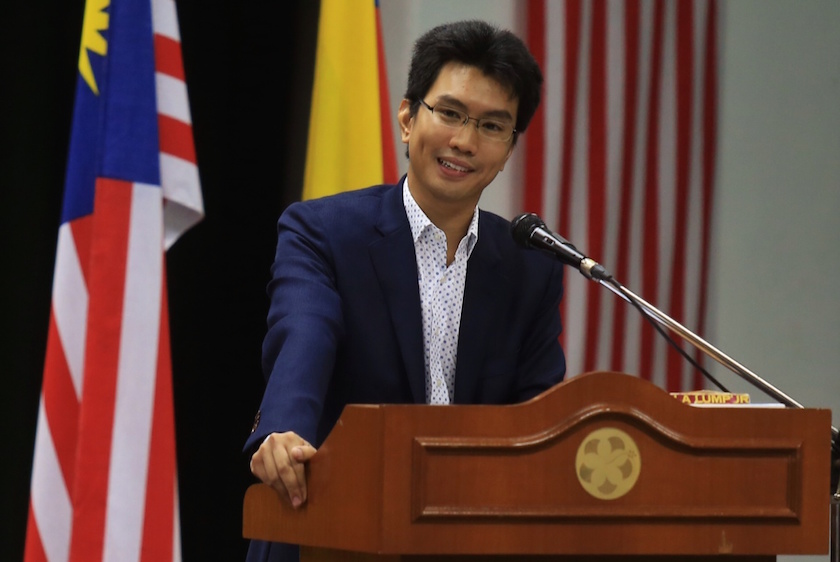
PETALING JAYA, Sept 20 — Rhetoric such as “Islamic racism” and the vilification of liberalism demonstrate the lengths to which politicians will go to further their agenda, said Negri Sembilan prince Tunku Zain Al-Abidin Ibni Tuanku Muhriz.
Tunku Zain, who is also Institute for Democracy and Economic Affairs (IDEAS) president, said that promoting the idea of individual liberties in a society where class warfare, religious bigotry and racial supremacy have become institutionalised is a challenge to the “powers that be.”
“If necessary, liberal ideas are branded as alien and heretical concepts, new justifications are dreamt up to consolidate state-sponsored division,” he said in his keynote address at the Malaysian Freedom Summit 2015 today.
“Indeed, the aftermath of the Malaysia Day ‘red shirts’ rally, one politician from the governing party attempted to argue that there is an acceptable ‘Islamic’ form of racism. The adoption of such rhetoric, coupled with the vilification of liberalism highlights how malleable our political landscape is; how bereft it is of ideological conviction.”
Tunku Zain did not identify the politician, but Umno Supreme Council member Tan Sri Annuar Musa had during the Himpunan Rakyat Bersatu on Wednesday admitted he was racist, but claimed this was permitted in Islam as long as other races were not harmed.
This led to calls for the Department of Islamic to Development (JAKIM) to take action against Annuar, after critics accused him of falsely depicting racism as acceptable under Islam.
Today, Zain added that the term “liberalism” appeared to have been completely redefined over time to suit political objectives, noting that former Prime Minister Tun Dr Mahathir Mohamad was quoted as saying earlier this year that liberalism had resulted in Britons joining the Islamic State terrorist group and slaughtering people.
Zain said that the negative portrayal of liberalism by politicians was a clear departure of the Rukunegara, or national principles, that speak of “guaranteeing a liberal approach towards our rich and varied cultural traditions.”
He also criticised attempts to pigeonhole different sections of the public, saying it paved the way for the entrenchment of divisive politics.
“One favourite tactic is to appeal to class, culture, race or religion — such as in ‘Asian values’ or the ‘Islamic way of life’ — such that these become defined by the state instead of by individuals,” he said.
“This enables the state to offer ‘protection’ to these groups, leading to paternalism, authoritarianism and the politics of patronage the inevitable spirals into corruption.”


