













KUALA LUMPUR, Aug 26 ― There is no denying that Malaysians are foodies: we just love to eat. But we are also notorious when it comes to wasting it.
Food waste makes up almost half of the 33,000 tonnes of solid waste generated every day, according to the National Solid Waste Management Department (JPSPN). To put that into perspective, the amount thrown away in just seven days can fill up the KLCC towers.
While most people don’t see the danger of tossing out food ― thinking it’s bio-degradable ― well, think again.
Dangers of food waste
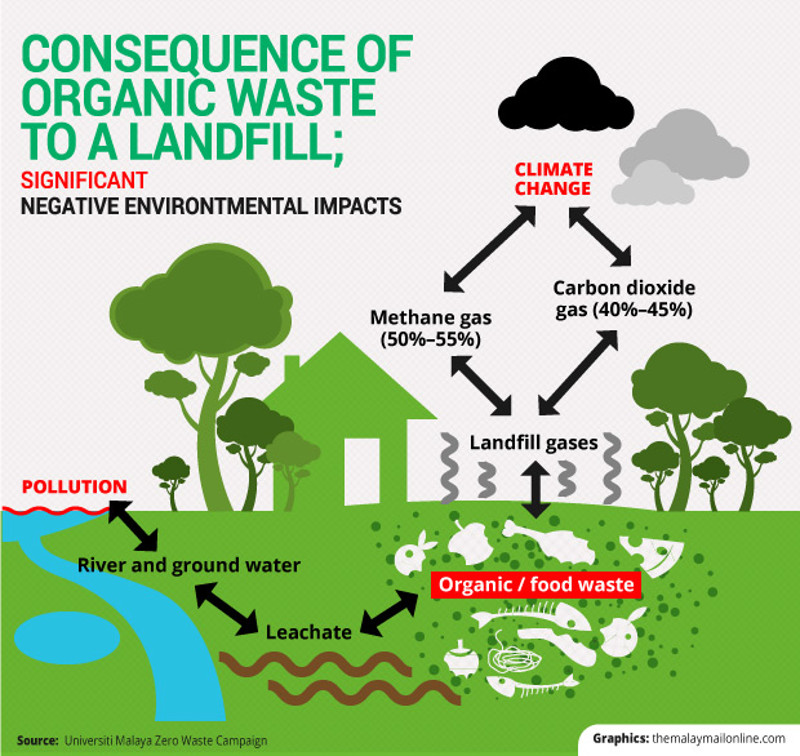
Academics and environmentalists say food waste dumped in landfills is the main contributor of methane, a greenhouse gas and a major contributor to climate change.
Without a good lining at the landfills, toxic leachate from food waste can contaminate groundwater and rivers.
While they applaud the government’s initiative to roll out an ambitious national waste segregation programme in KL, Putrajaya, Pahang, Johor, Malacca, Negri Sembilan, Perlis and Kedah from September 1, they say the biggest category of waste and the most dangerous one given the current circumstance, is not being separated.
Under a law passed in 2007 which was supposed to be enforced in 2011, it is mandatory for households to segregate waste into paper, plastic, other recyclable items and residual waste.
Organic food waste is mixed with inorganic waste including soiled items, diapers and wet tissues, under the last category.
Residual waste would then be sent to landfills, JPSPN director-general Mohd Rosli Abdullah told Malay Mail Online recently.
There is currently no food waste composting facility in Malaysia.
Jaron Keng, manager the Universiti Malaya’s successful Zero Waste Campaign, said some countries even ban food waste from going to landfills.
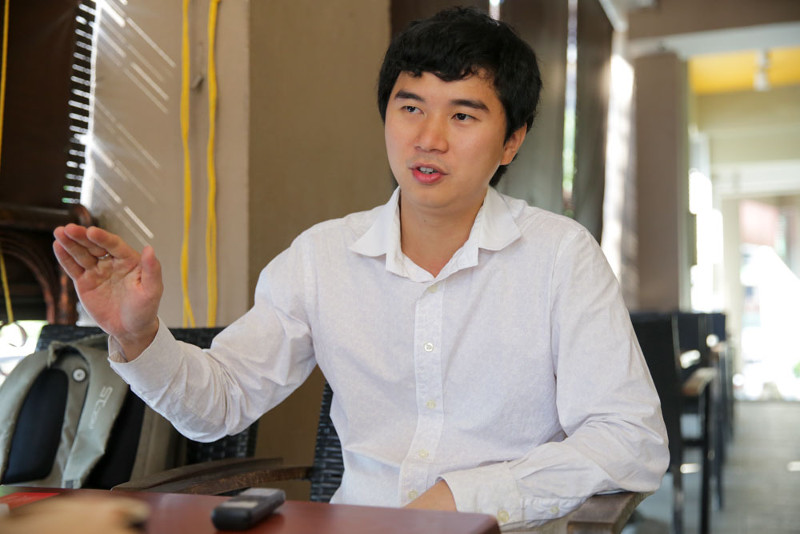
He pointed out that out of the 170 landfills in Malaysia, only about 10 are considered sanitary. It takes at least RM20 million to properly set up a landfill, he added.
Turning food waste into fertiliser and electricity
Keng, who is also the secretary for the Green and Blue Environmental Protection Society of Malaysia, said even countries like Indonesia, India and Iran have composting facilities.
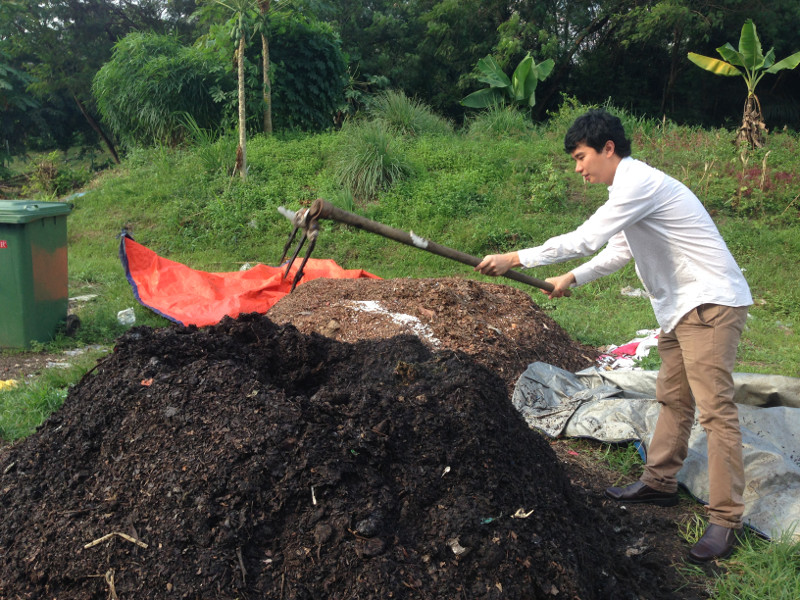
He explained that the compost needs to be turned periodically to add oxygen to the compost pile. This is good for the aerobic micro-organisms and to ensure that all parts of the pile are subjected to the high internal heat, thereby ensuring total pathogen death, and yielding a hygienically safe, finished compost.
If fed through an anaerobic digester, food waste can produce biogas to generate electricity. A liquid digester can be added to the compost for added nutrients.
Managing food waste collection
Environmentalist Matthias Gelber, founder of the Negawatt Revolution, said however separating food waste can be problematic if not managed well.
“Food waste in a hot country like Malaysia very quickly will be smelly, have bacteria. You need a very efficient system to handle it, so the sophistication of your system needs to be a couple of notches higher if you are doing that on a mass scale.
“Sooner or later down the line, you’re going to have problems, rodents, people complaining about the smell unless you have a very efficient system where this is being picked up very quickly,” he said.
However, under the national waste segregation programme, the residual waste, which is a mix of organic and inorganic items, will only be picked up twice a week.
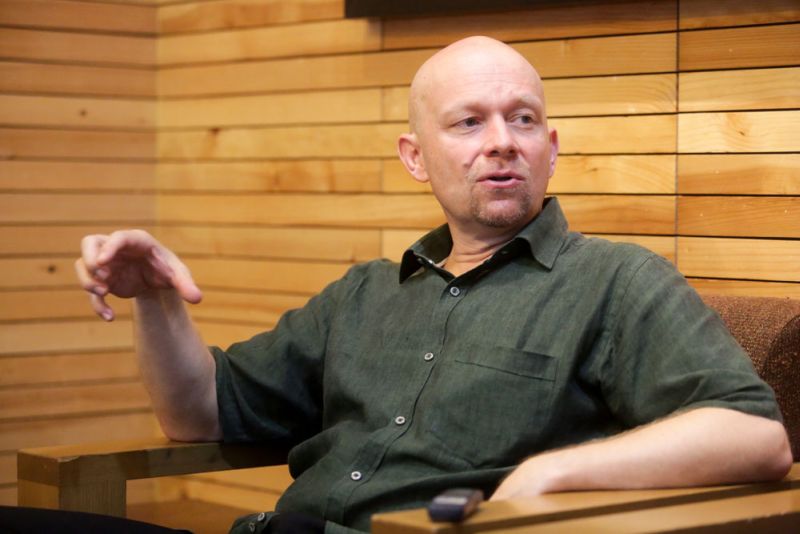
Gelber said collection can be costly on a federal level, adding that this has to be well thought through to keep the cost under control and maximise the value of the separated recyclable collection.
For food waste specifically, he said it would be better to do it at a community level.
“That’s why I’m arguing, start with places where you will get economies of scale, in a condominium. If you really work it out well, you may be able to collect food waste separately because you have a high volume or start with the restaurants... every day they have food waste, the big hotels, they have a gigantic amount of food waste.
“Even if you pick it up on a daily level, it’s worth it because of the volume that they’ve got but if you want to pick up food waste at a residential level, in a hot country like Malaysia, you need to do it very fast otherwise you get the smell and other problems.
“In Germany, the food waste is not so wet, it doesn’t spoil as quickly... it can be picked up once a week but here, once a week you would get smell issues,” he said.
According to The Star, the Subang Jaya Municipal Council (MPSJ) in Selangor already has a composting facility at its centre while the Petaling Jaya Municipal Council (MBPJ) has a household composting programme.