















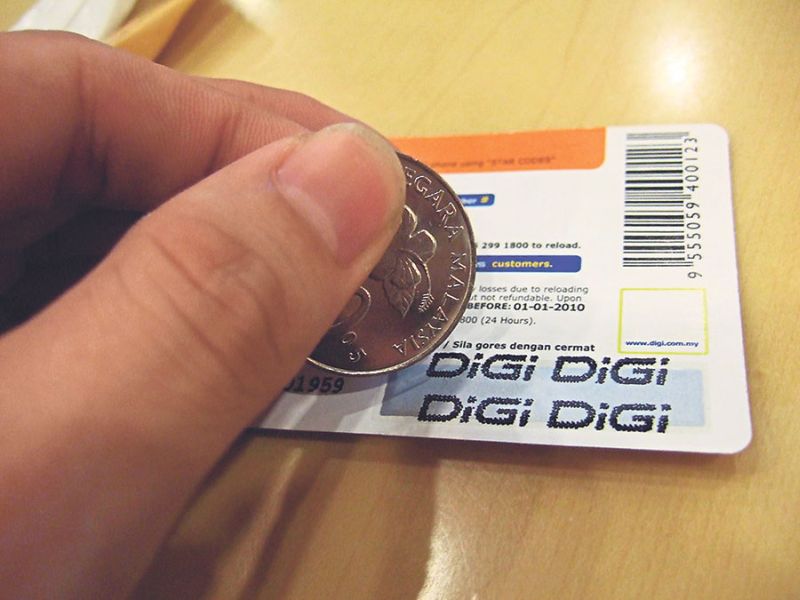


 KUALA LUMPUR, May 2 ― Mobile prepaid reloads
Issue: Deputy Finance Minister Datuk Ahmad Maslan initially said the pricing would not change after GST. This was reinforced by Customs GST director Datuk Subromaniam Tholasy on April 1. The reasoning was that the six per cent GST would replace the previous six per cent Sales and Services Tax (SST).
The next day, however, Subromaniam said telecommunication companies could charge GST on top of the reload coupon prices for three months, pending a final decision on the matter, although consumers would receive “extra airtime worth more than GST” charged.
The Malaysian Communication and Multimedia Commission (MCMC) also confirmed this, adding that telcos would conduct consumer surveys about it. On the same day, Ahmad Maslan said telcos would be given one month to switch to pre-GST prices.
Almost three weeks later, Customs director-general Datuk Seri Khazali Ahmad issued the telcos a directive to stick to old prepaid reload prices, inclusive of GST, by May 1. Hours following the announcement, MCMC said telcos would continue charging GST on top of old prices, pending a “final decision” in May.
Outcome: Khazali issued a statement on April 30 agreeing that telcos would continue charging GST on their old prices, cancelling his previous directive. Prime Minister Datuk Seri Najib Razak has now directed Communications and Multimedia Minister Datuk Seri Ahmad Shabery Cheek to take charge of the issue. Only Ahmad Shabery is authorised to make statements on the matter.
Service charge
Issue: In March, Ahmad assured customers that they need not pay the 10 per cent service charge if they received poor service.
After GST came into forceon April 1, Domestic Trade, Cooperatives and Consumerism Ministry secretary-general Datuk Seri Alias Ahmad said service charge was a “universal practice” for hotels and restaurants, and the charge itself was now subjected to GST. He added that patrons could be sued by service providers if they refused to pay the service charge, although outlets could also be sued by customers dissatisfied with their service.
Following consumer uproar, Alias said only outlets with collective agreements (CAs) with their employees could impose service charge, adding that the practice was increasingly becoming irrelevant.
This drew outrage from both employers and employees of hotels. Many do not have unions, and employees bemoaned the potential loss of earnings.
Outcome: On April 22, Alias announced that the charge would remain, as long as outlets had CAs or legal contracts with their employees regarding the charge. Outlets must also put up clear notices informing patrons that the charge would be imposed.

Dataran Merdeka parking woes
Issue: In April, the seasonal parking at Plaza Dataran Merdeka increased from RM230 to RM300. With GST imposed, the total sum came up to RM318.
Outcome: After complaints flooded in, the parking lot management Stess Property Sdn Bhd reverted to the original RM230 fee, excluding GST. Users could also offset the difference in the following month's parking charge.
Small traders closing shop
Issue: In the months leading up to GST, there were reports of such establishments closing as they found it confusing or they could not cope with the cost of hiring accountants.
In January, Penang Chief Minister Lim Guan Eng claimed that three small businesses is the state had closed down for such reasons. Reports in March said a two medicine shops in Penang closed due to GST, including one which had been operating for 74 years.
There were also reports of petty traders lamenting that they were forced to absorb GST while being unable to raise prices.
Lim later suggested the current revenue threshold for businesses to register for GST be raised from RM500,000 to RM2 million, as some small traders had low profit margins and could not afford the computerised software required for GST accounting.
Deputy Finance Minister Datuk Chua Tee Yong, however, said GST should not be solely blamed for the closures, citing other reasons such as the lack of interest from the owners' children to take over the business and stiff competition from larger franchises.
Outcome: Unknown