

















A Meteorological Department spokesman explained light rainfall would only worsen the situation while a downpour would only temporarily clear the air.
“When it drizzles, the water mixes with air particles which stay longer in the atmosphere. This will cause the haze to worsen,” he said.
“Even when it rains heavily, the haze will not necessarily be cleared completely as the rain has to be consistently heavy which is not the case at the moment.”
He said the department hoped the rain would help reduce peat fires and open burning which had been the main contributors to the haze this year.
“The rain forecast this week is expected to fall within the water catchment areas. This will help increase the water level in dams.”
Rain fell in water catchment areas in Bentong, Pahang and the Hulu Langat dam on Saturday.
The department’s atmospheric science and cloud seeding division director Azhar Ishak said the RMAF had given the green light to conduct a cloud seeding exercise. Such activity was put on hold as the force had deployed its assets to help find the missing Malaysia Airlines Flight MH370.
“A cloud seeding exercise was conducted in Pahang, Selangor, Negri Sembilan and Bentong on Saturday.”
Azhar said the effort was 70 per cent successful and the department would decide today when the next exercise would be carried out pending weather conditions.
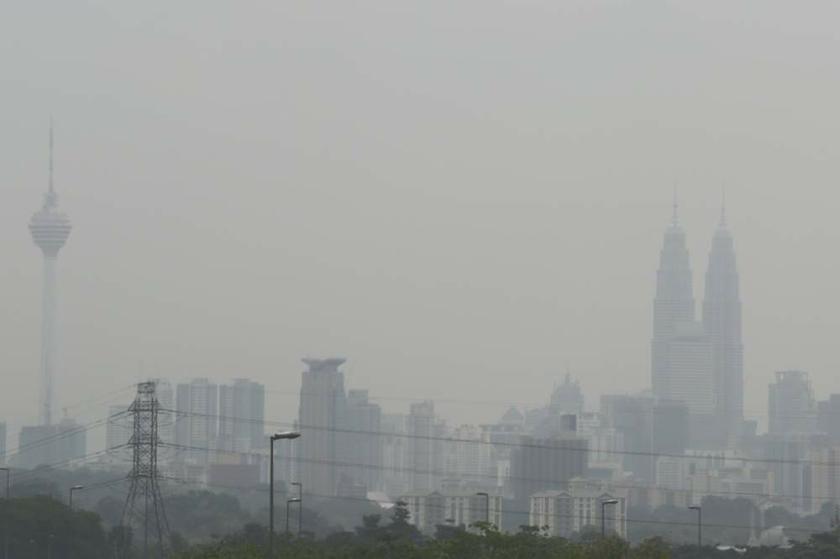
The prolonged dry spell and increase in peat fires and open burning had caused poor air quality in many parts of the country.
The Air Pollutant Index in Banting was 154 (noon) while Shah Alam recorded 109 (4pm) — both within the unhealthy bracket — yesterday.
Other areas which recorded poor air quality throughout the day were Port Klang (100 at 3pm), Petaling Jaya (97 at 3pm) and Cheras (67 between noon and 4pm).
A reading of between 0 to 50 is good, 51 to 100 is deemed moderate, 101 to 200 is unhealthy, 201 to 300 is very unhealthy and anything above 300 is considered hazardous.