




KUALA LUMPUR, Aug 15 — Repressive laws that saw a Johor resort operator arrested for letting Buddhists use a Muslim prayer room are creating further barriers between the religions in multicultural Malaysia, non-Muslim leaders said today
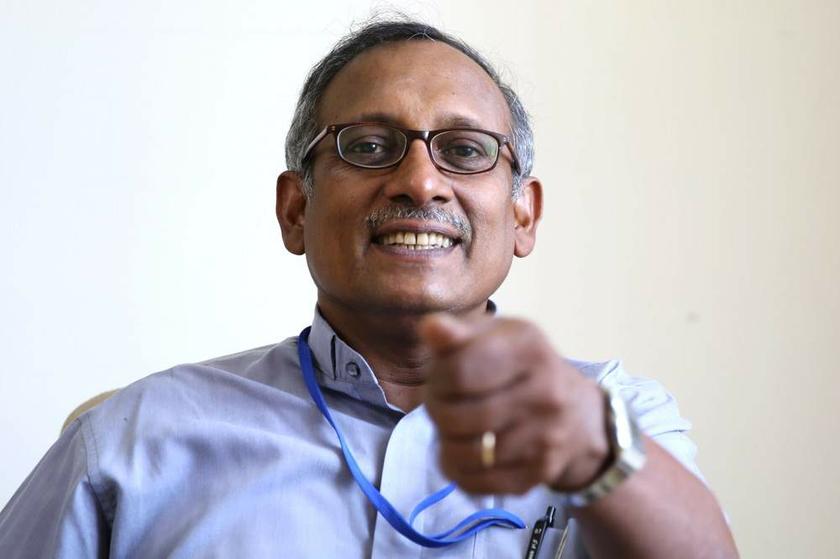
Rev Dr Hermen Shastri, the general secretary of the Council of Churches of Malaysia (CCM), said that during an international interfaith conference between Muslims and Christians he attended in Indonesia last May, Christian participants were taken to the Istiqlal Mosque in Jakarta, where they could observe Muslim prayers and also engage in their own prayers in another room in Southeast Asia’s largest mosque.
“Today, the authorities are building fences to keep religions apart by restrictive regulations,” Shastri told The Malay Mail Online via email today.
“It offers a poor witness to the hospitality that lies at the centre of all faiths. How can interfaith relations be built up if people can’t come into contact and appreciate the religious houses of others?” added the representative of the umbrella body of Protestant churches.
On Monday, a resort operator in Johor was arrested by the police for “injuring or defiling” a place of worship after he allegedly allowed Buddhist tourists to pray in a surau (Muslim prayer room) in the hotel.
This followed several media reports highlighting a video uploaded to YouTube showing the incident.
The 85-second video starts with an external shot of a small building and a close-up of what appears to be a sign in Arabic script over a doorway, before going on to show what resembles a prayer session inside the building by a dozen people clad in white, led by a monk in red and saffron.
The resort operator was reported by Malay-language daily Berita Harian last Monday as saying that he did not intend to hurt anyone’s feelings by allowing Buddhists to use the surau, as other halls in the resort were full.
“My intention is to show that Islam is universal and tolerant,” the Singapore-born Muslim, who has permanent residence in Malaysia, was quoted as saying.
Johor Islamic Religious Council adviser Datuk Nooh Gadut reportedly said yesterday that the surau in the resort may be demolished as it has been used by non-Muslims for worship.
Shastri said that among the “most meaningful” things that he has experienced is when people of one faith offer their sacred spaces to those of another.
“By doing that, they did not feel that their place was desecrated. In fact, it was a testimony of the spiritual generosity of their faith,” he said.
In March, UK’s BBC News reported that the St John’s Episcopal Church in Aberdeen, Scotland, allowed Muslims to pray in the church as there was not enough space in their mosque next door and many were forced to worship on the street outside.
“I felt very distressed when I saw my neighbours praying out in the cold and I knew I needed to do something to help,” St John’s rector Reverend Isaac Poobalan was quoted as saying.
Prematilaka KD Serisena, honorary secretary-general of the Malaysian Consultative Council of Buddhism, Christianity, Hinduism, Sikhism and Taoism (MCCBCHST), said today that religion was not a “zero-sum game”.
“There is no one teaching domineering over another,” Serisena told The Malay Mail Online.
“All religions teach us to respect. That is the basis of all religions — respect other religions... When you turn around and become domineering and try and push your views onto another, which means to say what, there is no respect,” added the representative of Malaysia’s largest non-Muslim interfaith group.
Serisena also said the country’s first prime minister, Tunku Abdul Rahman, and Datuk Onn Jaafar, the founder of Umno, would be “shocked” to see the recent spate of religious rows.
National Unity and Integration Department (NUID) director-general Datuk Azman Amin Hassan said today that Malaysians are becoming “a bit too sensitive”.
“So we have to be more careful to maintain religious harmony,” Azman told The Malay Mail Online.
Religious controversies have surged this year, while the term of the Cabinet’s interfaith panel, also headed by Azman, expired last month.
Two Chinese bloggers — Alvin Tan and Vivian Lee — were charged last month with sedition after they posted a mock “Selamat Berbuka Puasa” (breaking of fast) greeting on their Facebook page that showed them eating “bak kut teh” (a soupy pork broth).
Maznah Yusof, a Muslim dog trainer, is also being investigated for sedition after a video of her bathing and walking her three dogs resurfaced recently on YouTube.
Christians and Muslims also remain locked in a legal tussle over the term “Allah”, which stems from a 2009 High Court ruling upholding the Catholic Church’s constitutional right to use the Arabic word.


