




KUALA LUMPUR, Aug 11 — MCA should rejoin the government, but only if the party can lead the way in weeding out racism from national policies, former Cabinet minister Datuk Zaid Ibrahim has said.
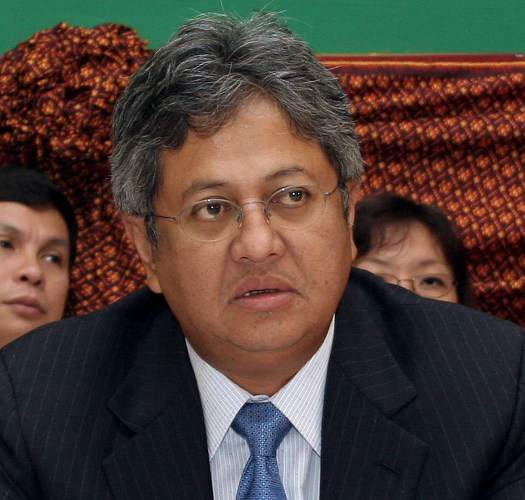
Zaid (picture) stressed the need for a sledgehammer approach to end racial and religious extremism here and revived calls for a Race Relations Act, which he said the MCA should champion if it steps back into government.
“There is no way we can overcome economic and financial challenges in the future if the country is divided along racial, religious and ethnic lines, so a well-crafted Race Relations Act is urgently required,” the former law minister said in a blog posting yesterday.
The law, he added, must be there for punitive reasons or at least to discourage racially-charged remarks or actions from spreading.
“Discriminatory practices must be outlawed,” he said. “The rights of citizens must be respected, regardless of whether their forefathers came from China, India or Sulawesi. Immediate action must be taken against racist conduct and remarks.”
“Companies and the civil service must be open to all races without discrimination, for this is the only way we can progress as a nation,” he added.
The MCA, as the second-largest component party in the ruling Barisan Nasional (BN), should rejoin the government to ensure this becomes reality, Zaid wrote.
“... especially if the party can get the prime minister’s undertaking to listen and act on key issues,” he observed.
Racial divisions have shaped the Malaysian political landscape over the decades. Pro-Bumiputera affirmative action policies were implemented since the 1970s, but opposition pact Pakatan Rakyat (PR) has argued that such measures benefit the well-connected Malay elite at the expense of ordinary citizens.
The social impact of race-based economic policies and politics — where BN’s component parties Umno, MCA and MIC represent the Malays, Chinese and Indians respectively — is more complex.
Inter-racial and inter-religious relations have been uneasy, with the row between Muslims and Christians on the word “Allah” exploding in 2010 when the High Court ruled that the Arabic word did not belong exclusively to the former. A church was firebombed and other places of worship were desecrated.
Malay rights lobby Perkasa had once even suggested that Malay-language bibles, which contain the word “Allah”, be burned. The right-wing group also recently demanded that Putrajaya expel the Vatican’s first ambassador to Malaysia, Archbishop Joseph Marino, for his views on the “Allah” issue that it deemed provocative.
Racial hostilities deepened when a Chinese pair of bloggers uploaded a photograph of themselves eating “bak kut teh” (a pork broth), together with a Ramadan greeting, on Facebook several weeks ago. They were swiftly charged with sedition and even denied bail.
In yet another recent case, a Muslim dog trainer was arrested for a video she made three years ago where she is featured celebrating Aidilfitri with her four-legged friends.
Noting that race relations in Malaysia have taken a hit in recent days, Zaid said a request for a Race Relation Act should not be deemed as “asking for the sky”.
“A Race Relations Act will signal to the people that this government is concerned about racial discord, that it has the political will to act against racism and racist policies, and that it has every intention to deal with the subject fairly to maintain peace and harmony,” he pointed out.
MCA, he stressed, should play a role in getting the Prime Minister to promise that public prosecutors are given a free hand to charge anyone who violates this Act.
“Laws are useless if not they are not enforced fairly or made applicable to those who violate them. In Malaysia, Malay or Muslim demagogues —especially from Umno and Perkasa — have escaped prosecution despite making blatantly racist remarks,” he pointed out.
“If MCA can get this done, then it would be worthwhile for the party to rejoin the Cabinet.
“There are other key issues that MCA leaders can champion and stick their necks out over, but they must get the prime minister to agree on these specific issues before taking on their Cabinet posts,” he said, noting that the party would gain more support in the next federal polls if it is successful.
After its dismal showing in Election 2013, MCA stuck to its guns in rejecting all government posts at both state and federal levels.
Earlier this week, however, party deputy president Datuk Seri Liow Tiong Lai was reported as saying that several Chinese non-governmental organisations still harbour hope that the MCA would reverse its decision and accept a government post.
“They had expressed their views and viewed that the MCA could help the Chinese community to solve many issues affecting them and have a pivotal role in helping the government to formulate policies for the good of the country.
“As such, they feel that it is only right that the MCA must be represented in the Cabinet,” Liow reportedly said, according to national news agency Bernama.
While agreeing with the need for the MCA to rejoin the government, Zaid said the party must only do so for the right reasons.
He noted that in the past, MCA leaders in government were merely accustomed to holding their posts for the purpose of delivering allocations to Chinese schools and representing the community in business and educational issues.
“A few of their top leaders held Cabinet posts and this enabled them to dish out some contracts to the Chinese towkays.
“The lower-rung MCA operatives held positions in local councils, which gave them some leverage with grassroots members,” he alleged.
“If MCA were to rejoin the Cabinet, it must do so for the right reasons,” he added. “Being vocal without having the ability or willingness to implement key policy issues will reduce MCA to being like just another NGO: vocal, but essentially helpless.”


