
















OKUNOSHIMA, Nov 21 — Stepping onto an island in western Japan, tourists squeal with joy at the sight of hundreds of fluffy rabbits, but few realise the land was once home to a secret chemical weapons factory for the country’s Imperial Army.
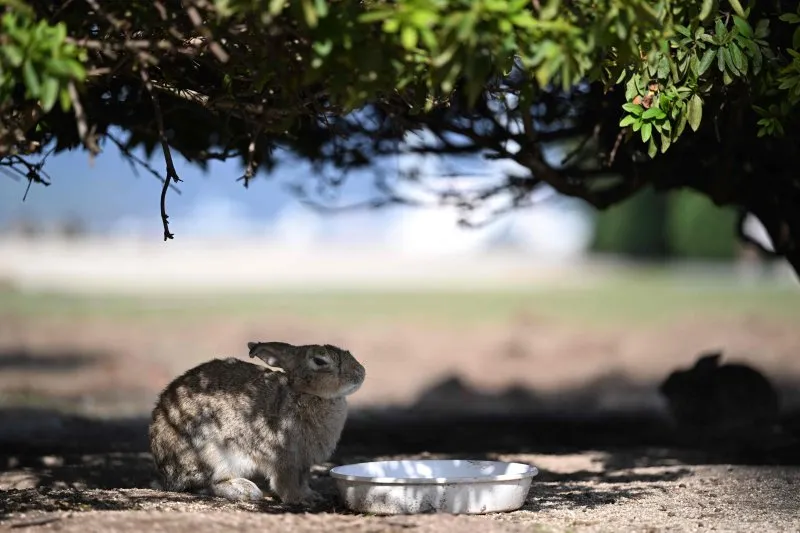
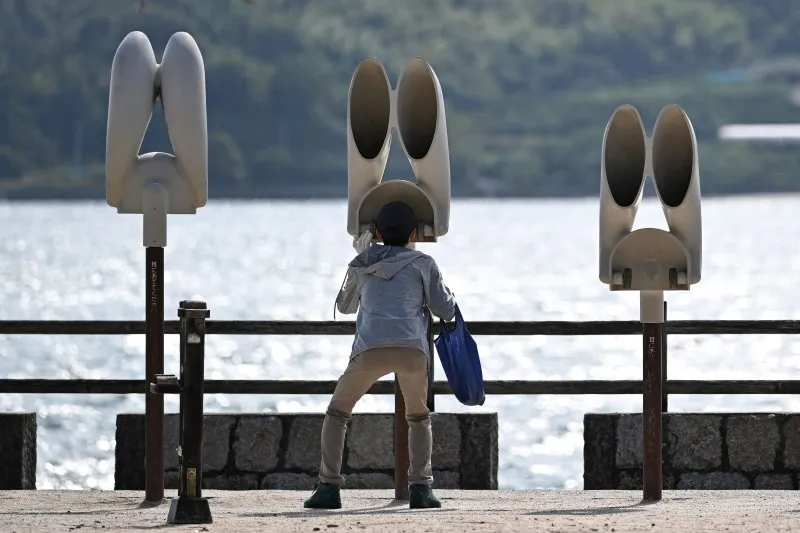
Okunoshima — also known as “Rabbit Island” — has a perimeter of just four kilometres but welcomes thousands of snap-happy visitors attracted by its bunny population each year.
“This was my dream,” to visit the island, 67-year-old Susan Balzer from Canada told AFP.
“You can feed them, they come to you. We never get to really get close to them” back home, she said.
The rabbit population is thought to have grown from a small group released by a nearby elementary school in the 1970s to around 500 today, aided by abundant food and a lack of predators.
But the island’s cute exterior belies a dark history.
In 1929, the former Imperial Japanese Army built a chemical weapons factory on Okunoshima in an effort to catch up with Europe, despite international bans introduced after World War I.
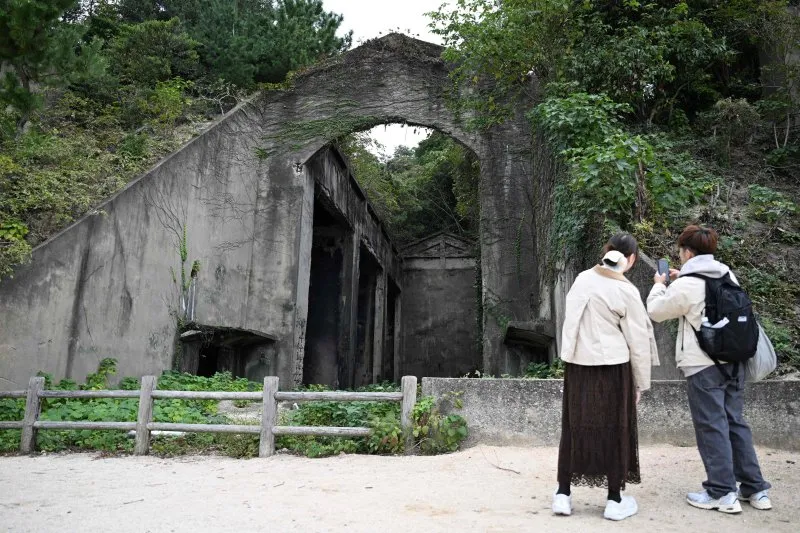
As rabbits hop around the island, which lies in the Hiroshima region, large ageing concrete and brick structures — once used as power plants and poison gas depots — serve as reminders of its murky past.
Many of its factory workers suffered from cancer and other diseases, according to a monument on the island.
“Learning that many people died from the gas they produced made me realise what a tragic legacy the island carries,” 69-year-old visitor Eiji Tomari said.
“At the same time, I’m glad it has become a place where rabbits can live peacefully.”
‘Sustainable tourism’
Since the production of poisonous substances, including mustard gas and lewisite, was highly secretive, authorities removed the island from Japanese maps, keeping it hidden until the end of World War II in 1945, when Allied occupation forces ordered its destruction.
“It was something that could not be disclosed, not just to ordinary citizens, but to the rest of the world,” Okunoshima Poison Gas Museum Director Kazuhito Takahashi told AFP.
“If the facility had been exposed internationally, Japan, which relied heavily on imports at the time, could have faced sanctions,” he said.
Masayuki Yamauchi, an 82-year-old tour guide, said rabbits were used as test subjects in experiments, although there is no evidence the bunnies now roaming the island descended from them.
“I hope people will learn about that history and use those lessons to help promote peace in the world,” Yamauchi said.
Last year, around 200,000 people visited the island, according to the local tourism association.
But as word spreads on social media, some experts warn that overfeeding the rabbits is harming the ecosystem.
According to a study published in July, wild boars, lured by the food, have reportedly been observed attacking the creatures.
“To achieve sustainable tourism, it’s important to understand the impact of feeding wildlife and to consider how we should interact with it,” Asami Ogura, an associate professor at the National Institute of Technology’s Kure College, said in a press release on the study.
Ogura said the rabbits face food shortages when there are few tourists, while heavy grazing by the animals has affected the island’s vegetation, stripping low-lying branches and leaves from many plants.
Tour guide Yamauchi called the situation “tragic”.
“A growing rabbit population does not mean the animals are happy,” Yamauchi said.
“If we want them to thrive, visitors should avoid selfishly feeding them.” — AFP