














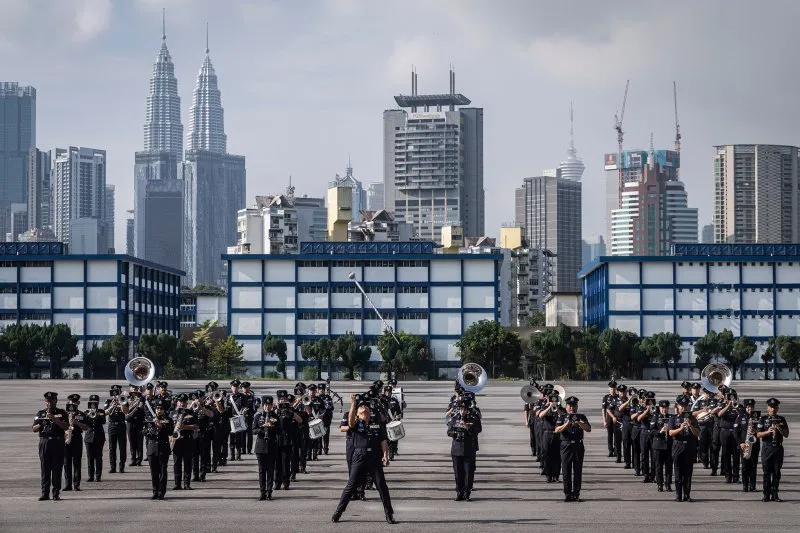


KUALA LUMPUR, Nov 21 — They say music heals the soul, but for the Royal Malaysia Police (PDRM) Band, its purpose goes beyond striking the right notes.
Behind every melody, synchronised step and meticulously choreographed performance is a longstanding tradition rooted in discipline, teamwork and dedication, offering the public a glimpse of a different side of the men in blue.
Whether performing at official state ceremonies, national celebrations or public gatherings, the band has carved out a distinctive place within the police force, using music to connect with audiences from all walks of life.
PDRM music director Superintendent Mohd Fazilah Mohamad Noor said the band serves as a musical ambassador for the force, using its performances to foster closer ties with the community and reach audiences who might otherwise have little interaction with the police.
He said this mission also reflects PDRM’s longstanding motto, Polis dan Masyarakat Berpisah Tiada (The police and the community are inseparable).
“Through music, the band gives this principle a different expression, bringing police personnel and the public together through our musical talents in a setting that goes beyond the conventional image of policing.
“We are like a small ambassador for PDRM, using music to attract public attention, enhance the force’s image and help the younger generation get to know the police,” he told Malay Mail during a recent interview here.

While the band is perhaps best recognised for its appearances at formal parades and official events, it is also occasionally called upon to perform in place of the Malaysian Armed Forces’ band at state functions and to assist with general policing duties when required.
“Our members are also not confined solely to musical duties.
“As a regimental unit whose personnel receive basic police training and legal instruction, the band is also sometimes called upon to assist with other general policing responsibilities, including maintaining public order and crowd control when required,” he said, citing previous deployments during Bersih demonstrations in KL.
Steeped in history
But the band’s role in representing the force was not built overnight.
The band today evolved from the Federated Malay States Police Band, established in 1932 by J.D. Hussey, an English officer who served as Commandant of the Federated Malay States Police Depot, now known as the Kuala Lumpur Police Training Centre (Pulapol KL).
The band underwent a significant expansion in 1937 when A.W. Crofts, a formally trained music director from the Royal Military School of Music in England, took charge of its musical development.
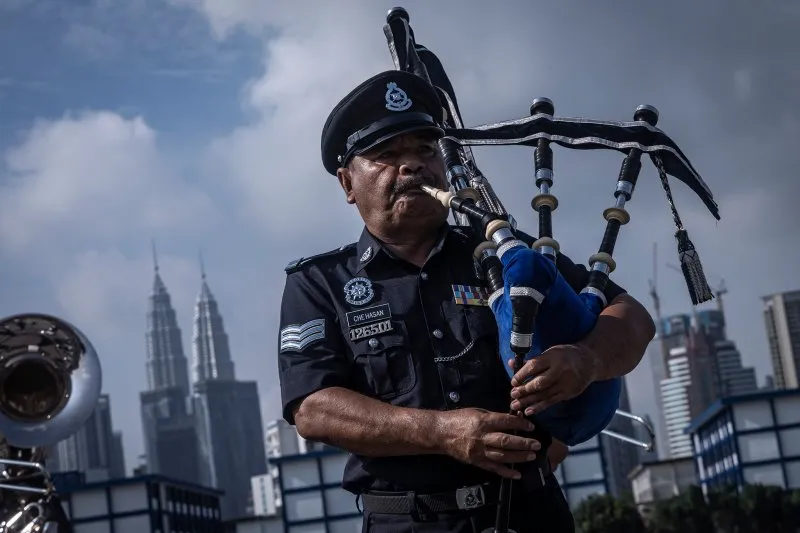
Under his direction, the previously small ensemble, which initially comprised basic brass and percussion instruments, grew and expanded its repertoire and instrumentation to include bagpipes, bugles and orchestral performances.
However, the band’s progress was interrupted by World War II, when the Japanese occupation of Malaya forced it to disband.
Following the return of the British administration in 1946, Crofts reorganised the police band, introduced further improvements to its structure and musical capabilities before retiring in 1959.
Alias Arshad, a graduate of the Royal Academy of Music in England, succeeded Crofts as the band’s first music director of Malay descent.
Following the formation of Malaysia in 1963, the ensemble adopted its present name.
Today, the band has a combined strength of about 300 members across its contingents in Pulapol Kuala Lumpur, Kedah, Sabah and Sarawak, with approximately half based at its headquarters here.
Behind the music
But sustaining a tradition that has endured for nearly a century requires more than preserving its repertoire.
It also means nurturing new talent, maintaining musical standards, ensuring members are equipped to meet the demands of modern performances and public expectations.
Joining the band, however, involves meeting two sets of requirements: passing the standard PDRM recruitment process, followed by an assessment of their musical abilities.
Candidates must first pass PDRM’s general recruitment screening and basic training before undergoing a technical music audition to assess their score-reading and instrumental proficiency.
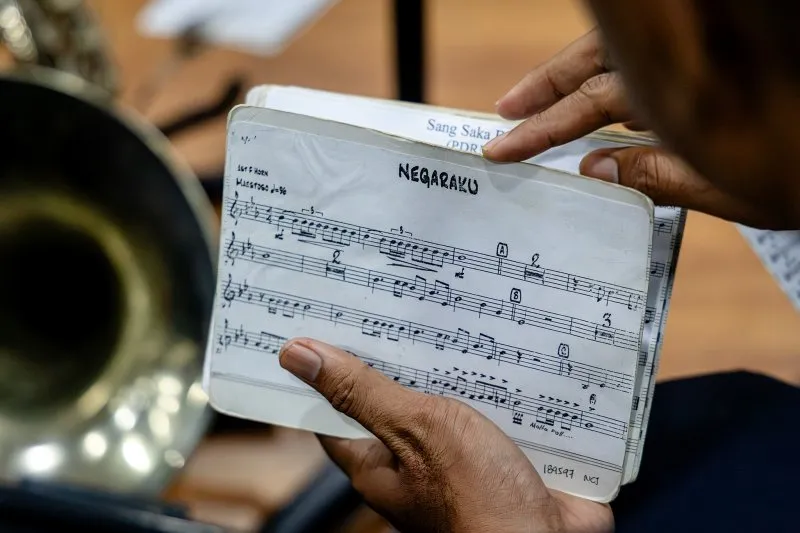
Although formal musical training is strongly encouraged, Mohd Fazilah said it is not a prerequisite, allowing candidates with musical aptitude to develop their skills further within the band.
Once recruited, new members undergo six months of training to sharpen their musical skills and build the endurance needed for marching performances in challenging outdoor conditions.
“The approach is intended to test their endurance and ability to maintain musical precision while marching in challenging conditions, particularly since performances and official engagements can occur in different environments with little control over the weather.
“If they cannot meet the requirements within that six-month period, they will be removed from the band.”
Beyond mastering their assigned instruments, members are also expected to be proficient in at least two, allowing them to contribute to different musical arrangements and performances.
“While their primary instrument is generally determined by their musical specialisation, they are required to take up a second instrument, which may be chosen based on their aptitude or assigned by the respective band’s director based on necessity,” he said.
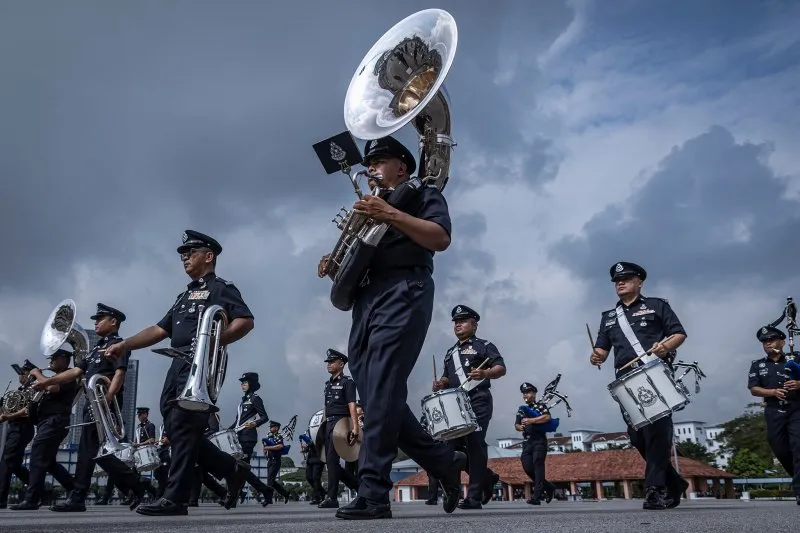
With the band recognised as a specialist unit within PDRM, Mohd Fazilah said members could even build their entire careers there, with the option of remaining in the unit until retirement.
Members may also request transfers to other units to gain wider policing experience, subject to approval and the band’s operational needs.
The band’s existing musical diversity is also reflected in its organisational structure, which comprises nine specialised units catering to different musical styles and performance formats.
These include the Brass Band, Bagpipe Section, Drum Section, Combo Unit, Quintet Unit, Akustika Unit, Keroncong Emas PDRM (traditional Malay music), Wind Ensemble and Big Band, collectively covering 41 different musical instruments.
Keeping the rhythm alive
For Mohd Fazilah, balancing operational readiness with musical excellence remains an ongoing challenge, particularly as the band works to attract younger talent and preserve its nearly century-old legacy for future generations.
“Although we are unique, one of our weaknesses is that we do not have dedicated music instructors; new members must learn from the more experienced ones, who pass down their knowledge.”
Another challenge was ensuring members had a genuine interest in music, as technical ability alone did not necessarily translate into the motivation needed to develop their skills.
“While some members are capable of performing their musical duties, those with less interest in music could struggle to push themselves to improve, particularly when compared with colleagues who are more enthusiastic and proactive.
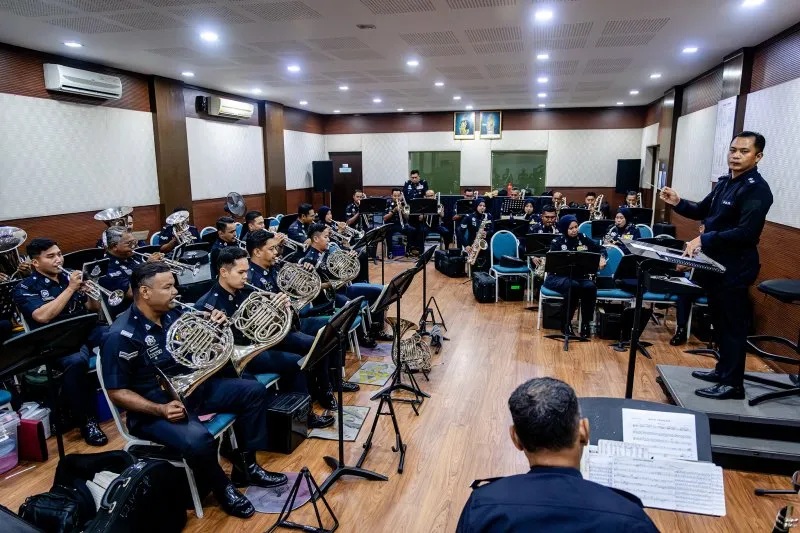
Time constraints also pose a challenge, as the band’s heavy schedule leaves members with limited time for dedicated practice.
“Regular practice is essential to maintaining musical proficiency, as prolonged breaks could cause musicians to lose their sharpness and make it harder for them to identify and address weaknesses in their performance,” he explained.
Still, Mohd Fazilah said many of the band’s experienced members were also capable of arranging music themselves, reflecting the level of musical aptitude and commitment expected within the unit.
Striking a chord
Despite the challenges, he said the most rewarding aspect was seeing how their performances brought joy to audiences, sometimes in ways the members themselves did not anticipate.
For younger audiences in particular, these encounters can help shape a more familiar understanding of the force, allowing them to see police personnel not only in their role as law enforcers, but also as musicians and representatives of the community.
“Through our performances, we hope to leave a lasting impression on those who come to watch us and, in doing so, change perceptions by helping to dispel any negative views of the police,” he said.
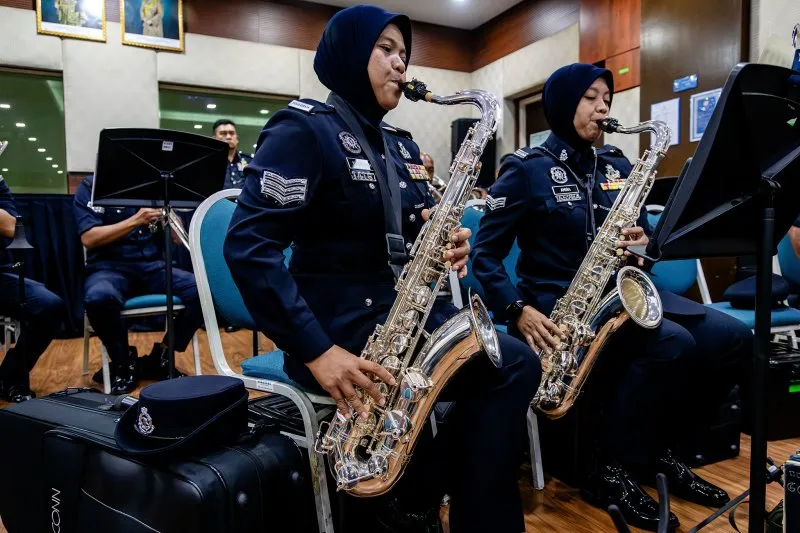
Mohd Fazilah said the positive public response thus far has reinforced the need to further strengthen the initiative to bring the police and community closer, as part of broader efforts to enhance PDRM’s image and build public trust.
“Given the positive public response, I believe this is a form of recognition that the PDRM Band’s efforts to bring the police and community closer through music are bearing fruit.
“The satisfaction is difficult to put into words. There is a deep sense of pride in knowing that our performances can bring joy to people, sometimes in ways we never expected.
“Seeing how much happiness music can bring to others makes all the effort worthwhile,” he said.
As it continues to carry its musical legacy forward, the band remains committed to using its greatest strength, music, to remind the public that beyond their duties as law enforcers, police personnel are also part of the community they serve.