










KUALA LUMPUR, Nov 20 — Malaysia’s food is more than a gastronomy experience. It tells a story of diversity and unity, where different but complementing flavours, ingredients, and culinary traditions reflect a shared national identity.
This distinctive character is what captivates Italian chef Alessia Morabito, who hailed the country’s food culture as an expression of how different communities preserve their culinary individuality while contributing to an unmistakably Malaysian identity.
“What I love in this country is that you have three souls together, the Malay, Chinese, and Indian together and the food is expressed in three different moods but when you taste a Malay, Chinese, or an Indian food, every time you understand the same identity,” she told Bernama in an exclusive interview.
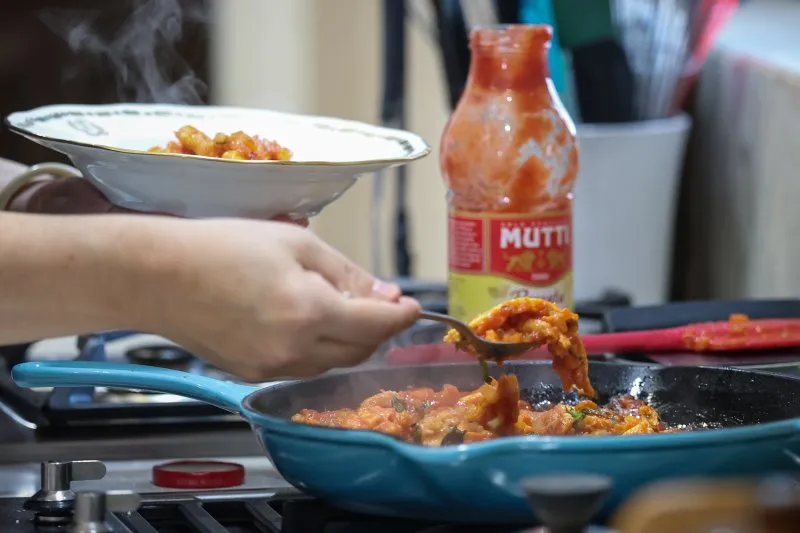
At the interview, Morabito, who was in Malaysia in conjunction with the Week of the Italian Cuisine in the World 2026, also demonstrated the preparation of Trippa Finta, a classic home-style Italian dish that uses thin, sliced cheese omelettes simmered in tomato sauce to mimic the look and chewy texture of animal tripe.
The recipe, which dates back to post-war central Italy, is featured in Reti e Archivi del Gusto (RAGU), a cookbook digitisation project she has led since 2021 with food historian Mila Fumini.
Different cultures, shared values
Morabito, who also teaches migrant women culinary arts at Roots, a social enterprise restaurant in Modena where she is based, said while Italian cuisine enjoys wide international reach, Malaysia’s rich culinary diversity is largely discovered only by those who visit the country.
“Malaysia gastronomic identity is very inner (deep-rooted). So, to taste Malaysian food, I have to come here. Italian food is different because can find it everywhere,” she said.
Despite their distinct culinary traditions, Morabito said Malaysians and Italians share a deep appreciation of food as an expression of generosity, family bonds, hospitality, and human connection, making it an integral part of their cultural identity.
She noted that this appreciation of food as part of cultural identity is also reflected in Unesco’s recognition of Italian cooking as an Intangible Cultural Heritage of Humanity.
She added that both kitchens share surprising similarities in ingredients and techniques, comparing local beef stews to northern Italy’s brasato, dumplings to tortellini, and water-and-flour handmade pastas like Tuscan pici to Asian noodles.
Recipes that adapt
On adapting Italian dishes for local tastes, Morabito said chefs should view recipes as “alive” rather than rigid.
She said, even within Italy, cooking practices for traditional food such as ragù (slow-cooked meat sauce) and tortellini vary from town to town depending on local ingredients.
“Authentic food, for me, is not so important, because if you have a recipe, recipes are alive. So you have to change the recipe because the ingredients are changed during the time and in the places too,” she said.
Citing an example, she noted that Italian restaurants abroad often cater to Italians living there while also offering local diners an introduction to the country’s food traditions.
Expanding Italy-Malaysia culinary exchange
Morabito also sees potential for Malaysia and Italy to deepen culinary cooperation, with food offering a platform for cultural exchange, professional development, and closer people-to-people ties.
She expressed optimism about expanding bilateral culinary exchanges through diplomatic channels such as the Italian Embassy in Kuala Lumpur by way of joint workshops, chef training, and ingredient showcases in both countries.
Such initiatives, she said, would allow chefs from both countries to share techniques, explore each other’s culinary heritage, and gain greater exposure to ingredients and food products.
“We can organise kitchen courses and invite Malaysian chefs to Italy for exhibitions, collaborations, and ingredient showcases for instance, with iconic Italian products like Parmigiano-Reggiano.
“We have everything needed to create strong Italian-Malaysian collaborations,” she said. — Bernama