


BINTULU, Sept 14 — After more than a century of Iban settlement in Sera, Sebauh, Judy Stephen has become the first woman to take on the role of tuai rumah (longhouse chieftain), and she is the 10th to lead this community.
For her, the appointment is a special milestone.
“I feel that No 10 is a good number. I am also very grateful to be the first woman to take over the headship.
“I know it will not be easy, but I am ready to do my best.”
Judy, 60, was officially appointed the tuai rumah on July 1 this year, succeeding her uncle TR Jack Sigie.
Her appointment is significant not only because she is the first woman to lead her community, but also because her longhouse has a history stretching back more than 130 years.
A longhouse with a long history
Judy’s longhouse is located about 50km from Bintulu. It can be reached by both road and river, although the former can sometimes be a challenging journey.
Visitors travelling by car have to park near the Sera River and cross the river to reach the longhouse.
The present longhouse stands on the same general site where Judy’s ancestors settled after moving from Ulu Skrang during the time of the Second Rajah of Sarawak, Sir Charles Brooke.
According to Judy, the first settlement was established sometime in the 1860s, when her great-great-grandfather Bulan Genaya was issued the “Internal Migration Permit” by the Rajah.
From Ulu Skrang, they landed at Nanga Sebauh River, where they built their temporary longhouse.
The original longhouse was a traditional structure, with belian (ironwood) used extensively for the roof, walls and floor.
Even the ruai, the common passage where longhouse residents gather and community life takes place, was made from belian.
Like many established longhouses, Judy’s has been rebuilt several times — the last reconstruction took place in 1989.
For Judy, seeing the longhouse continue to grow is something she looks forward to.
“I have inherited 18 doors, or families. Some families are still working elsewhere. It is exciting to think about how our longhouse can grow in the future,” she said.
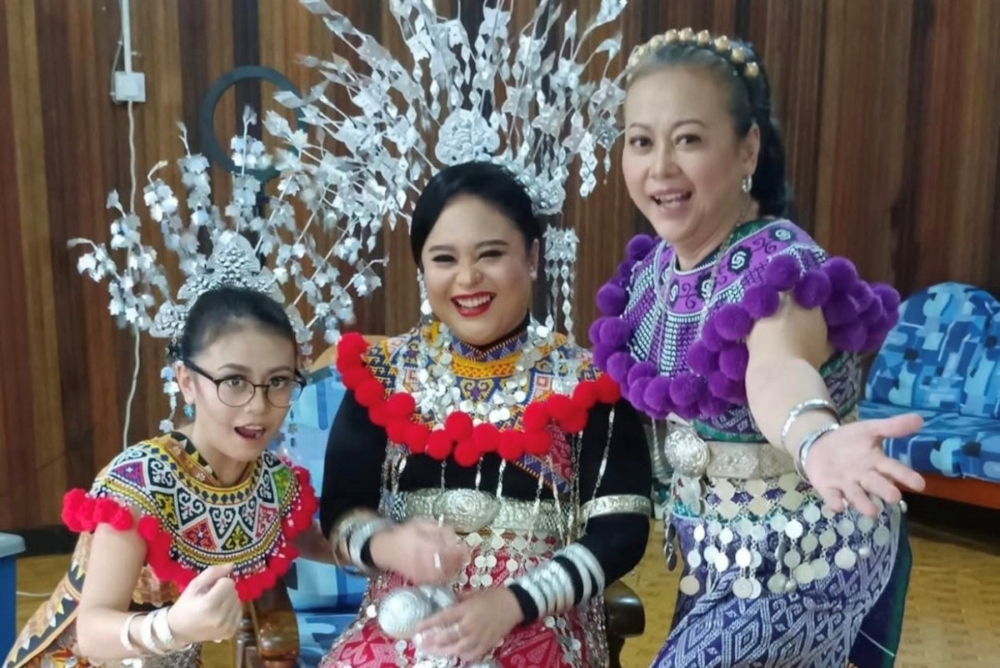
From Ulu Skrang to Sebauh
The story of the Sera settlement began with the early Iban pioneers who travelled from Ulu Skrang to this Bintulu area during the rule of Rajah Charles Brooke.
Judy’s family history is closely connected with this migration.
Her great-great-grandfather Bulan was among the early Iban migrants from Nanga Bunu in Ulu Skrang. The family history records that he had been involved in the struggles of the time before eventually choosing a more peaceful path.
His son, Jelani Rekan, later became a key figure of the community.
The early Iban settlers arrived in Bintulu, explored the Pandan, Ulu Kemena and Sera areas, where they sourced forest products such as rattan and wild rubber to be traded for cash.
Over time, these temporary camps became permanent settlements.
Judy said the original longhouse was much larger than it is today.
“The original longhouse had 56 bilik (household units). In those days, longhouses were really long,” she recalled.
Over the generations, some families eventually moved away and established new longhouses.
One of the closest breakaway communities is Rumah Tabor, located on the opposite bank of the Sera River.
However, not all of the Sera community joined the breakaway in 2009.
Many families, including Judy’s, continue living in the present longhouse.
For Judy, these movements are part of the natural history of Iban communities.
“It’s the people’s choice, and it cannot be prevented from happening.
“Families sometimes move away because of work, farming opportunities, or because of disputes or disagreements, or simply the desire to establish a new settlement.”
Judy’s uncle Jack was appointed the chieftain in 2009.
His predecessors were Tabor Lasah who led the longhouse from 1979 to 2009; Sigie Ugam (1971-1979); Anggot Manjan (1955-1971); Nilie Rurong (1933-1955); Akat Buja (1932-1933); Jalin Mambang (1913-1932); Bantin Apai Lingang (1896-1913); and Chaong Apai Tayok (1889-1895).
Judy now carries the responsibility of continuing that line of leadership.
Love for books
Judy grew up in a family where education was highly valued.
She is the daughter of Maria Abok and Stephen Randi Sekalai, two of the early educated Ibans from the Sebauh area.
Her father was a Bintulu Town Council officer before becoming involved in private construction.
He was among the early Iban intellectuals who studied at Batu Lintang School and College in Kuching.
Her mother was the daughter of Temenggong Datuk Abok Jalin, a paramount Iban community leader.
Such upbringing encouraged Judy to look beyond the immediate present.
As a young girl, she dreamed of becoming a librarian because she loved books.
The first novel she read was Anne of Green Gables — a 1908 novel by the Canadian author, Lucy Maud Montgomery — which she borrowed from the then-Kuching State Library.
That love has never left her. Today, her home has a sizeable collection of books.
“You can see books everywhere in my home!” she said with a laugh.
Judy was educated at St Teresa’s School in Kuching and later attended Kolej Tun Haji Bujang in Miri for her Form 6 studies.
She furthered her studies in the UK, but was recalled because of the country’s economic downturn.
Nevertheless, she went on to develop a wide range of interests and skills.
She has training in banking, having worked in Bank Utama (the predecessor of today’s RHB Bank) for 10 years, but later resigned due to family commitment.
She is an artisan baker and runs FreyaCraft Bintulu, a business that reflects her interest in sewing and handicrafts.
She hopes to continue her sewing activities after having settled into her new responsibilities as tuai rumah.
Despite her busy schedule, Judy is currently studying law.
For her, learning is clearly a lifelong journey.
Life shaped by responsibility
Judy’s life has also not been without challenges.
She married Sudin Manja of Machan, Kanowit, in 1990, but he passed away in 2009.
She then raised her two daughters, Charraine and Pheonnie — both in their 30s now — on her own.
She and her daughters then relocated to Kuala Lumpur and stayed there for 15 years before returning home to take care of her elderly parents.
Her experience as a mother and widow has given her an understanding of the responsibilities that come with caring for a family.
Today, Judy brings that experience into her role as a community leader.
One of the things Judy is particularly proud of is the primary school located near her longhouse.
SK Hermanus Assan was established in 1963 after the then-Penghulu Abok Jalin appealed to the Sarawak government for a school to serve the children of the surrounding longhouses in Sera.
He then named the school after his brother, Hermanus Assan, the first Iban District Officer in Sarawak.
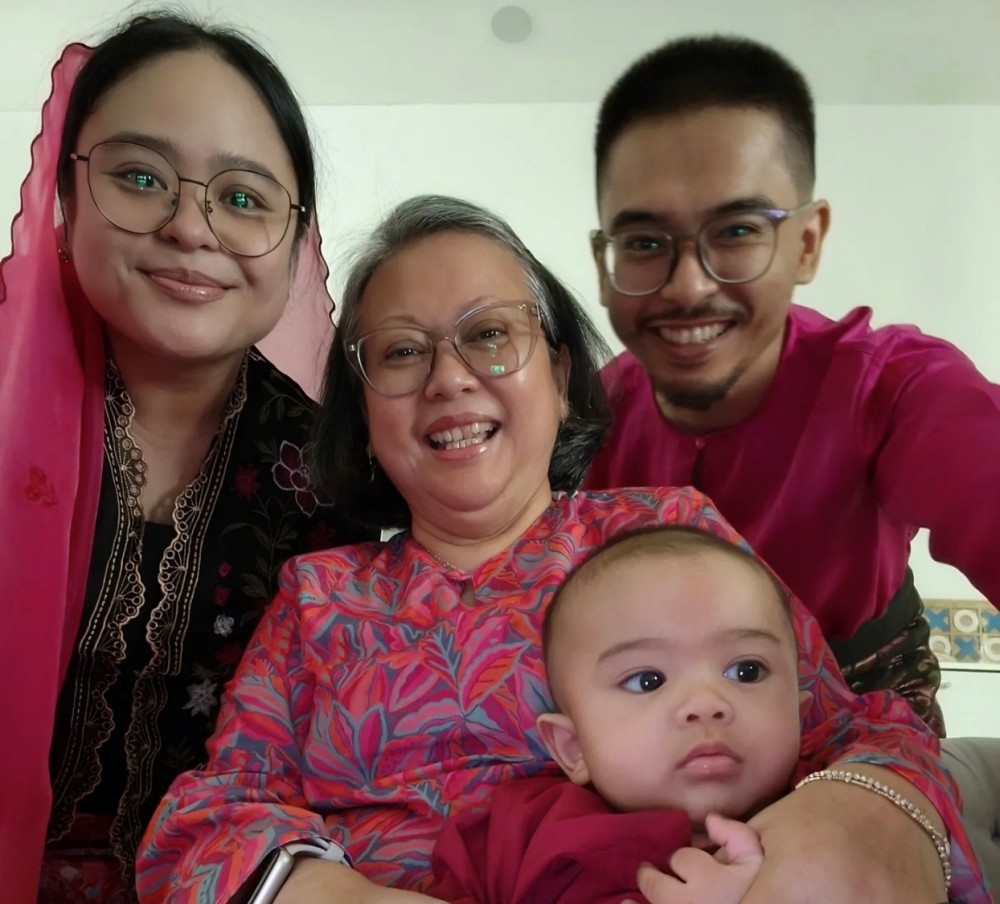
Before the school was built, the children had to travel to Central Upper Primary School in Sebauh, which was a difficult journey.
Some even gave up studying altogether.
The first school building was simple — a wooden structure accommodating 30 children from seven nearby longhouses.
Over the years, enrolment grew and today, the school has some 73 pupils.
For the community, the school is more than just a place of learning. It is part of the history of Sera and a reminder of the importance earlier generations placed on education.
Keeping community safe
Today, however, Judy has a grave concern — the crocodile-infested Sera River.
For families whose children have to cross the river by boat, this is a serious matter.
“Our greatest concern is the safety of our children when they cross the river. We have seen crocodiles during the day and at night,” she said.
Teachers and the security guard take precautions when the children travel by boat, but Judy believes the community should not have to live with this worrying concern.
She hopes the government would consider building a bridge across the river.
“It can be a simple bridge — a hanging bridge, a bailey bridge or even a basic wooden bridge.
“We will all feel much safer. It is never too late to build a bridge,” she said.
For Judy, this is one of the first issues she hopes to take up as a tuai rumah.
Being a longhouse chieftain is more than carrying a title.
She has to help maintain unity among the residents, ensure that the biliks are properly looked after, encourage residents to keep the longhouse safe and orderly, and ensure that the community continues to observe its adat (customary laws).
She also has to work closely with the relevant government agencies, especially the Sebauh District Office.
For Judy, good leadership means listening to people.
She wants to work together with the residents to improve the longhouse, keep proper records and strengthen communication with the district authorities.
Most importantly, she wants the people of Sera to remain united.
Protecting ancestral land
Another responsibility close to Judy’s heart is the ancestral land surrounding the longhouse and other plots belonging to the Sera communities from the time of their ancestors’ migration to Sebauh.
She regards land as “one of the greatest treasures” handed down by her ancestors.
“The early settlers were known as hardworking farmers, particularly rice growers.
“Their ability to cultivate the land was one of the reasons they were encouraged to settle in Sebauh.
“Today, the farming activities have changed with the times.
“Many families grow oil palms and rubber trees, while others maintain fish ponds, as well as pepper, fruit and vegetable farms.”
For Judy, development does not mean forgetting the land.
“It means finding ways for the community to continue benefitting from it, while ensuring that the next generation will still have something to inherit.”
Judy is particularly passionate about preserving the history of the Iban community in Sebauh.
She believes that history should not simply remain in people’s memories.
“It should also be recorded so that the young people can learn about their families and their origins.
“My family holds a remarkable connection with Sebauh: my great-grandfather was Penghulu Jalin; his sons, Hermanus Assan and my grandfather Temenggong Datuk Abok Jalin were prominent local leaders.
“Their stories are part of the wider story of how Iban communities developed in the Kemena and Sebauh areas.
“In this respect, I hope to help preserve these stories for future generations.”
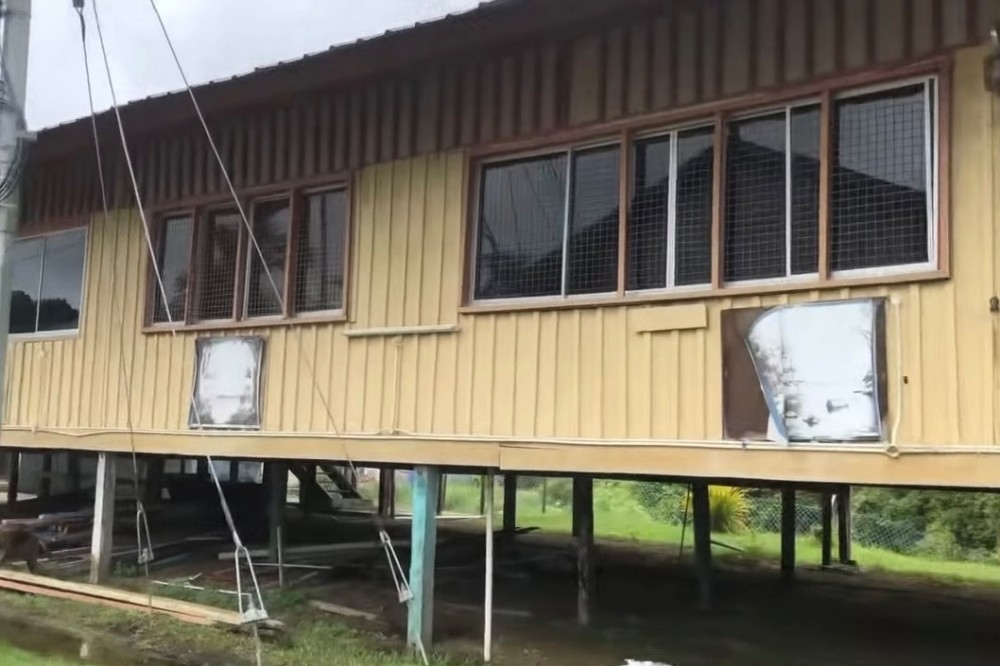
Nevertheless, Judy understands that the world around the longhouse is changing rapidly.
Young people are studying, working in towns and cities across the globe, and finding opportunities far beyond their ancestral homes.
Still, she believes that embracing modern life does not mean abandoning one’s roots.
“I believe the two can go together.
“The law gives us the tools to protect our rights. Our culture reminds us who we are and where we belong.
“Still, we must embrace new opportunities and welcome changes that are beneficial to us.
“At the same time, we must keep our cultural identity and adapt to what is good for our community.”
This belief and her experience led her to pick up a course named “Adatology”, which was conducted by the Society for Rights of Indigenous People of Sarawak (SCRIPS) earlier this year, to further equip her role as tuai rumah.
New chapter for Sera
The history of Sera has never been completely still.
Longhouses have grown, families have moved, new settlements have emerged, and generations have come and gone.
That is part of the story of the Iban community.
Now a new chapter has begun, with Judy becoming the first woman longhouse chieftain of Sera.
This formidable woman knows that she has inherited a responsibility built on more than a century of history, and she also knows that she cannot do it alone.
“My success depends on the cooperation of the families in my longhouse and the support from the wider community.
“What I am sure of is that I am approaching responsibility with determination and hard work, and also I strive to embrace new opportunities and help my people to do well.” — The Borneo Post


