


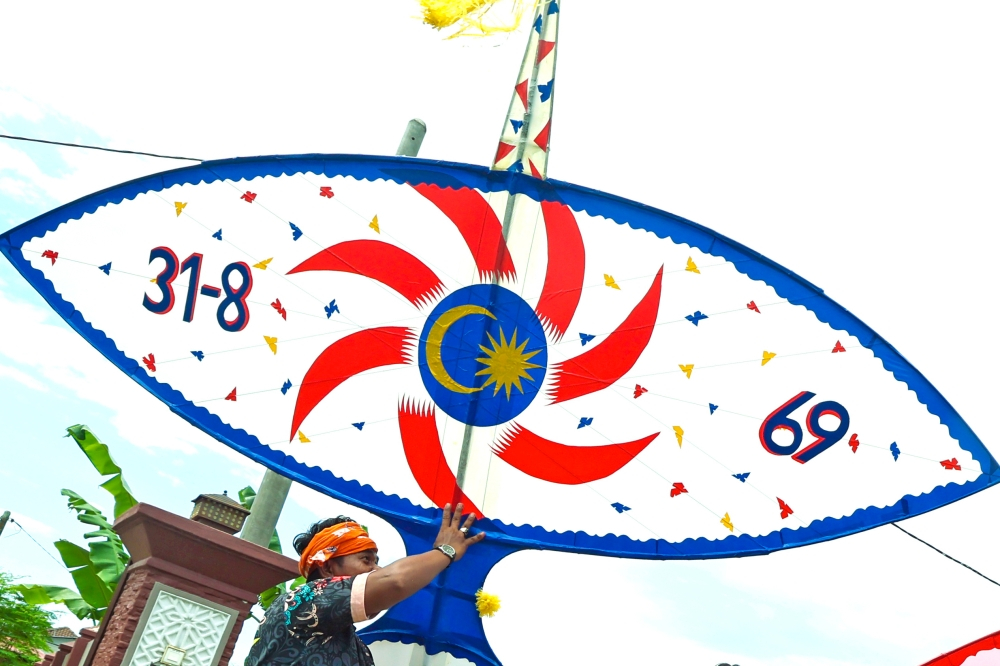


KOTA BHARU, Aug 7 — The artistic heritage of kites, which is the identity of the Kelantan community, will colour the National Day Malaysia Day (Hkhm) celebrations in the state when dozens of mega kites are expected to fill the airspace of Cherang Laut Beach, Kampung Senok in Bachok through the 2026 Merdeka Mega Kite Competition later this month.
Not just a competition to test kite makers' skills in producing large-sized works, the event, which was introduced five years ago, is also a platform to promote traditional art as a medium to ignite the spirit of patriotism and love for the country in conjunction with the National Day celebrations.
Among those who will be participating is Team Sri Bongor, which is competing with two mega kites, namely the moon kite and the cat kite, created by kite maker Mohd Norazizi Mustapha, 45, from Kampung Padang Bongor, Binjai.
Mohd Norazizi said that both kites, measuring between 11 and 12 feet and weighing approximately three kilogrammes, were also decorated with elements of the Jalur Gemilang colours, which took about two weeks to complete before being competed in the event which will be held on August 30 and 31.
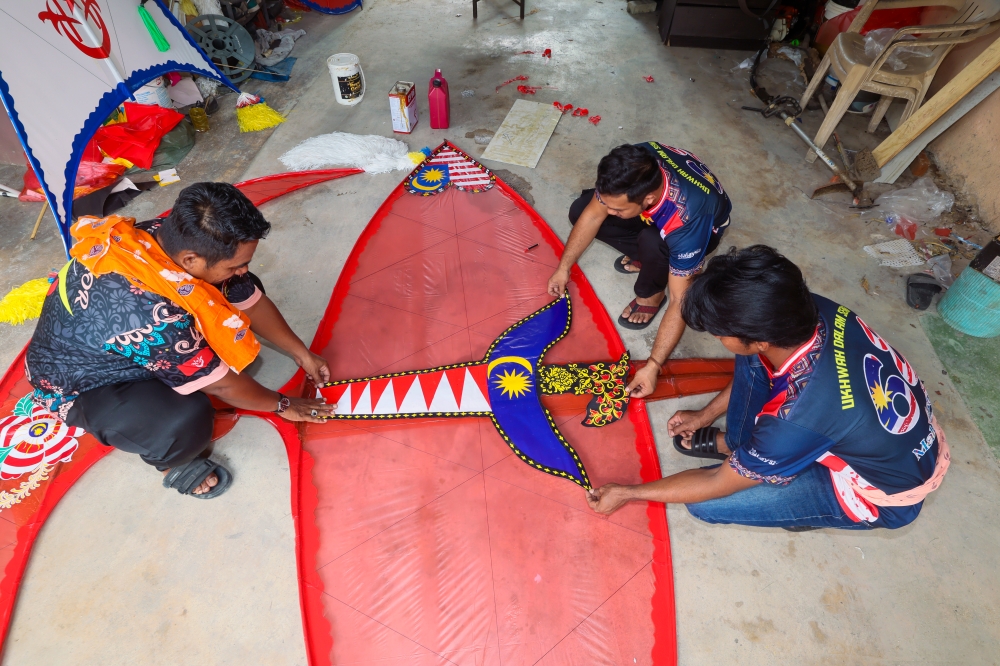
“Every time the Independence month arrives, I will participate in the kite competition. For this year, I will produce a moon kite and a cat kite with the concept of independence as a sign of love for the country, besides wanting to highlight the beauty of Kelantan's traditional kite art which is becoming less known to the younger generation,” he told Bernama recently.
He said the production of the two kites was also assisted by two of his friends, Wan Mohd Syamsul Maariff Mohd Halim, 35, and Muhamad Syahmi Rosdi, 31, at a total cost of about RM500.
According to Mohd Norazizi, producing a mega kite not only requires technical skills but also teamwork, especially during the process of flying it due to its large size
“To fly a mega kite, at least eight individuals are needed. Four people help launch the kite while four others hold the rope to ensure that the kite can be flown stably. When the wind is right and everyone plays their respective roles, only then can the mega kite be able to rise perfectly. That cooperation is very important,” he said.
Reflecting on his involvement in the art of kite making, he said his interest began to blossom when he was in school after watching his friend's father produce various types of kites.
He said his first attempt at producing a moon kite did not turn out as expected, but the failure prompted him to study with his friend for a year to learn the kite-making technique in more depth.
“That's where I learned to start with selecting bamboo, forming the frame, tying it up to decorating the kite so that it was not only beautiful to look at but could fly well,” he said.
Mohd Norazizi said his interest became more serious about five years ago when the mega kite competition was introduced by the local community, thus giving kite makers the opportunity to produce larger, more challenging designs.
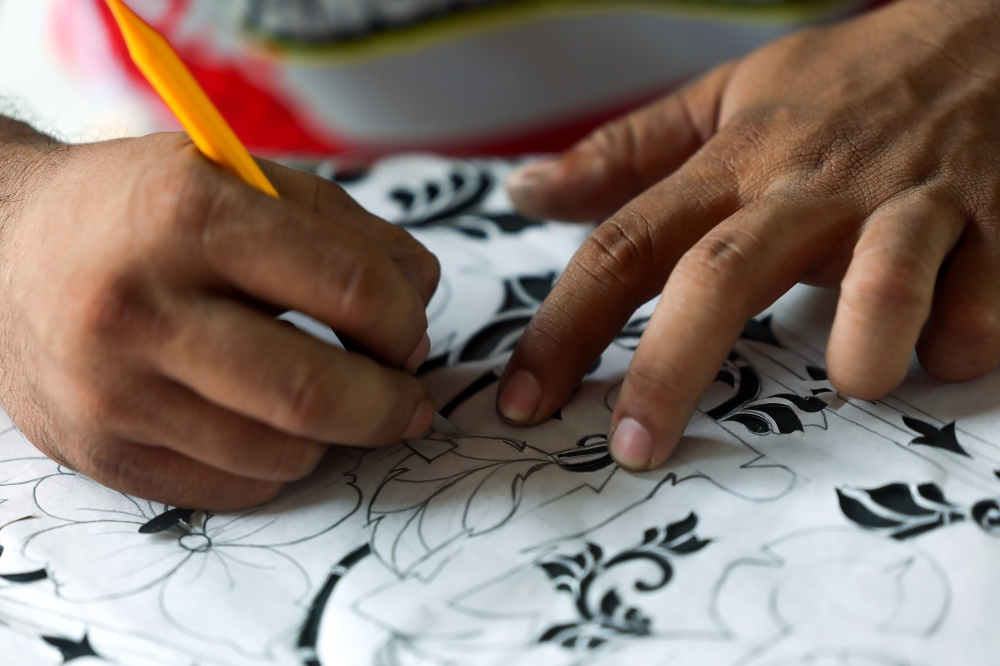
Now, he is skilled in producing about 15 types of kites including the moon kite, cat kite, quail kite, jala budi kite and peacock kite, with the production period depending on the level of complexity of the design.
“It usually takes between a week and two months. The most challenging part is forming the frame because if it is too strong, the wind cannot enter well and the kite will be difficult to fly,” he said.
According to him, the process of making kites begins with selecting old bamboo that is more durable before going through the process of splitting, drying and forming the frame, followed by installing scales, tying it with rope, plastic decorations and equipment such as a jerabu (decorative fringe) and a bow that produces a distinctive sound when the kite is flown.
Mohd Norazizi said the moon kite, quail kite and cat kite were among the Kelantan heritage identities that needed to be preserved so that they would not be lost to time.
He also hoped that more young people would be interested in learning the art of kite making so that the heritage would continue to be preserved and recognised not only in the country but also internationally. — Bernama


