


KUCHING, June 28 — For many families, finding food that is both nutritious and suitable for specific dietary needs can be a daily challenge.
As awareness of gluten intolerance and sugar sensitivity grows across the Asia Pacific region, more consumers are looking for alternatives that feel safer, simpler and better suited to long-term wellbeing.
The regional gluten-free market is projected to reach US$3.2 billion (at present rate, RM13.2 billion) by 2030, with annual growth of between 6.7 per cent and 12.1 per cent.
In Malaysia, that shift also sits alongside a growing public health focus on reducing sugar intake and improving everyday diets.
The National Health and Morbidity Survey 2023 shows that 15.6 per cent of Malaysian adults are living with diabetes, while 54.4 per cent are overweight or obese.
Against that backdrop, familiar staples are starting to look different.
Long known locally as ‘ubi kayu’, cassava has deep roots in Malaysian food culture, including as a survival food and rice substitute during the shortages of World War 2.
Today, it is re-emerging as an allergen-friendly ingredient associated with prebiotics and resistant starches, making it increasingly relevant to conversations around healthier alternatives.
Malaysia’s domestic modified cassava flour (mocaf) segment is valued at around RM14.95 million in baked goods, supported by small-and-medium-enterprise (SME) innovation and growing interest in food security.
Across the region, one response is taking shape in Siak, Riau in Indonesia, where a small enterprise called Telarasa is turning local cassava into healthier food products, while creating more reliable demand for village growers and fishers.
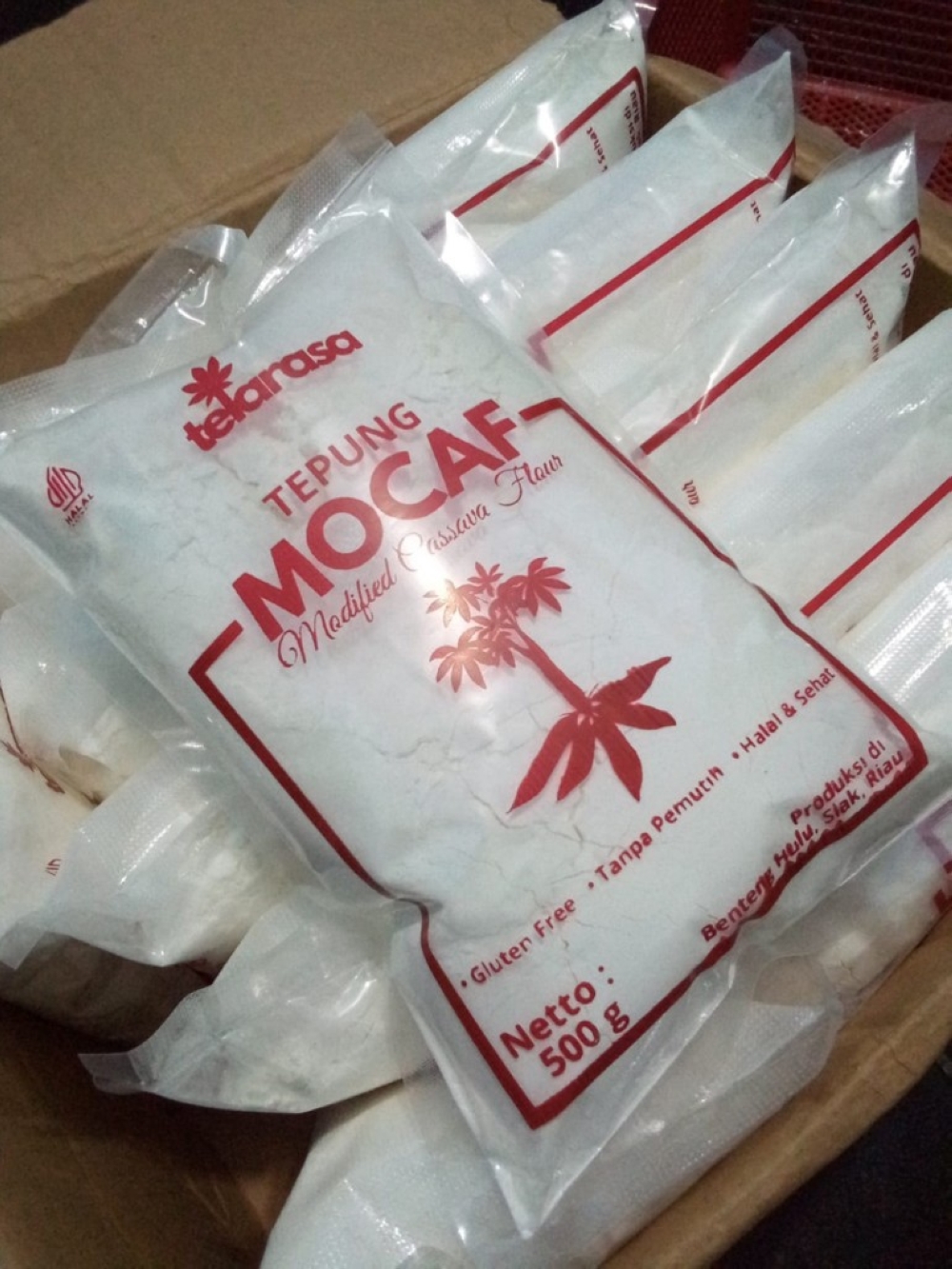
Wibowo Nugroho, 33, did not start Telarasa with a grand business plan.
He established it because his child had severe sensitivities to gluten and sugar, and finding safe food options was difficult.
As he searched for solutions at home, he realised that other parents nearby were facing similar worries, including families caring for children with special needs such as ADHD.
“Initially, this was truly for our own family,” said Wibowo.
“Our child needed safe food, and it turned out many parents nearby shared the same anxiety.”
At the same time, he noticed something else close to home.
Many Siak residents were growing cassava in small home gardens, often without chemical fertilisers or pesticides.
Around 90 per cent of cassava in the area was considered pesticide-free; yet with no clear supply chain, much of it simply stayed in the ground.
“The cassava was planted, but eventually left in the garden,” said Wibowo.
“Residents were confused about where to sell it.”
That gap became the starting point for Telarasa.
What began as small-scale kitchen research gradually grew into cassava nuggets, mocaf flour as a wheat substitute, low-sugar cookies, and ‘lekit lomek’, a product that combines mocaf with ‘lomek’ (Harpodon nehereus), a brackish-water fish species long overlooked because of its high water content.
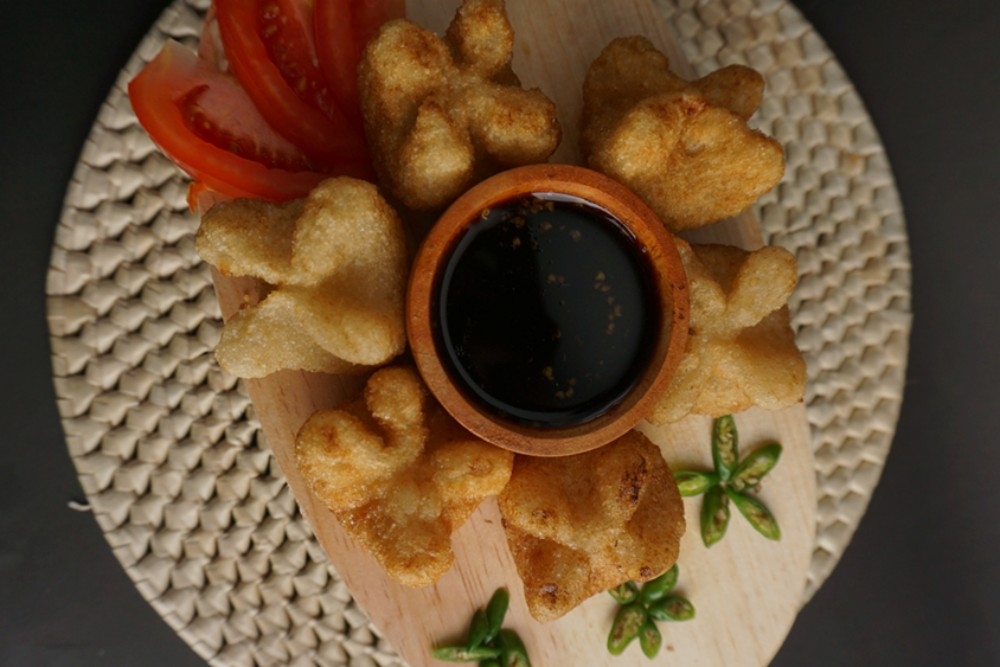
In doing so, Telarasa not only created healthier food options, but also opened up another source of value for local fishers too.
Today, Telarasa absorbs around 200kg to 250kg of cassava per month, with production adjusted gradually to match demand and avoid placing unnecessary strain on growers.
The enterprise entered a new phase after joining Sentra Kreatif Lestari Siak (Skelas) – an incubation programme through the Siak Sustainable Business Incubation (Kubisa) and the Siak Innovation Challenge.
Over six months, the business received guidance on food safety, packaging, finance and marketing, along with access to wider business networks.
One outcome was a growing connection with healthy food communities such as Dapur Mempura, which now uses Telarasa’s mocaf to make Siak’s signature ‘Bolu Komojo’.
The incubation has also helped sharpen Telarasa’s zero-waste approach.
Cassava peels and cores are composted, young leaves are sold or eaten, older leaves become animal feed, and leftover flour residue is used as chicken feed.
What might once have been discarded now goes back into the local cycle.
For Cerli Febri Ramadani, a representative from Skelas, this is where the business becomes bigger than the product itself.
“A business like this proves that economic recovery can go hand-in-hand with environmental restoration and the strengthening of local communities.”
That change is beginning to show in financial terms too.
Monthly income, once below one million rupiah (about RM230), has risen to around 1.5 million to two million rupiah (RM348-RM465) in the last two months.
The impact is also felt beyond Telarasa. Local cassava growers now have a more stable buyer, while demand for lomek-based products is creating new opportunities for fishers and partner kitchens.
For Wibowo, though, the bigger goal remains simple – for the business to grow, absorb more cassava and local seafood, create jobs, and remain committed to health and the environment.
“If those things can walk together, it means we are on the right track.”
In Siak, cassava is no longer just a humble crop or a memory of hard times.
Through Telarasa, it is becoming something more hopeful: a healthier food option, a source of local income, and proof that small family concerns can sometimes grow into benefits for the wider community as well.
Skelas is a place as well as a forum for creative young people to express ideas to explore the superior potential of Siak Regency while maintaining its natural sustainability.
Currently, it has guided 26 businesses from various sectors such as fashion, culinary businesses and education services.
It continues to operate to support the vision of a ‘Green Siak’ in achieving the target of 1,000 micro-SMEs per year, and increasing creative economy businesses as part of the Regional Development Performance Indicator plan for the Siak Regency government. — The Borneo Post
* This article is in connection with World Cassava Day, observed annually on June 28.


