


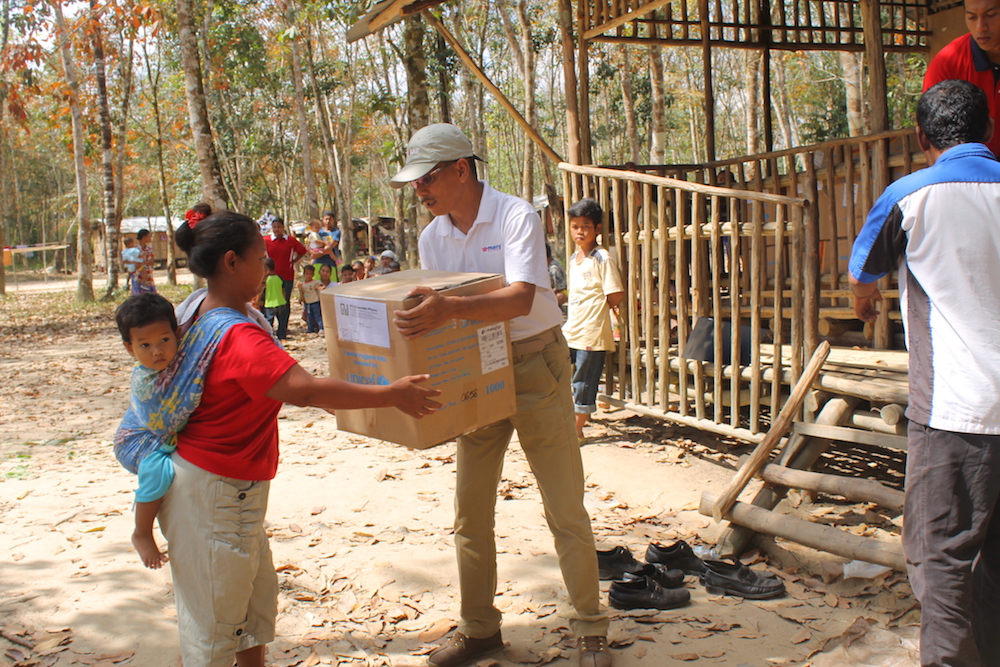
KUALA LUMPUR, Sept 29 — The barely hopeful faces of refugee children who were selling packets of tissue paper in a Syria-Turkey border town have left a searing memory for even experienced volunteers.
“It is always the children that truly tug at your heart. The memories of them stay with you long after,” said Mercy Malaysia president Datuk Dr Ahmad Faizal Mohd Perdaus.
As the relief organisation heads into its 20th year in 2019, Mercy continues to face challenges in raising funds and getting more Malaysians to understand the complexity of humanitarian work.
The organisation depends on donation, particularly from the corporate sector, and from the general public, government, philanthropic organisations or individuals, and institutional funding.
“Funding is always a challenge for humanitarian organisations such as Mercy. Economy affects us greatly. When times are bad, donations shrink.
“Some donate in response to certain disasters. Donations will shoot up in the first week or so of a disaster or an escalated armed conflict. However, it drops drastically over time,” said Dr Ahmad Faizal.
And this closely relates to the lack of understanding of humanitarian work.
He said many donors are quickly taken up with emergency responses but funding for mitigation and risk reduction projects are as important.
There are exceptions
One being the Indian Ocean tsunami in 2004, and another was Kelantan’s great floods in late 2014.
These two events saw sustained support and funding.
Mercy has a response protocol in place since its first mission in 1999.
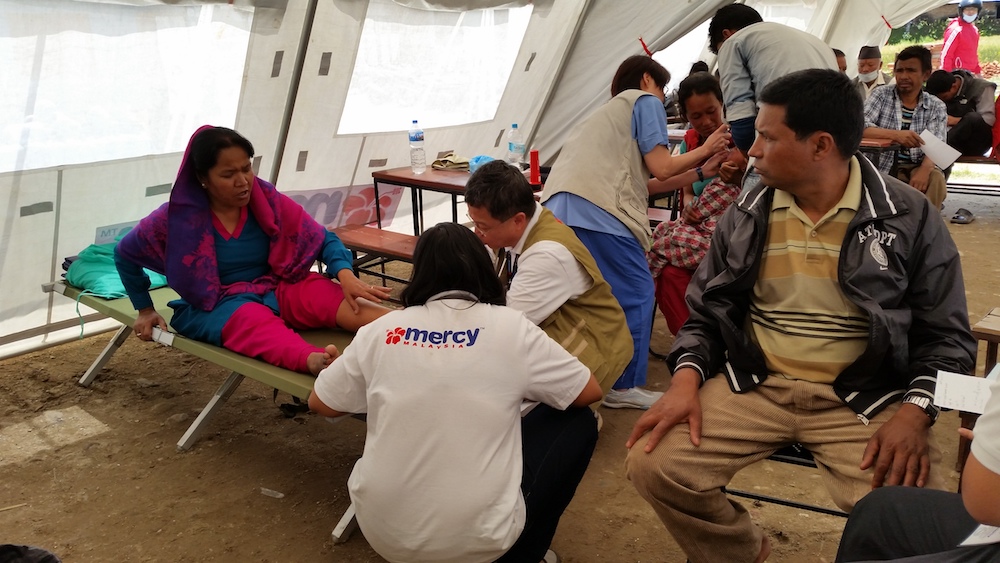
“Malaysia is our highest priority, then the Asean region before we look at Asia, Middle East, the eastern African seaboard and south eastern Europe (Bosnian conflict, for example).
“We will also evaluate if our field ops in areas of health, water sanitation and building shelters are needed. Thorough evaluation before we send our ops team is crucial,” he said.
Currently, Mercy has teams in Laos, Kerala in India and Indonesia’s Lombok. Locally, its field ops team were in Likas, Sabah where more than 100 houses were destroyed in a fire in late June.
At least 6,000 people in Laos were evacuated due to flash floods caused by the collapse of a hydropower dam in July where some are stuck in areas laden with landmines.
Meanwhile, July saw people in Kerala fleeing their homes after severe floods, which some called the worst in nearly a century. Some one million people remain displaced.
Lombok island was affected by a series of earthquakes in July and August, resulting in hundreds of thousands to abandon their homes.
And just two weeks ago local authorities declared a health emergency as residents were hit with malaria.
Where do your donations go?
In its 2017 report, some 63 per cent go to health and medical-related missions.
This could include emergency medical relief, psychosocial intervention and humanitarian relief and recovery.
Meanwhile, disaster preparedness and water sanitation take up 15 per cent and 14 per cent.
The disaster preparedness, prevention and mitigation programmes help educate communities to reduce future damage caused by disasters.
Water sanitation and hygiene projects provide publicly accessible safe and free water for consumption when areas are affected by contaminated water.
The rest of the funding allocation goes to food relief and building shelters.
What does it take to be a volunteer?
Mercy’s volunteer corp has approximately 5,000 registered members. Most likely, new volunteers are not immediately sent out to field.
More often than not, massive manpower is required at the warehouses to pack supplies, do inventory checks, and prepare necessities for the field teams to bring over to the affected areas.
“Each volunteer is equally important. Without those who are at the warehouses, we cannot deploy our field ops in a timely manner,” said Dr Ahmad Faizal.
The volunteers are trained and briefed before each task, especially when they are needed in the field.
They are often accompanied by trained staff members as well. Mercy also secures insurance for people they sent to missions.
For example, over the one year, some 150 volunteers were sent on missions to aid the Rohingya refugees in Cox’s Bazar, Bangladesh.
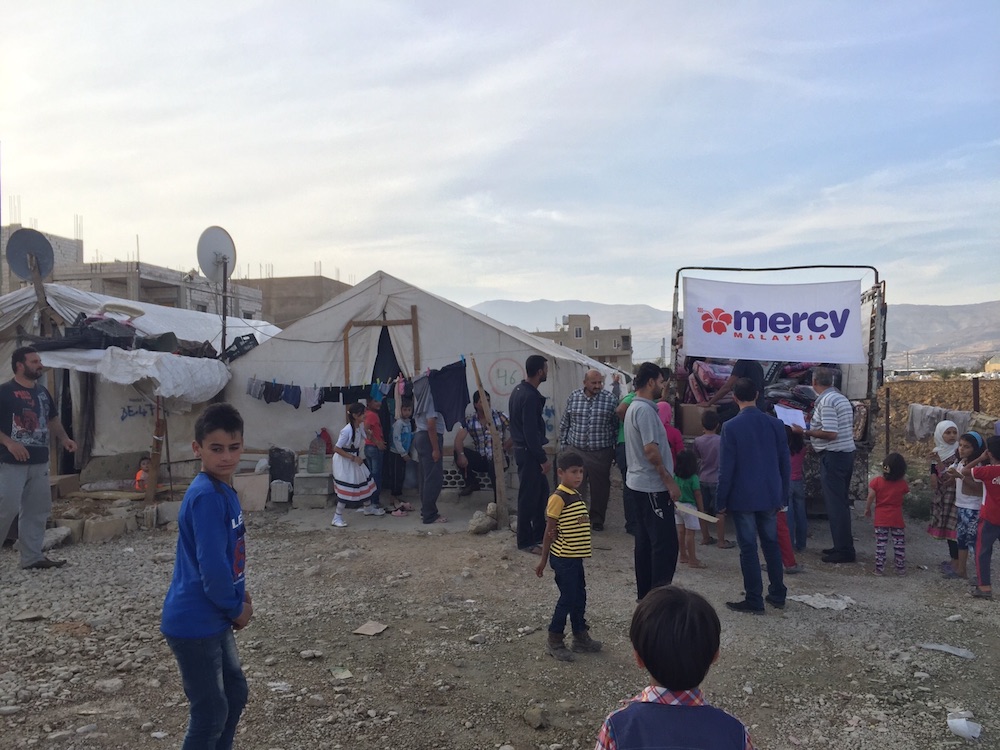
The refugee camps house almost a million refugees, with an estimated 60 per cent comprising children, and 4 per cent falling under children who are unescorted or separated from their caregivers.
When they return, there are briefings to sit through as well.
The preparedness training helps the volunteers to know their duties as well as cope with what they might have witnessed.
“We are extremely cautious when sending our teams to armed conflict areas. Wars often stretched over many years and the needs of the local communities there differ from time to time.
“Mercy also works with partners such as the United Nations, Asean, local authorities and communities to pinpoint what are the most pressing needs in those conflict areas.”
Full-time support is provided by 45 to 55 staff members at its new headquarters in Oval Damansara.
“Having a career in social work is still a new concept in Malaysia. Though I won’t say you will be rich working for an NGO. In fact, those who help us raise funds have a tougher job than most.
“Even I’m not Mercy president full-time, the same goes for the exco members and those in senior positions.”
Not that Dr Ahmad Faizal does not want to, but it is to reduce financial strain on Mercy. He has a day job as a respiratory specialist at a private hospital.
“It wasn’t quite as dramatic as you put it. It built up slowly as I joined some Mercy missions. I felt it was important to help advocate for the organisation.
“Instead of taking away from my day job, I think I have become more efficient thanks to my role at Mercy. No time is wasted.”
As Mercy heads to its 20th year in operation, Dr Ahmad Faizal hopes to see more Malaysians embrace humanitarian work and humanity in general.
“We need to build better people and have more space for civil societies.”


