


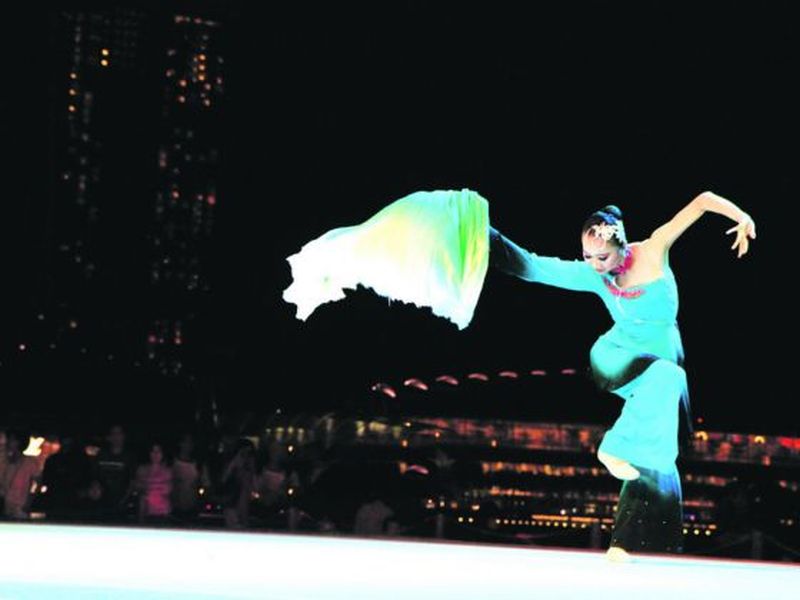


SINGAPORE, April 30 — The celebration of Singapore’s heritage may be the central focus of the annual Singapore HeritageFest (SHF), which kicked off last night at the National Museum. However, there is a slight twist: More Singaporeans, particularly the young, are taking the initiative and getting involved with the events this year. For example, there are 13 student-led programmes this year, compared to five last year.
These include students from Dunman High School, who will conduct a tour around the Dakota Crescent; while River Valley High School is organising food trails around Changi Road and Jurong West; even as students from the Nanyang Academy of Fine Arts stage theatre performances to present their take on Singapore’s multicultural roots.
Over at the National Museum this weekend, young hawkers will be providing sustenance in the form of laksa, prata and popiah, among other dishes. While young musicians such as SA, the Yong Siew Toh Conservatory, The Voodoo Sound, The Pinholes and Inch Chua will be providing not just a glimpse into Singapore’s music heritage but also a sample of what tomorrow’s heritage would sound like.
“It is heartening that the youths in Singapore have been taking on increasingly active roles in promoting our country’s shared heritage,” said festival director Angelita Teo.
However, it’s not only at the SHF where you can see the youth taking up the baton to keep the flames of Singapore’s heritage alive. Despite the perception that traditional arts is old-fashioned — a group of young trailblazers are determined to hone their craft in the traditional arts. And they hope, their actions will help continue these art forms for future generations.
Dance moves
Take teenager Lim Jia Yi. Three years ago, the odds were stacked against her in her pursuit to be a traditional Chinese dancer.
The 19-year-old, who was then in Dunman High, wanted to drop out of its Integrated Programme to pursue traditional Chinese dance as a career but her parents wanted her to be an engineer or a doctor. Her interest started when she took it on as a co-curricular activity in school.
She was 14 when she decided that Chinese dance was what she really wanted to do. “I was having ballet class (at NAFA School of Young Talents), when I found myself peeking through the window to watch a Chinese dance class, instead of concentrating on my class. That was when I realised I like Chinese dance more than ballet.”
But she had hurdles to overcome. She would quarrel with her parents every time she raised the issue. Friends too, were against her decision.
“They (asked why I wanted to) give up my studies for dance, where the road is uncertain and it doesn’t make as much money,” Lim said, adding that after they saw she was persistent, they accepted it and even encouraged her.
Still, Lim was at a crossroads. After she graduated from Dunman High, her parents did not have enough money to send her overseas for training so she went to Temasek Junior College instead. However, she quit after three months as it didn’t feel right to her. Out of desperation, she wrote to more than 40 organisations asking for sponsorship to fund her diploma course in dance at a vocational school in Beijing.
Her persistence paid off: In mid-2014, she accepted the scholarship offered by Sheng Hong Arts Institute. This year, she completed the 1.5-year-long diploma course and auditioned for the prestigious Beijing Dance Academy, where she was accepted. She will be studying Chinese ethnic dance there from September — a four-year-long undergraduate programme.
Lim is one of many young Singaporeans here who are breathing new life into traditional arts, choosing to eschew typical routes and embrace the country’s heritage and culture.
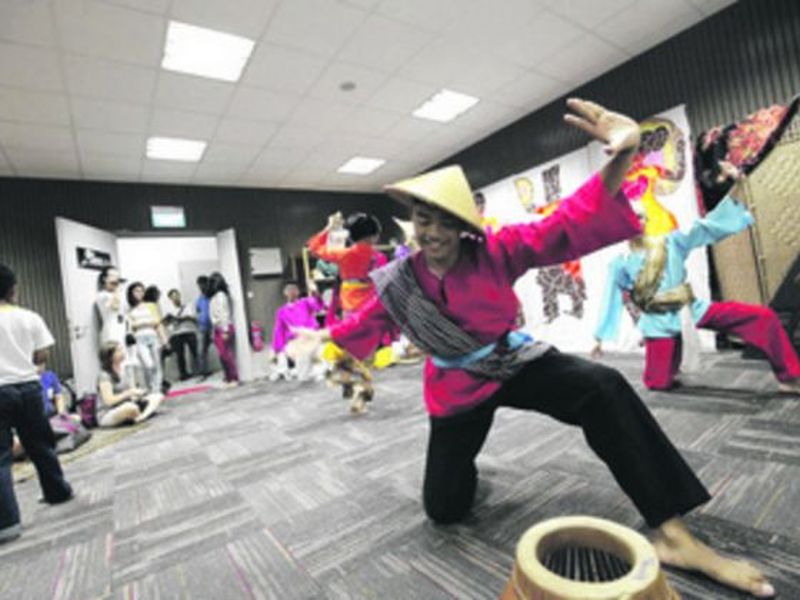
Like Lim, Muhammad Faiz Hairul Anuar got into dance — in his case, Malay traditional dance with DIAN Dancers Singapore — while he was still in school. “I was first introduced to (the group) by my dance instructor in polytechnic, Mr Amin Farid, who is one of the co-founders of the group,” he said. “From then on, I was keen to explore more about Malay traditional arts.”
The 20-year-old said the rich history of traditional Malay arts also spurred his interest. “There are many different facets of the traditional Malay arts industry and it is an opportunity for me to discover and learn different aspects of my own culture and heritage.”
While he admitted that it was challenging to be a practitioner (“traditional art forms do require precise execution of different styles and forms, which can be difficult to achieve without proper training,” he said), it was equally challenging dealing with those who didn’t understand why he wanted to do it.
“We have the challenge of changing the public’s perception of traditional art forms and breaking our stereotypes,” he said.
“I do encourage my peers to attend performances organised by my group in order to cultivate a sense of cultural appreciation in them.”
He added: “Traditional art forms do have different and extensive histories, (but they) are still relevant in today’s society. They give us insight into our own culture’s history and how our traditions have shaped the landscape of Singapore today. Conservation of traditional art forms is extremely important, not just for me as an individual, but for a society to be aware of its culture and heritage.”
Setting the stage alight
Another budding artiste is Tan Wei Tian. The Nanyang Girls High student, who turns 13 this October, started training in Teochew opera when she was three, after her maternal grandparents took her to watch live opera performances.
“I was mesmerised by the colourful costumes and intricate hair-dos. My mum sensed that I was interested in opera and decided to get me a teacher to train me,” said Tan.
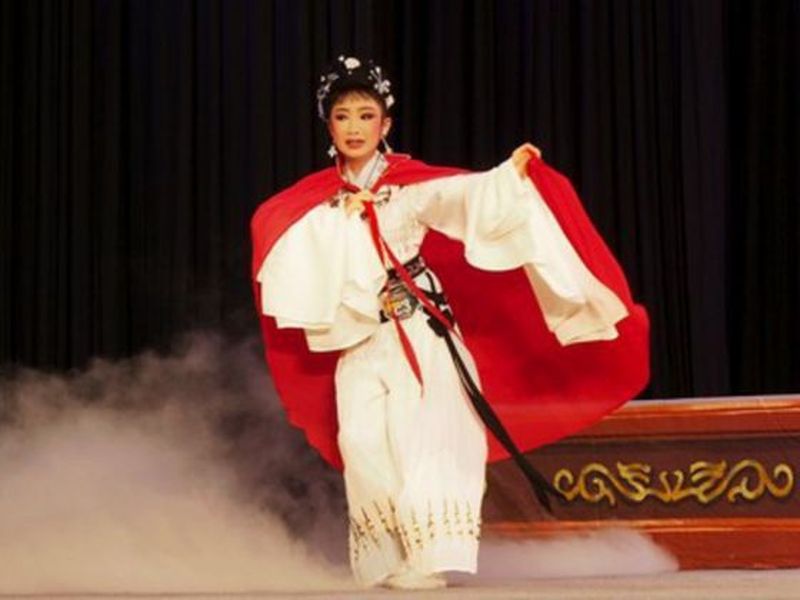
While she is fluent in Teochew, she had difficulties understanding the emotions of the character at such a young age, she said. Tan also had to train her voice and learn how to do the actions for the different roles, added the Nam Hwa Opera member.
Juggling her passion and school work was not easy but she made inroads. She won second place in the open category of the Voice of Teochew competition last year. Last month, she won the “New Sprouts” award from the Chinese Opera Institute, which recognised her as a promising young performer in Chinese opera.
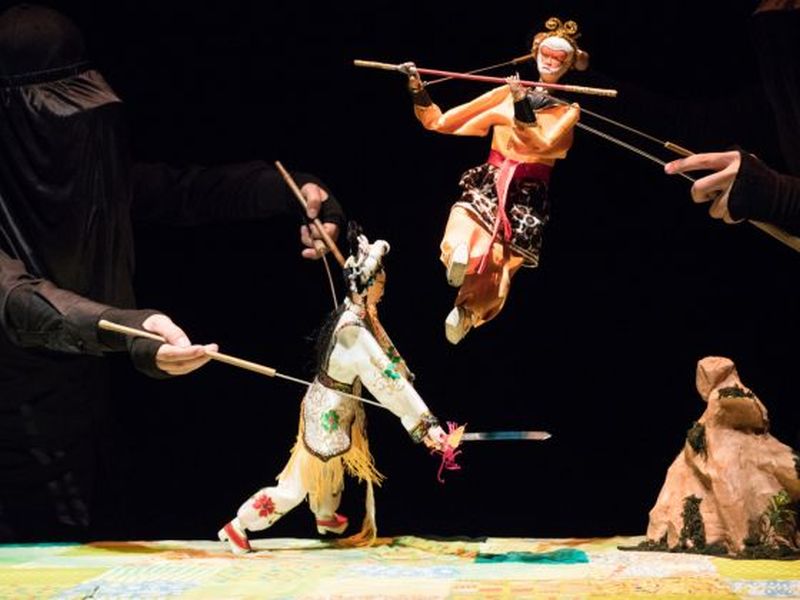
Similarly, puppeteer Ang Cheng Yan from Paper Monkey Theatre (which has a show on tonight called Journey To The West: Web Of Deceit as part of the SHF) said her interest in puppetry began when she was much younger, when, as an only child, she used to entertain herself by playing with soft toys. “I think a lot of my interest in puppetry comes from playing with toys and making them come alive.”
The 28-year-old was invited by Paper Monkey’s artistic director Benjamin Ho to work on a show while she was studying for her diploma in theatre. She found her first experience in Paper Monkey intriguing, and after a few more projects, she joined the theatre company full-time.
The process wasn’t easy. She spent one month training to master the art of manipulating the puppets, which consisted of repeating each action over and over such that her hands and body ached.
“The initial stages of training were very frustrating when I still couldn’t get the hang of the puppet, and it wasn’t moving the way I wanted it to,” she said. “I wouldn’t consider myself to be adept at it yet — that would take years of training.”
Still, it wasn’t physical ailments that challenged her the most. “The biggest challenge was convincing myself that I could do this for a living, and that I am not worse-off than my peers who have ‘proper jobs’ and a steady income, which is a common perception of ‘success’,” she pointed out.

Meanwhile, a couple of young musicians are hoping to pique the public’s interest with their unique ways of playing traditional Chinese instruments. The duo, MUSA, comes up with fresh arrangements of popular Western hits, their own originals, as well as arrangements of Chinese classical pieces to show the versatility of the traditional instruments.
“We believe in retaining the roots of Chinese traditional music but yet exploring new sounds that represent our own distinctive ‘voices’,” said Sophy Tan Su-Hui, 25, the band’s Guzheng player. Her other group mate is Dayn Ng Chee Yao, 27, who composes and arranges the tunes.
“We should learn to adapt ... and not insist on the traditional ways if it is not reaching out to the audience efficiently,” she noted.
What’s important, Su-Hui said, is to make people aware of the instruments and then to learn to appreciate the sound and understand its tradition. “Fusion music is a more efficient way of getting the audience to pause and listen,” she said.
However, it is important to strike a balance between fusion and classical (sounds), she added, and “not to forget that the ultimate aim is to slowly ‘teach’ the audience to appreciate and love the classical side of the traditional instrument”.
Traditions for the future
These young enthusiasts are precisely the target group that the Government, which has been accelerating efforts to promote traditional arts, particularly to a younger audience, is trying to reach. With traditional art forms “somewhat of a dying trade”, Ang said it is crucial to preserve and promote them now. “With no successors, what happens when these performers get too old to perform?”
However, an audience is also required to make the art forms thrive, added Ang. “If we have people who want to learn the art form, and are willing to put in the time and effort to learn them, and another group of people who are interested in watching these performances, that’s when the art gets passed down to the next generation.”
“Awareness of traditional art forms helps youths to build a strong sense of identity in our multicultural society and helps the young to feel more connected with their roots,” said Muhammad Faiz.
While he feels that the traditional arts industry is growing, thanks to greater support and funding, as well as the creation of more avenues for traditional artistes to organise programmes, he said there is still room to grow. “I personally feel that one of the greatest obstacles … is presenting quality cultural performances to the masses; while trying to raise greater awareness and inculcate a sense of appreciation of traditional art forms.”
Lim hopes that her participation in Chinese dance can help “influence and open people’s perceptions”. Her friends have become more curious and interested in what she does, she said.
“There is a variety and a diversity (in Chinese dance) that is so vibrant,” she said, citing how having various dance forms — from Chinese classical dance to Mongolian or Tibetan dance — means it can never get boring. “It is up to us (practitioners) to help our peers who are not into traditional arts know more about this culture.”
Agreeing, Tan said: “Opera will never get old if it is continued among generations.”
Added Ang: “ I hope that in the near future, going to the theatre will be as common as watching movies, and that we can create a unique Singaporean theatre culture.”
The Singapore HeritageFest runs until May 15. For more details, visit http://heritagefest.sg/. — TODAY


