


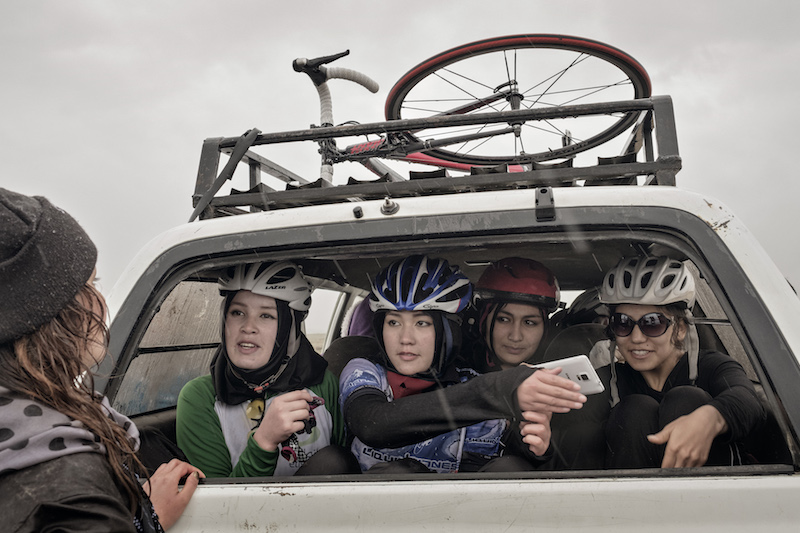


KABUL, April 27 — Women’s sports programmes in Afghanistan, long a favourite of Western donors, have all but collapsed.
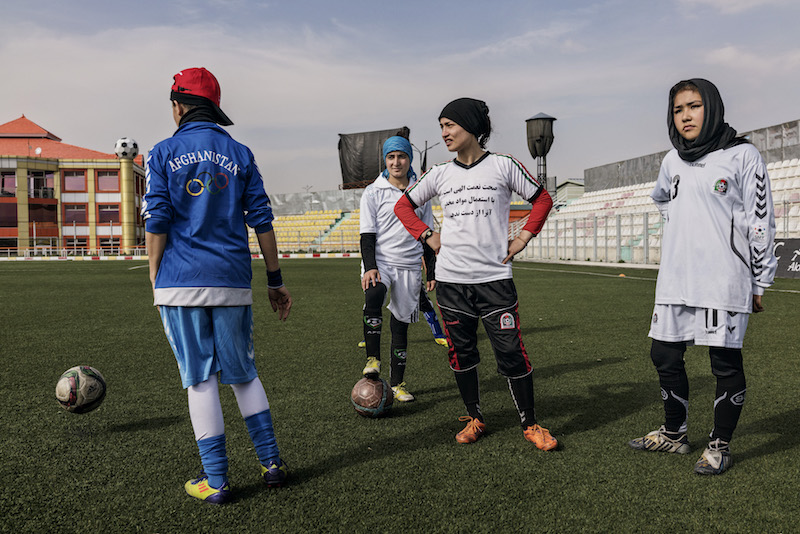
Some consist of little more than a young woman with a business card and a desk, as one insider described the women’s version of cricket, Afghanistan’s most popular game. Others, like women’s football, have managed to field a few teams for practices and training sessions but have not played an international match in years.
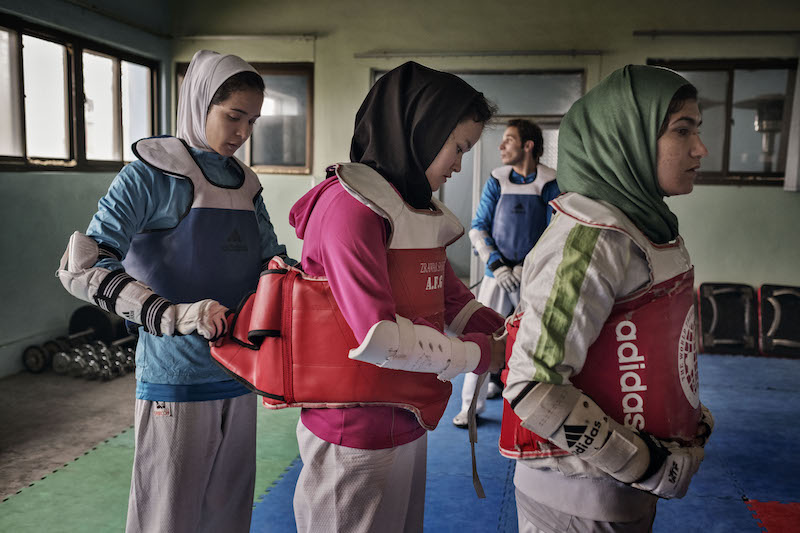
Even the relatively few encouraging stories, like women’s taekwondo, one of the sports that may see an Afghan woman sent to the 2016 Olympics in Rio de Janeiro, are at best qualified successes. Afghanistan’s strongest hope for a female taekwondo medallist, Somaya Ghulami, 23, actually lives in Iran and commutes to practice sessions here. She said she would never be able to compete if she had to live in her own country.
It is a conspicuous failure for Western efforts to improve the lives of Afghan women. With few exceptions, the sports programmes have become riddled with corruption and been undermined by conservative Afghans who have never liked the idea of young women on sports fields.
One of the main supporters of women’s sports in Afghanistan is the US government, which spends US$1.5 million (RM5.9 million) a year on coeducational sports programmes — not counting a US$450,000 cricket grant that officials took back when they realised no women’s cricket was being played. US officials, however, declined to discuss women’s sports on the record.
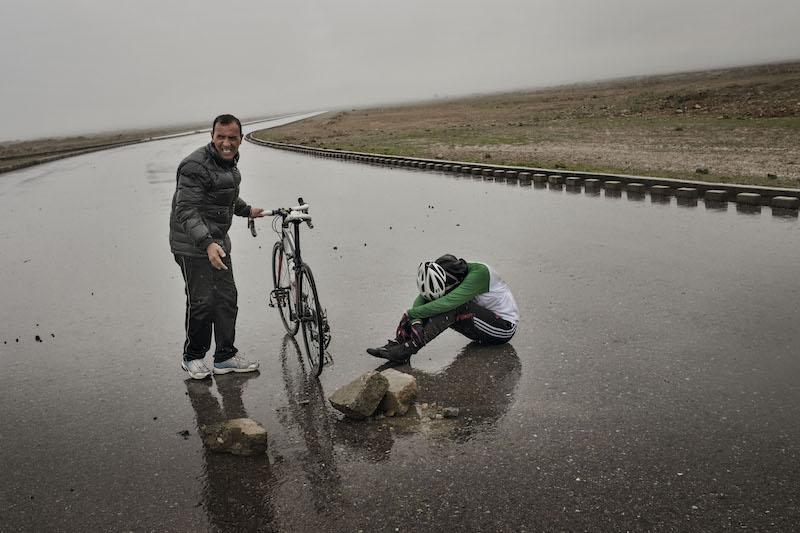
While all women’s sports here are suffering, none have failed quite as spectacularly as the women’s national cycling team. Celebrated in documentaries, and the subject of a 2014 book and a blizzard of news articles, the team was recently nominated for this year’s Nobel Peace Prize — thanks to the tireless promotion of its benefactor, Shannon Galpin, who financed the team through her Colorado-based charity, Mountain to Mountain.
However, Galpin announced on her Web page last month that she would no longer support the Afghan Cycling Federation because of what she described as “out of control” corruption by the team’s longtime coach and the head of the federation, Haji Abdul Sediq Seddiqi.
Galpin was upset that sponsors’ gifts, including more than 40 bicycles and other racing gear, valued at more than US$100,000, were stolen after being handed over by her organisation to the team and Seddiqi.
Seddiqi was recently dismissed from his post as both coach and head of the federation by the president of the Afghanistan National Olympic Committee, Mohammad Zaher Aghbar, who cited something besides corruption. He claimed that Seddiqi had successively married and divorced three of the young women on his team.
“He has married three of them — three times — and the girls were all complaining about him,” Aghbar said.
In an interview, Seddiqi denied the corruption charges, claimed Galpin’s organisation was still financing the cycling federation and called the accusations against him “a lot of made-up crap.” Seddiqi, 62, acknowledged that he had three prior divorces and was now married to a 25-year-old woman, but denied that his current or past wives were ever team members.
One national cycling champion (Seddiqi also controlled the men’s team), Hashmat Barakzai, who recently fled to Germany to claim asylum, said that “Seddiqi used the women’s team as his personal piggy bank and love playground.”
Corruption in other women’s sports might not be quite as brazen, but it remains a huge problem. Diana Barakzai, who played for Afghanistan’s women’s cricket team when it was actually functioning, in 2009, said she was approached recently by the Afghanistan Cricket Board about heading up a women’s team.
“They told me they already made a deal with someone to pay them US$180,000 for the job, but if you’re willing to pay US$200,000 you can have it,” she said, adding that she turned the offer down.
Diana Barakzai, who is not related to Hashmat Barakzai, said she was surprised by the demand, since she assumed there was no money to be made in women’s cricket. Besides, the national team had not competed — or even practised — in at least three years.
But it turned out that the US Embassy had awarded a grant of US$450,000 last summer to promote women’s cricket and had sent it to Lapis Communications, a private organisation, to administer. Those funds have now been returned to the US Embassy, said a Lapis official, Sarah-Jean Cunningham.
“This programme did not get the traction it needed to justify pushing forward,” she said.
Shafiq Stanikzai, the chief executive officer of the Afghanistan Cricket Board, denied Diana Barakzai’s accusations.
“That’s totally a false claim that she made and a very stupid one,” he said.
Stanikzai said that there was a national women’s cricket programme but that it was operating in secret.
“We are not publicising that due to certain limitations,” he said. “The national team is functioning but at a very basic level, as they are not good enough to compete at an international level.”
But Peter Anderson, an Australian cricket coach who was brought to Afghanistan several years ago to train its women’s cricket team, said the cricket board was so against women participating that it had dismantled what women’s team there was. He said he quit after being shunted to coaching the disabled team.
Tuba Sangar is the current head of women’s cricket — the person Anderson described as “a girl in an office with a business card.” When contacted, she said she was not allowed to comment.
Robina Jalali was on the first women’s team to compete in 2004 in the Olympics for Afghanistan after the Taliban were toppled. A runner, she was one of two at the 2004 Games. Now the head of women’s sports at the National Olympic Committee, she says that even the foreign embassies are no longer paying much attention.
“The main problem is the growing insecurity we have; secondly, violence against women, which is growing. Women are not feeling safe to train,” she said. “Now we see the youth are just running away from the country, which has changed the mentality of the embassies,” she continued. “They feel they can’t give a girl a visa to compete because she’s not going to come back.”
But the women’s football team, often held up as an example of success, has not played internationally since 2014. There are plans to do so sometime this year, yet neither the date nor the country where it will take place has been set, said Khatool Shahzad, an official with the football federation. — The New York Times


