



KUALA LUMPUR, April 9 ― It is a tale told largely in Chinese dialects and snippets of Malay and English, but “The Journey’s” path to becoming Malaysia’s highest-grossing movie ever has some believing it has transcended Malaysia’s social barriers.
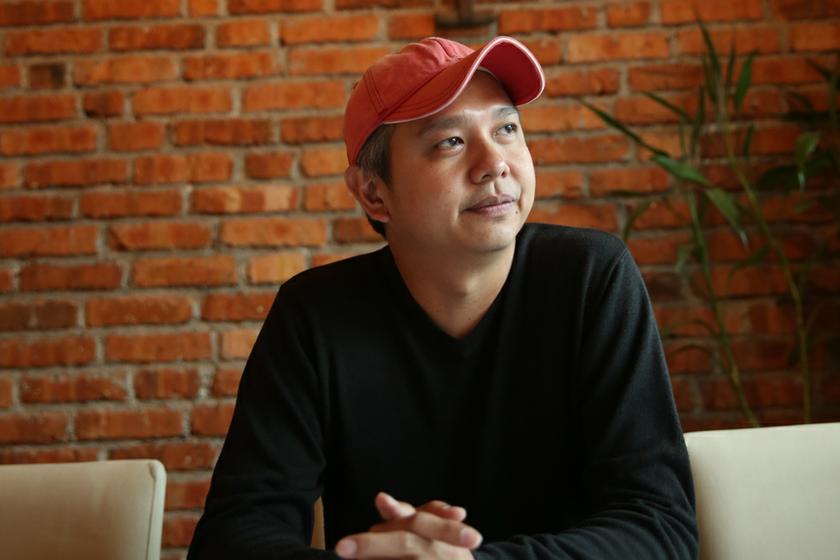
At a recent interview with The Malay Mail Online, “The Journey” director Chiu Keng Guan said that the movie’s success showed hope for Malaysian films to break through the silos that are encasing the various races.
“It used to be that the Chinese would watch Chinese-language movies, the Malays with Malay-language movies, and the Indians with their own,” the 42-year-old said.
The movie’s main plot revolves around an elderly father, Uncle Chuan, and his future son-in-law, Benji, embarking on a trip throughout Malaysia to deliver wedding invitations to the former’s childhood friends by hand.
“The Journey” features various languages, including English, Malay, Mandarin, and other Chinese dialects like Cantonese, Hokkien and Hakka.
Alternating between sadness and hilarity, the jokes in Mandarin, Malay and Hokkien made different people laugh, depending on their understanding of the dialect.
The poignant scene of Uncle Chuan cooking “mee suah” (noodle soup dish) for his daughter, and then finding out that his daughter could not make it for their Chinese birthday celebration, would make others cry.
The family theme in “The Journey” is also found in Chiu’s previous projects ― “Woohoo!” in 2010 and “Great Day” in 2011.
“The things that touch people may be little things such as family. One family has conflict and the others do not have it. Then, you enter a Malay family and see how it is like,” he said.
Chiu added that such family situations reflect reality and are easily relatable to the audience.
As for the character Benji, Chiu wanted an actor who had a genuine, novel reaction towards the local culture and languages.
“If I choose a white person who lives in Malaysia, they understand our Mandarin well. A person who has little to no knowledge would inspire genuine reactions and convey the conflict well,” he said.
“So when he came, I asked him ‘what if your girlfriend wants to marry and deliver invitations by hand’, and he asked back, ‘why can’t we use email?’” Chiu added, referring to Australian stage actor Ben Pfeiffer (Benji), who had never visited Malaysia before “The Journey”.
First-time local actors Frankie Lee and Joanne Yew play the lead role, Uncle Chuan, and Bee, respectively.
At a joint interview together with Chiu, Ryon Lee and Chan spoke to The Malay Mail Online about the script that featured various languages, including a little Mandarin that is spoken by a Malay character.
“It depends on both me and her (Chan). If she knows a little more Cantonese, she will add it inside the script. But both of us are not fluent in English,” Ryon Lee, 41, said.
He added that if they included English in the script, it may clash with Pfeiffer’s understanding of the language.
“People who are fluent in English may look at it a different way,” Ryon Lee said.
Chan explained that Malaysian English was mixed with local dialects and words, so it may differ from Pfeiffer’s English.
“So, we wrote the script entirely in Chinese and let him translate and interpret it in his own way,” the 32-year-old said.
In a separate interview with The Malay Mail Online, Pfeiffer said that when he used Google Translate to translate the script, it produced a “very weird” translation that forced him to make his own translations.
Both Ryon Lee and Chan also shared their experience working with Chiu, whom they described as “demanding”.
“If the script does not make him laugh, or the meaning is lost on him, he will ask to revise the entire script,” Ryon Lee said.
Chan said working with Chiu required a lot of time and energy.
“He gave constant feedback and instructions. And it will come during late nights as well!,” she said, adding that the director gave them tight deadlines.
Although his next project has not taken off yet, Chiu would like to make films based on the 70s to 80s period in Malaysia.
“My view on filmmaking is that of a storyteller. I want to touch people with my stories,” he said.


