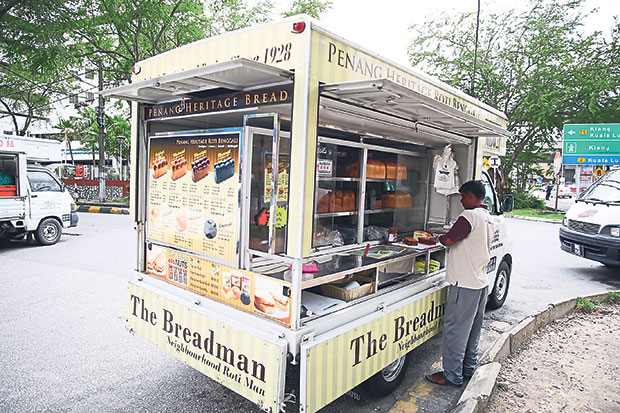
PETALING JAYA, May 3 — Have you seen The Breadman trucks all around the Klang Valley selling loaves of roti benggali? Originally from Penang, this old-fashioned bread with its iconic crusty top and soft fluffy crumb was a staple in old coffee shops for breakfast.
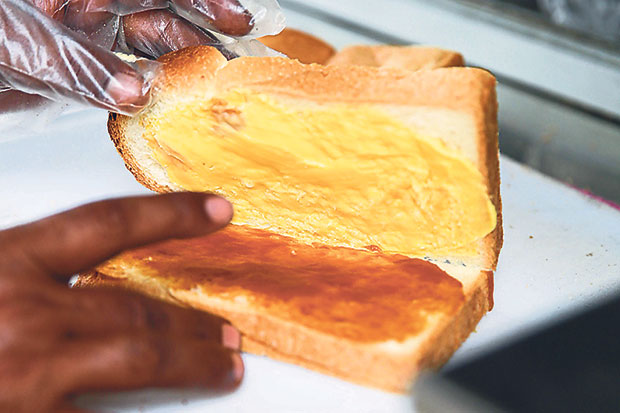
Usually toasted or steamed, it’s slathered with butter and kaya. Purists will dunk pieces of the bread into their cup of thick black coffee to savour it.
The Indians are also fond of eating the bread with leftover fish curry for a quick and easy breakfast, or even lunch. For the Malays, they like to pair the bread with the fortifying sup tulang or a broth made with boiling chicken and mutton bones.
Roti benggali can trace its heritage back to 1928, when the recipe for the bread was invented in India. In 1932, the British Malaya bakery was founded in Penang by the local Indian Muslim community which originally came from Madras, India.
In 1946, the shop was renamed as the Japanese who were occupying Malaya at that time, did not like its name. It became known as Ismalia Bakery, and was run by a group of shareholders, known as Paggalis, but it closed down about a decade ago.
In 2007, Maliia Bakery was started by the third generation of the same Paggalis who once ran Ismalia Bakery. The roti benggali moniker comes from Paggalis, or Punjabi for shareholders.
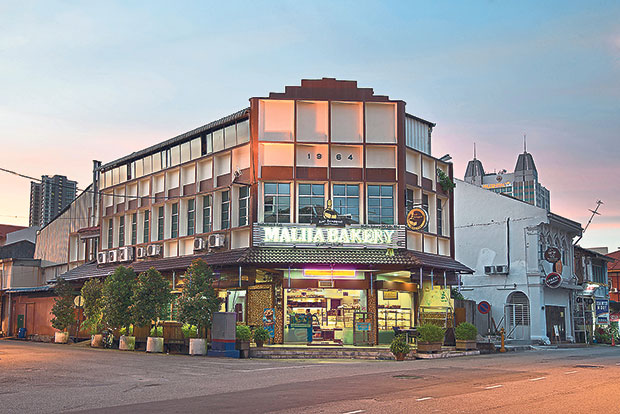
The bread is now made available in the Klang Valley by Maliia Bakery, who opened their USJ1 factory in October 2014 to fulfil their customers’ demands. “So many of our customers came up from Kuala Lumpur to buy the bread in bulk and they also demanded we open an outlet here,” explained Maliia Bakery Operations and Marketing Director Gunalen Mariadas.
The bread is supplied to kopitiams, hotels, vendors and restaurants. Some customers even pop by the factory to buy the bread directly.
The roti benggali is baked daily at the factory. First, a dough is mixed in a large industrial mixer using ingredients like flour, yeast, ice water, salt, sugar, yeast improver and calcium proportionate.
After 20 minutes, the dough is ready to be shaped. Subsequently, the dough is folded and shaped into mounds. The baking tins will be laid out and eight mounds of the dough will be placed inside.
The dough is left to rise for two hours. Once the dough has risen, it’s baked in a diesel powered industrial oven for 45 minutes. The bread will be removed and left to cool on racks before it’s sent out to their customers.
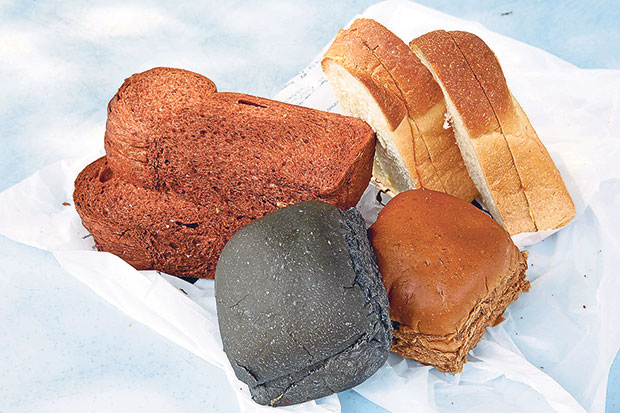
The truck offers four types of flavours — original, wholemeal, charcoal and chocolate. You even have the bakery’s own made kaya, margarine, jam, peanut butter and Nutella chocolate hazelnut spread at the truck as well.
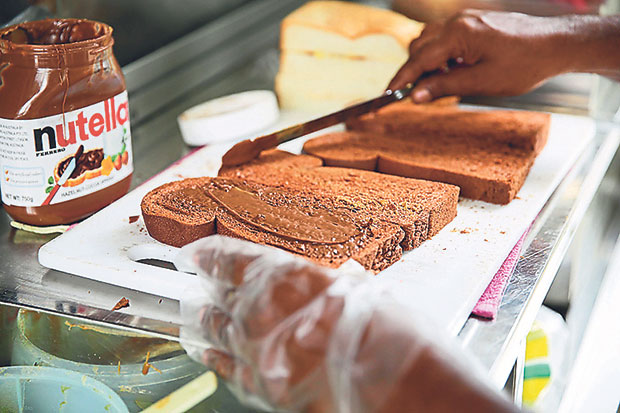
The chocolate bread has a softer fluffier texture similar to cake, which tastes divine with Nutella. According to one of the owners of the truck operating outside Subang Jaya Medical Centre, the charcoal flavour is their bestseller. People prefer to buy the bread and use their own spreads at home.
In addition, they also offer three types of buns for sale — original, wholemeal and charcoal. Some trucks also offer the bread to be toasted on site, like the truck located at Hospital Kuala Lumpur.
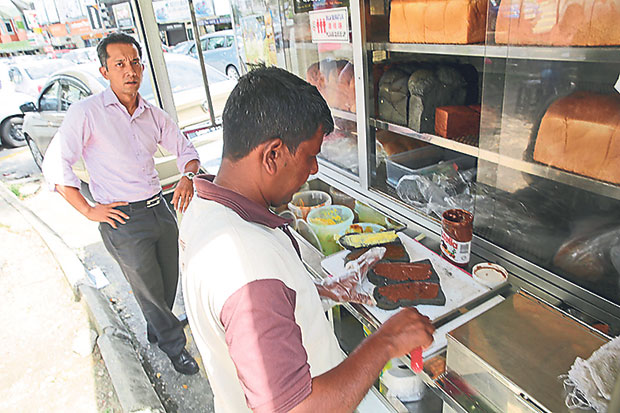
The Breadman trucks operate under a vendor programme. “It’s not a franchise and we give them the vehicles owned by us to operate.” These vendors pay an operating fee to Maliia Bakery that covers the start-up costs and rental.
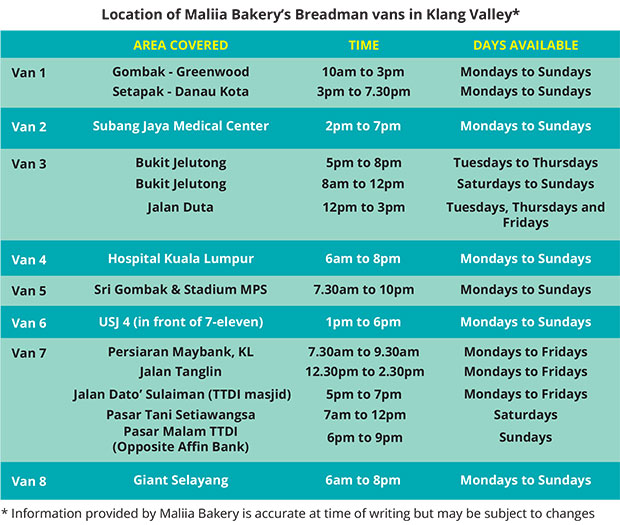
To date, there are eight trucks plying various routes all around the Klang Valley. According to Mariadas, it’s a similar programme practised in Penang, except there are some exceptions where the trucks are owned by people.
The trucks follow a schedule (as seen in the table) to operate their business. Some prefer to stay at one place with a lot of foot traffic, like the road near Hospital Kuala Lumpur where similar food trucks are parked that also peddle local food like nasi kerabu, nasi kukus, goreng pisang etc.
Other trucks prefer a wider coverage, moving from place to place. Since the schedule may change on occasion, it’s best to get the driver’s contact number if you’re a regular buyer.
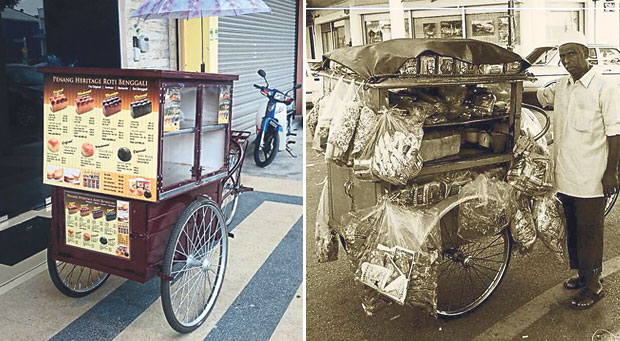
Maliia also operates an old-fashioned tricycle, like the bread man from the past that they use for food expos, like the recent Putrajaya hot air balloon festival. Occasionally, you may spot the tricycle around the USJ Subang area, as their employees will go around the area to sell the bread.
Mariadas says that response to the roti benggali has been good since it started last year. He also adds that currently they are restructuring the price of the bread as they target a bigger volume at a lower price.
Maliia Bakery
10, Jalan Industri USJ1/6, Taman Perindustrian USJ 1, Subang Jaya, Selangor.
Tel:03-80206611.