

KUALA BESUT, Aug 1 — I remember telling someone, “I have died and gone to Ramadan food heaven” when I first stepped into the Ramadan bazaar in Kampung Raja here after a hectic day covering the recent by-election.
For someone so jaded about the quality of bazaar food back in Kuala Lumpur, I was won over by the sheer variety of east coast dishes to feast on — some I had never heard of — as I waded through the crowd thronging the stalls.
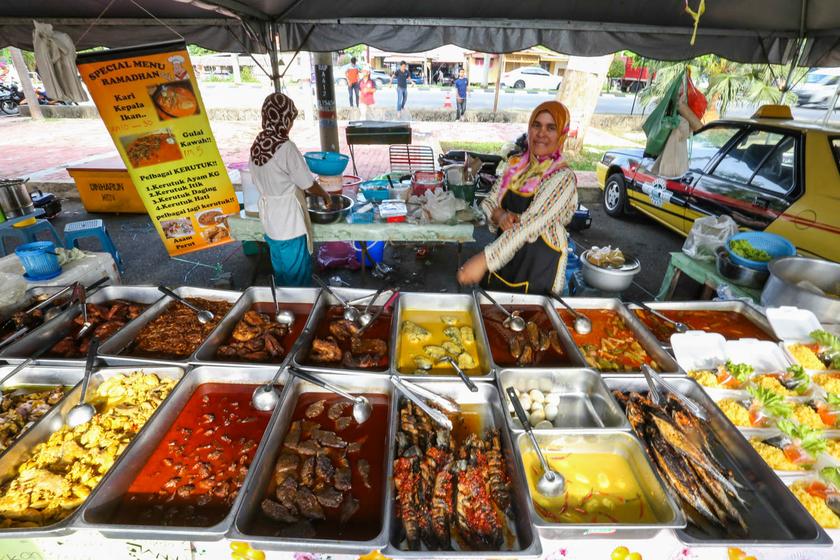
Smoke filled the air, coming from the abundant grill stations serving grilled fish. These were either served with the coconut milk-based percik sauce, or the spicy sauce, mostly a mix of onions and chillies, sweetened with jaggery.
A must-try specialty of the east coast here is the daging bakar (grilled beef); juicy chunks of beef marinated with onions, lemongrass and ginger. Not unlike satay, they were skewered with bamboo sticks and grilled over charcoal fire.
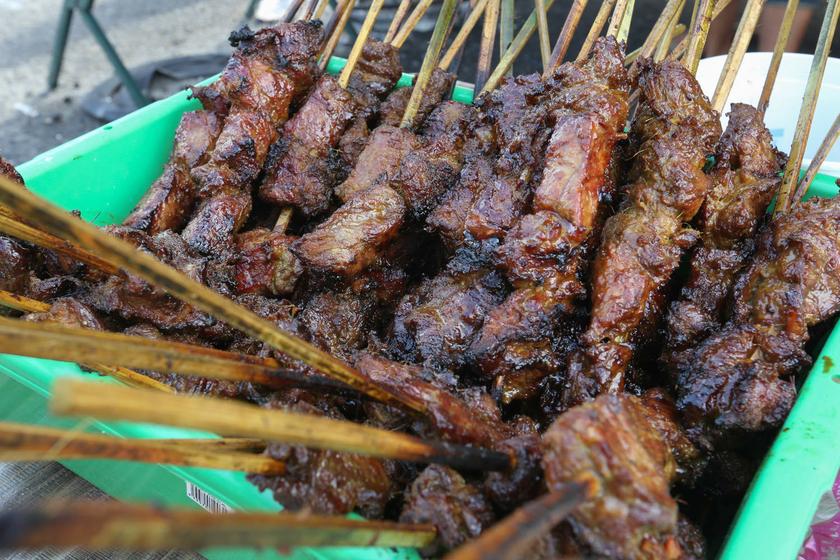
Mohd Nor Adi, 28, has been selling daging bakar based on a 30-year-old secret recipe learnt from his father for the last 10 years. He named his stall Adyra — his daughter’s name — and uses the tagline “sedak, lembok, getar” (tasty, tender, thrilling).
“Usually we sell between 700 and 800 sticks a day. But on busy days it could reach up to 1,500,” he said beaming, referring to his RM4 per stick daging bakar.
Situated on the Kelantan border, Kuala Besut’s dishes are mostly Kelantanese. Packets of the ubiquitous nasi kerabu and nasi khao mok — the Thai version of briyani served with fried chicken and sweet chilli sauce — can be found starting from RM3 a packet.
Kak Na, 46, originally from the Setiu district in the state, had one of the few stalls which sold bona fide Terengganu dishes here.
“It’s easy to tell Terengganu from Kelantanese food. Our food is more reddish in colour while Kelantanese food is usually sweeter,” she said, while dipping a fresh ikan merah (red snapper) into a huge pot of curry, a recipe she learnt from a Perak relative.
Her specialties are her kerutuk dishes which feature a mildly spicy brown gravy. These came in three variants: with duck, chicken meat or free-range kampung chicken. At RM10 per serving, it is usually eaten with white rice, but also goes well with bread.
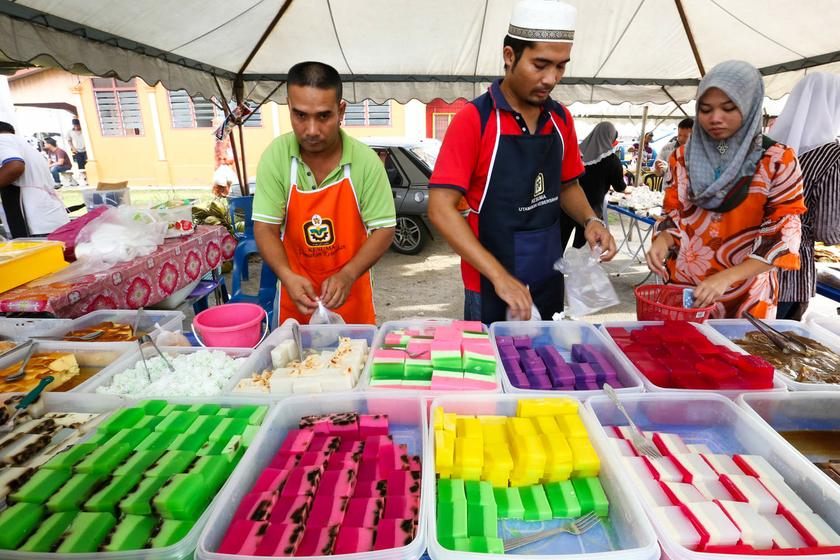
The leisurely attitude towards life here manifested itself in the attention to details found in the many kuih here. Colourful jellies sat side by side with other Malay desserts such as the labu sira, pumpkin drenched in a deep-yellow syrup.
The more common variety of the syrupy dish using bananas could also be found, as is nekbat, the variety using a type of the bahulu.
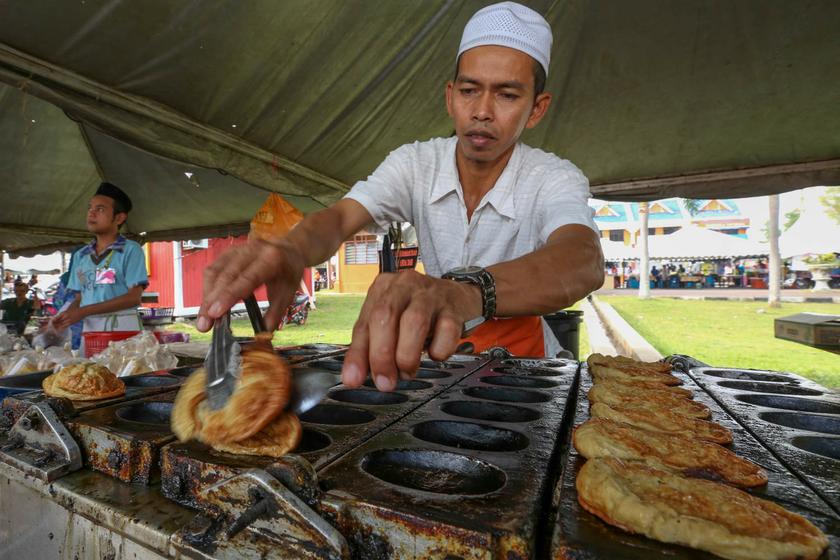
Mohd Zuhri, 35, sold the familiar family of Kelantanese kuih, which included the akok — a soft oval kuih made from a mix of eggs and wheat flour. There was also kuih bakar, the version of the former using less eggs and more flour.
Completing the family was the beko, similarly shaped as akok, but made with a mix of glutinous rice flour and dessicated coconut. The akok sold for RM1 per two pieces, while the other two RM2 for five pieces.
What better way to wash down the delightful delicacies on offer than with tuak, the palm sap known as air nira elsewhere. At RM2 per packet, the ones here came from coconut trees and tasted much like a sweeter version of coconut water, with a sourish aftertaste.
If you are ever in doubt about the dishes, do not fret. The friendly fair ladies of Besut, mostly selling homemade dishes expertly cooked by their elders, are only too happy to tell you what you should try.
Pasar Ramadan Kampung Raja, Kuala Besut, is situated opposite Petronas petrol station. Stalls open every day from 4pm until breaking fast.