














KUALA LUMPUR, Nov 24 — “You don’t even have a signature dish.”
That was the complaint Soh Yong Zhi heard from a few diners in the months after Eat and Cook was named American Express One To Watch at Asia’s 50 Best Restaurants 2022; how, they asked, had a restaurant like this won anything?
Soh shrugged it off. “Eat and Cook is not the type of restaurant where we want to repeat a dish,” he told Malay Mail in January 2024.
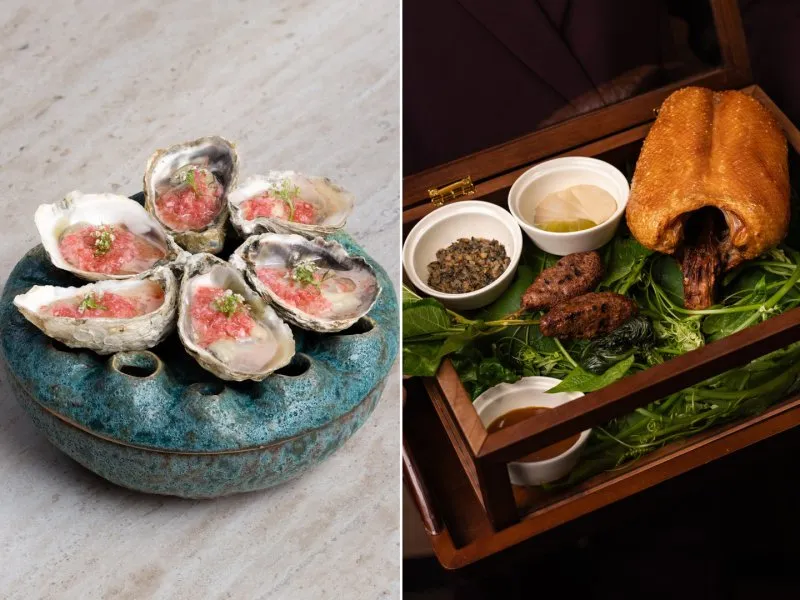
Today, the restaurant has several, including fresh oysters from the brackish waters of Bagan Pasir, served with a bunga kantan mignonette, and a roasted 28-day-aged local mountain duck, served with satay fashioned out of minced duck leg.
Eat and Cook's famous "deconstructed" asam laksa, the first dish Lee Zhe Xi and Soh ever created, about three months into life in a Bukit Jalil mall, is back too, on the à la carte menu.
“That dish is very meaningful to us, and it traces our journey,” Soh says.
It is one of many things that have changed.
Eat and Cook Villa, at 12, Jalan Delima in Imbi, opens today as the restaurant’s third address and its largest: two dining rooms under one roof.
The Dining Room, an à la carte room built for sharing, seats 60. Service at The Experience, a 10-course tasting menu at RM499, begins on December 4.
The Villa sits in a bungalow with high-rises on every side. The roof is brown and built to look like an attap roof, each of its seven thousand tiles carved by hand. Some run long, and some short, Lee says, and that is the point. “There is perfection in imperfection.”
Inside, the doors open onto ochre walls and dark wood throughout; the effect is earthy.
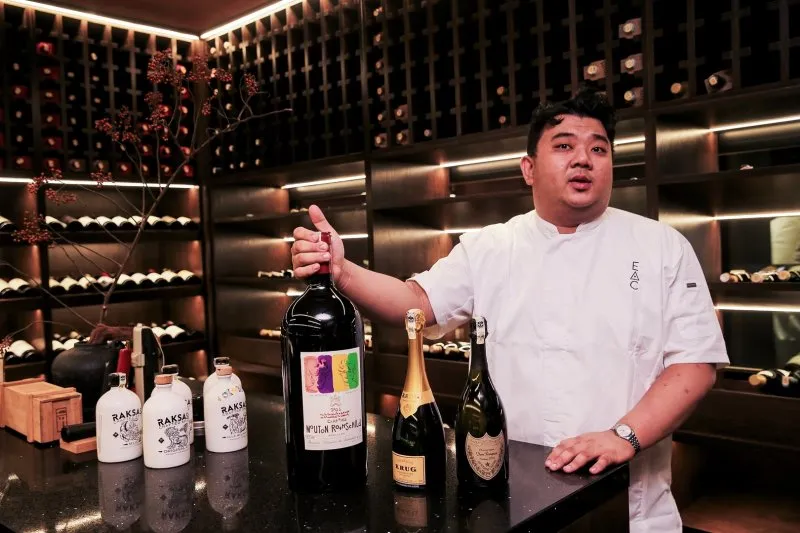
The bar comes first, then the wine cellar, which holds about 800 labels. Lee says they have plans for Krug and Dom Pérignon to be poured by the glass, and that each month a large-format rare bottle, a Lafite or a Mouton Rothschild, say, will be served by the glass through a Coravin.
They intend that half pours allow diners to try wines of that rarity at a fraction of the cost, without committing to a full glass.
The rest of the drinks include locally brewed miju, and a house toddy that is bottled on site and keeps up to a year when stored properly.
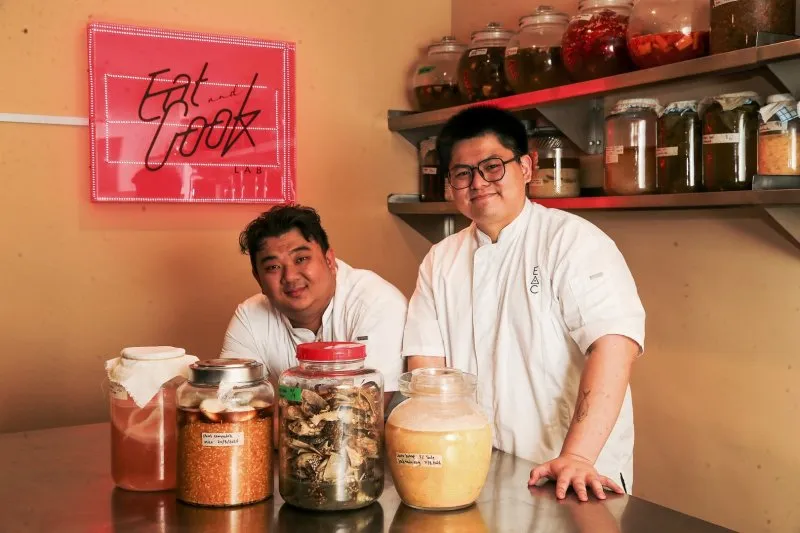
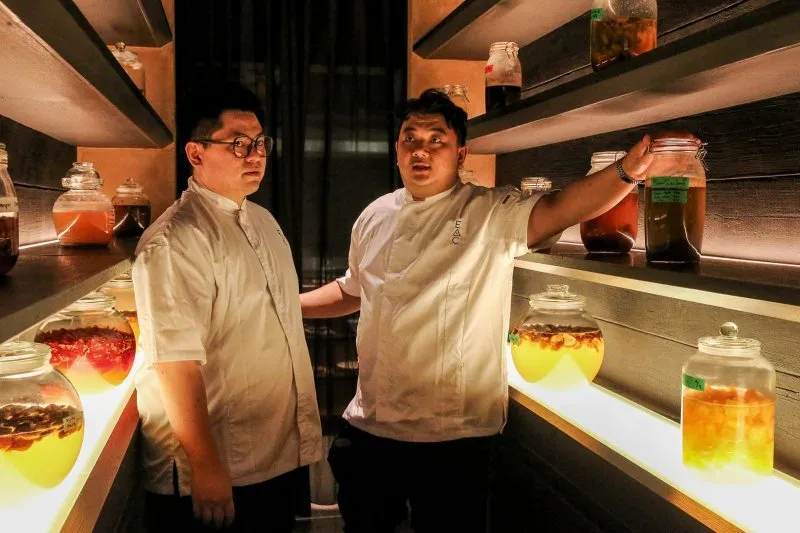
Past the cellar, the dining room opens under a skylight. To the cellar’s left, a lit corridor lined with jars of cheong and kombucha, still fermenting, leads into The Experience, which seats 20 at the tables and four at the counter.
The name is plain on purpose. “We wanted the new Eat and Cook to feel like a home,” Lee says. “We didn't want to rebrand with a really fancy name.”
Six years ago, Eat and Cook was six seats around a counter in a 100-square-foot unit in a nearly empty mall in Bukit Jalil, run by two chefs who had lost their hotel jobs to the pandemic.
Now there are three restaurants, including Sun and Moon, their hundred-seater all-day dining concept right next door, and Barkar, the open-fire restaurant at G Tower.
The last service for Eat and Cook at its most recent space in Bukit Jalil was on May 31, 2025. Today, almost exactly 18 months later, the Villa opens. “We expected longer,” Lee says.
The projected time was a result of other cost considerations. “RM10 million” is the round figure Lee gives when asked about the cost of the whole space. It's the biggest investment they've made so far.
Before the site was secured, he says, they were planning for two or three years, because “we really wanted to make sure our finances were stable before proceeding with this project.”
That cost invites a very natural reason to run both a tasting menu and an à la carte service.
“The tasting menu is for people to experience something unique,” Lee says.
“But it’s not a sustainable business,” Soh adds, with a chuckle.
“And you need a restaurant that people can keep coming back to,” Lee continues. He puts the case in terms of the market: “Malaysia is still a market that’s price-sensitive; our economy is still all over the place, so a lot of people are pulling the handbrake on spending.”
And in terms of the kitchen: a high-priced restaurant that serves 10 guests a night leaves its team with “no sense of urgency”, he says, and over time “you will lose your manpower”.
So they strike a balance. “Our thinking is that we are willing to have slightly lower revenues to keep our restaurant full,” Lee says.
“This is a restaurant for the people… at a slightly above-entry level.” He is candid about the alternative: “If people only come to Eat and Cook once a year, sei lo. I die already.”
The à la carte menu runs from RM20 for a salted fish bun to RM298 for the Kampung Seafood Noodles, before service charge and tax. The compromise has limits, and he knows where.
The Villa’s Salad is RM79, and it includes 20 vegetables from the herb garden on site to farms up in Perlis. It drew complaints about price from friends and family.
“A lot of them complained that our salad is very expensive, but I don’t mind it, because that’s the hard work our farmers and we have put in,” Lee says. “Getting baby okra and baby chayote comes at a price; we’re just trying to accurately reflect its value.”
Explaining that value to diners, he says, is “the hardest thing to do in the world", and it falls to the front of house, whether presented verbally, table by table or on “a little card”.
Almost every fine dining restaurant now talks about fermentation, and some that aren’t quite “fine dining” do too.
Lee’s answer to the obvious objection starts with salted fish. “In Malaysia, we have a lot of salted fish. That’s a form of fermentation,” he says.
One of the starters on the menu is a bun with fish garum (fermented fish sauce) folded into the dough, then glazed with salted fish when it's baked. It's then topped with bonito flakes made from yellowfin tuna caught in Sabah.
“We want to connect traditional Malaysian ways of food preservation and take them to the future.”
The idea took shape on the road. In Perlis and Kedah, the team learned how people in the north make belacan: not dry, a little wet, red instead of dark, and untoasted.
“What if we take these nostalgic Malaysian ways of making food and adapt them for something modern?” Lee asks. At the Villa, that means no bought vinegar: they ferment kombucha for longer into vinegar, with chillies, papaya and rambutan.
It means garums from anything, not only anchovies; trimmings of squid from Barkar are fermented with koji until they taste like prawn or crab.
And it means a nod to his grandmother, who made fruit enzymes to wash things around the house. “We’re trying to draw a link between that kind of thing and what we’re doing here at the restaurant,” he says.
A room of crabs, fish, gooseberries and mushrooms fermenting in jars, in a mixture of salt and koji or in plain salt, should announce itself by smell.
The Eat and Cook Lab, on the first floor of the building, does not smell; it is remarkably clean.
The first real whiff comes at the second stage of fermentation, in a temperature-controlled chamber kept at 55 degrees Celsius. It smells like what savoury tastes like.
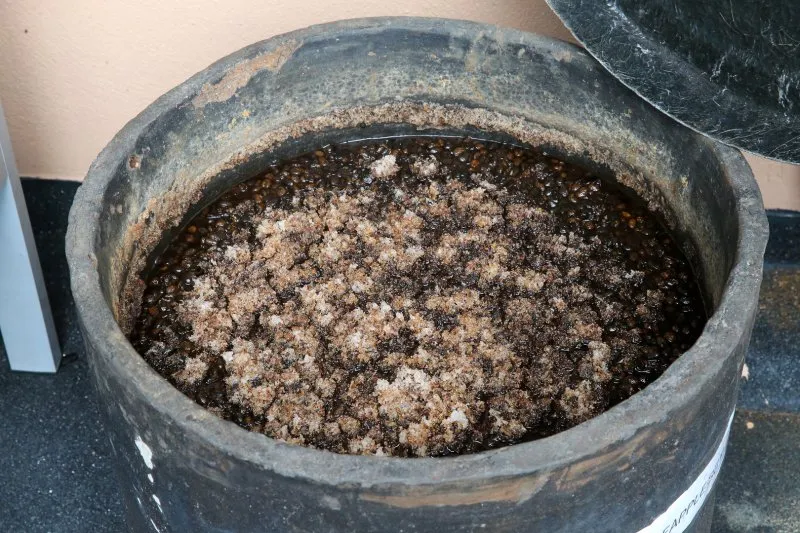
Inside a huge urn sits soy sauce made in partnership with Mu Artisan Soy Sauce. Fermented with pineapples for three years, a layer of salt crystals have formed at the surface. “I have to say it’s a bit sayang; the salt crystals were much fuller before we moved it here.”
On the à la carte menu, the lab shows up in dishes as different as grilled paku with fish garum ice cream (RM39), Grandma’s popiah with squid garum (RM20 a piece) and the seasonal fish with an acar dressing of chilli kombucha (RM78).
The fermentation program also changes what they can afford to buy.
The yellowfin tuna that becomes the bonito flakes comes from Sabah. “It’s caught in the evening, arrives in KL the same night, and we can receive it here by 2am,” Soh says.
Some weigh 20 to 25kg. “It’s a bit of a gamble, because sometimes they’ll be small, or if they come back with 10 fish, we have to take everything.”
Taking everything is only possible because of what happens next. “We can do a lot with the trimmings; it’s partially why we have such a big fermentation program here: it lets us take more stock than we would normally be able to go through, and it keeps our suppliers and especially the fishermen happy,” Lee says.
On slipper lobster, which, he says, plenty of peers ask him about how he gets consistent supply: “If they catch 25kg today, I will take it all. I can ferment the leftovers.” The fishermen know this, he says, “and we don’t press them on price.”
The same logic applies to produce. “I mean, sometimes we have ‘asshole’ requests too,” he says. For papaya, they ask farmers to leave the fruit on the tree until fully ripe.
“When they ask me, ‘What if it spoils by the time it gets to you?’, we tell them we’ll pay the full amount,” Lee says. “We can still get trimmings from it and turn it into a papaya cheong, or vinegar.” The chilli sauce is sweetened with ripe papaya, not refined sugar.
The fruit shows up on the menu in the Papaya Dessert 2.0 (RM88), where it is listed as tree-ripened, and in the papaya chilli that comes with the prawn cracker (RM29).
The suppliers are the same people they began with, Lee says: they have a guy in Sabah for tiger prawns, flower prawns and tuna; and a guy in Bagan Pasir for amadai, oysters, mussels and giant grouper. “Without them, we can’t cook anything.”
Soh says the farmers were mostly incurious about what happens to their produce, but it has changed in recent times: “I don’t know what you’re doing with these, but you just take lah.” Recently, the team started sending them photographs of the dishes.
Behind the restaurant, the kitchen’s organic waste is composted and turned into fertiliser for a herb garden. Sawtooth coriander, pentas flowers, ulam raja, peppercorns and chillies all grow there, in the middle of the city.
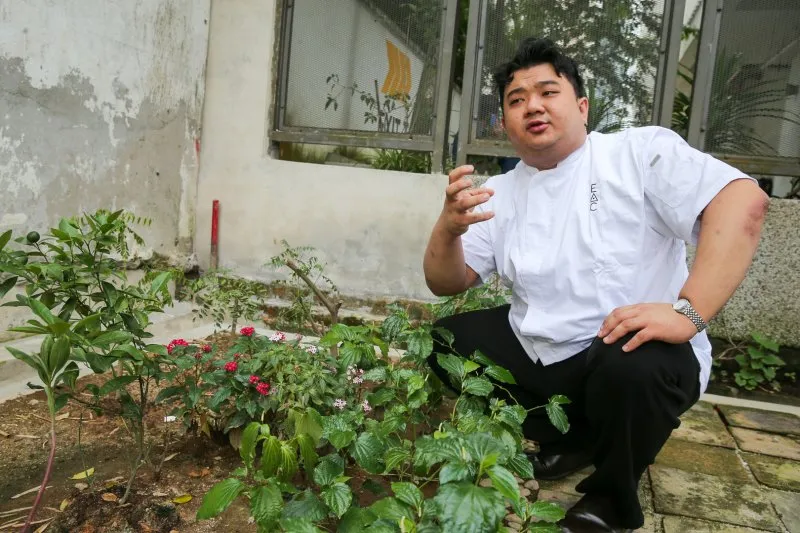
Aidil tends the plants. He is 18, from Kelantan, and started recently; his sister, who works at Barkar, got him the job. “He’s really our guy; he takes care of everything here,” Lee says.
Lee returns to the next generation more often than he does to awards. “If we can produce 10 head chefs from this restaurant, that would make me happier than three stars,” he says.
Both he and Soh are 29, and Gen Z themselves. But he is frank about what the industry’s newest entrants have been taught to expect from YouTube and what the industry has to learn in return.
“We used to be harsher on our team, repeating the lessons we learned from the previous generation,” he says. “But you need a different approach with the new generation. There needs to be more explanation and guidance, not just scolding them.”
Soh, who describes himself as the supportive half of a pair with “completely opposite” characters, is more candid still. “Yes, sometimes we curse,” he says, “but after about 10 minutes we have to sayang balik and explain to them.”
What Lee wants to pass on, he says, is not technique so much as a feeling from the small town where he grew up. “I can ask for something from a shop, and they know that my parents will pay for me the next day,” he says.
“I feel like this kind of community feeling has disappeared, and this is what we should try to bring to the future with the next generation.”
He doesn’t plan to be in the kitchen forever. “I want to quit eventually; I want to have my own time,” Lee says. “I see myself working in my own little restaurant, and I only open it when I’m happy.”
Asked what comes after the Villa, Lee does not name another restaurant. “A farm and fishery,” he says. “We want to enter the supply chain.” The team has started already, he says, with the oyster and grouper hatchery it works with.
The motive is what he has watched happen to farmers over the past six or seven years. “The real farmers, the hardworking farmers, don’t get the recognition they deserve, and funding, too,” Lee says.
“I try to talk to people, but nothing happens. The real farmers work so hard and burn through their money for it.” If everything goes well and stays stable, he says, “the next part of our vision is to go to the source.”
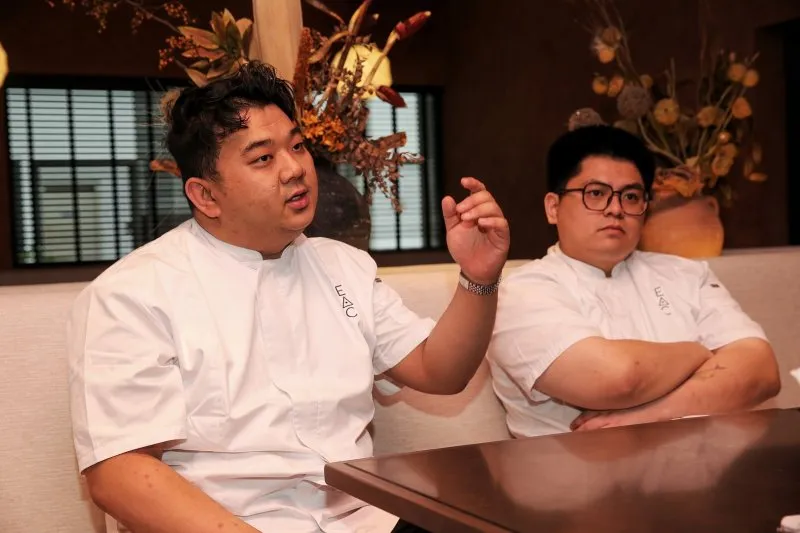
The other looming question hanging over any restaurant that returns after a long gap: awards. Eat and Cook sat out 18 months while others gained recognition in their absence with awards such as Asia’s 50 Best. Will they go for it now?
“I don’t mind doing it,” Lee says. “A lot of people just see it for the awards, but when we’ve been there, it’s not about the awards for us. It’s about the connections and community we can learn from.”
The benefits, he argues, go well past the trophy: “We get to understand the perspectives of these chefs from other countries: their cuisine, the market there.”
He does not pretend the circuit is above criticism. “A lot of people judge and say, ‘Oh, 50 Best is just a game, blah blah blah.’ It may be, but for us, we see it differently.” Years ago, after meeting at an award show, Lee arranged for the team to learn from Chef Jun Lee of two-Michelin-starred Soigne about “the standards required in a place like Seoul”, travelling there and cooking food for diners. That is, Lee says, “much more than just bringing a signature dish to cook at someone else’s restaurant.”
“I think that’s the biggest benefit we get — an expensive one, yes, but a benefit for sure.”
Eat and Cook Villa
12, Jalan Delima,Imbi, Kuala Lumpur.
Open Tuesday to Sunday, 5.30pm — 11pm.
Tel: 012-926 9695
Facebook: Eat and Cook
Instagram: @eatandcook.asia
* Follow us on Instagram @eatdrinkmm for more food gems.
* Follow Ethan Lau on Instagram @eatenlau for more in-depth conversations.