


PETALING JAYA, Sep 17 — Happy belated Malaysia Day. I hope you were able to stay safe from the haze, show off your allegiance to the country by bidding for special car plates, or at the very least, hand over your hard-earned money to corporations pretending to care about Malaysian history by incorporating it into a promotional campaign.
No, no, I get it — the drink is only RM6.30. It’s very clever.
In some ways, this article risks being guilty of the same contrived approach: a nasi lemak story any other time of year is unremarkable; a nasi lemak story one day removed from the two most patriotic — publicly anyway — weeks in the national calendar is just a little too convenient.
But I’ve been thinking about what it means to be Malaysian, and specifically, what it means to eat like a Malaysian.
As a country, we’ve anointed nasi lemak as our national dish, a symbol of Malaysian-ness, and in turn it has permeated every level of our rapidly changing society.
Today, one can eat nasi lemak anywhere, from roadside stalls and fast food outlets to the swankiest of hotel restaurants.
Now, simply eating nasi lemak does not a Malaysian make.
And while I’m not here to police how people eat, choosing to eat nasi lemak exclusively within a bubble utterly divorced from the community that traditionally makes it is a symptom of our fragmented reality — and, worse yet, it pretty much guarantees a lifetime of mediocre nasi lemak.
But a bubble is just that — a bubble. Invisible and fragile, it doesn’t take a poke, so much as a whisper, to pop it.
A single stop is all it takes to unlearn a preference that had long since calcified into bias.
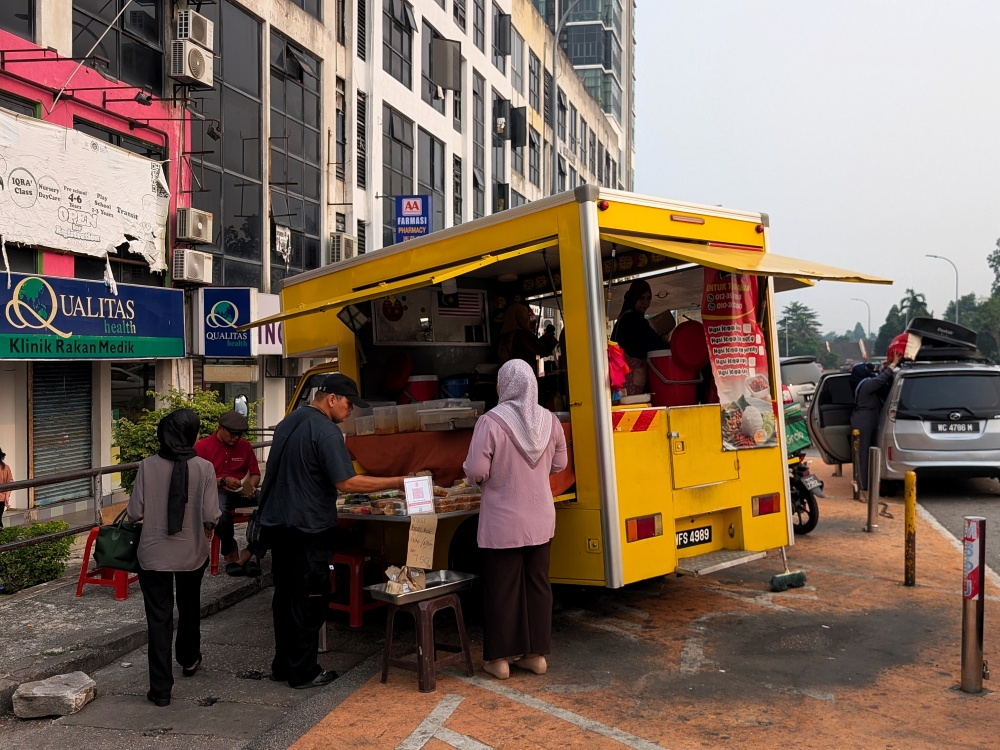
Which brings me to Nasi Lemak Abu, a truck parked outside Dataran Glomac in Kelana Jaya.
It sits just across the LDP from Paradigm Mall, and only a few minutes’ drive from some of the Klang Valley’s most talked-up nasi lemak joints, where the only thing more insufferable than the queue is the bottled-up social media hype spilling out of its gormless patrons.
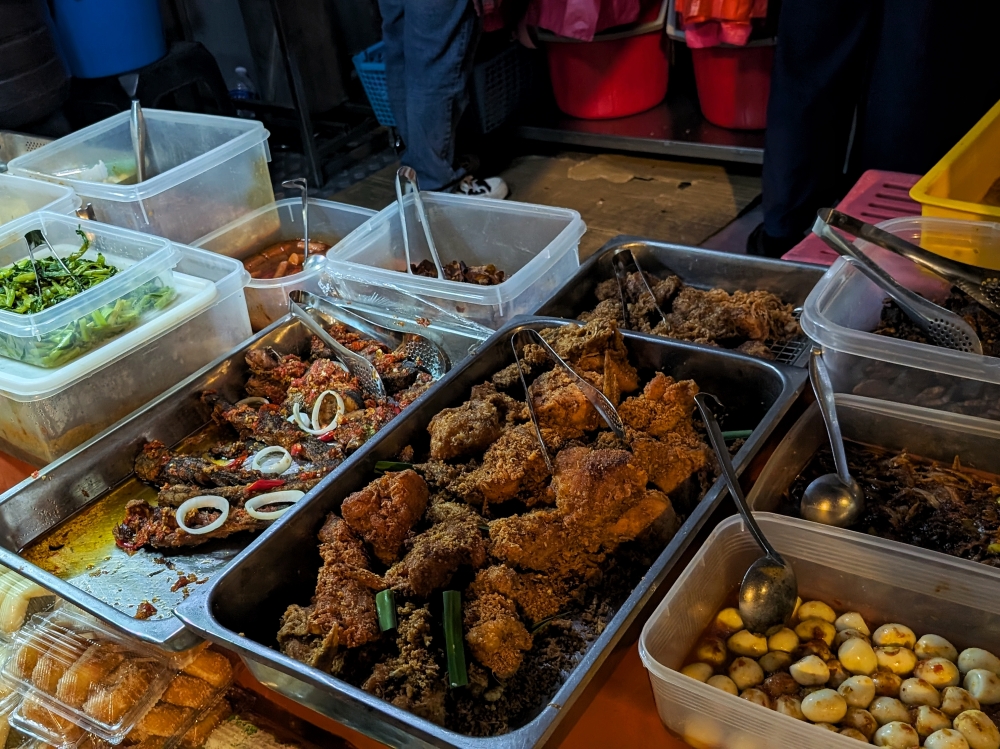
Nasi Lemak Abu opens at 6.15am to serve the masses that keep the city running before the rest of us wake up.
Rather than a queue, it’s a loose gaggle of people zipping by in the dark to bungkus their breakfast or lunch — delivery riders, security guards, office workers, even early risers walking over from the neighbourhood.
By the time the street parking fills after 8.30am, the reserves of lauk have largely dwindled.
Staples like ayam goreng and sambal sotong won’t run out until they close at 10.30am or 11am, but to get a taste of the real treasures, like ayam masak merah and ayam rendang, showing up before the sun is out is a necessity.
Like the sloth that I am, I showed up well after 8.30am the first time and had to settle for nasi lemak ayam goreng with sambal sotong (RM9.50), although the kakak was nice enough to tell me to come back earlier the next time to get first dibs on the full spread.
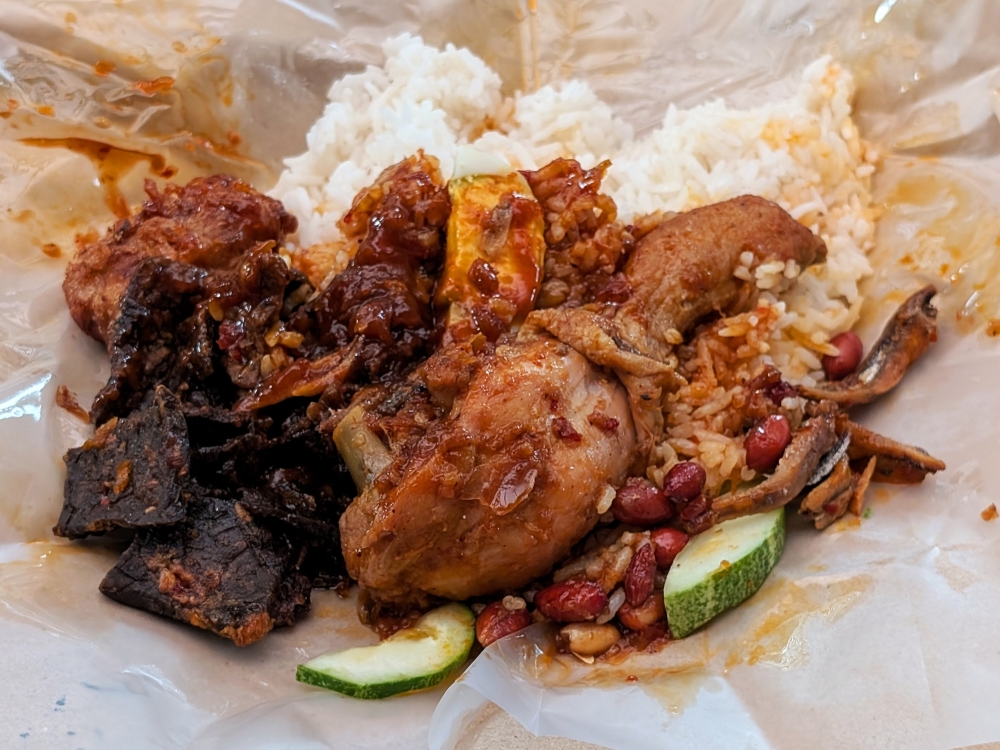
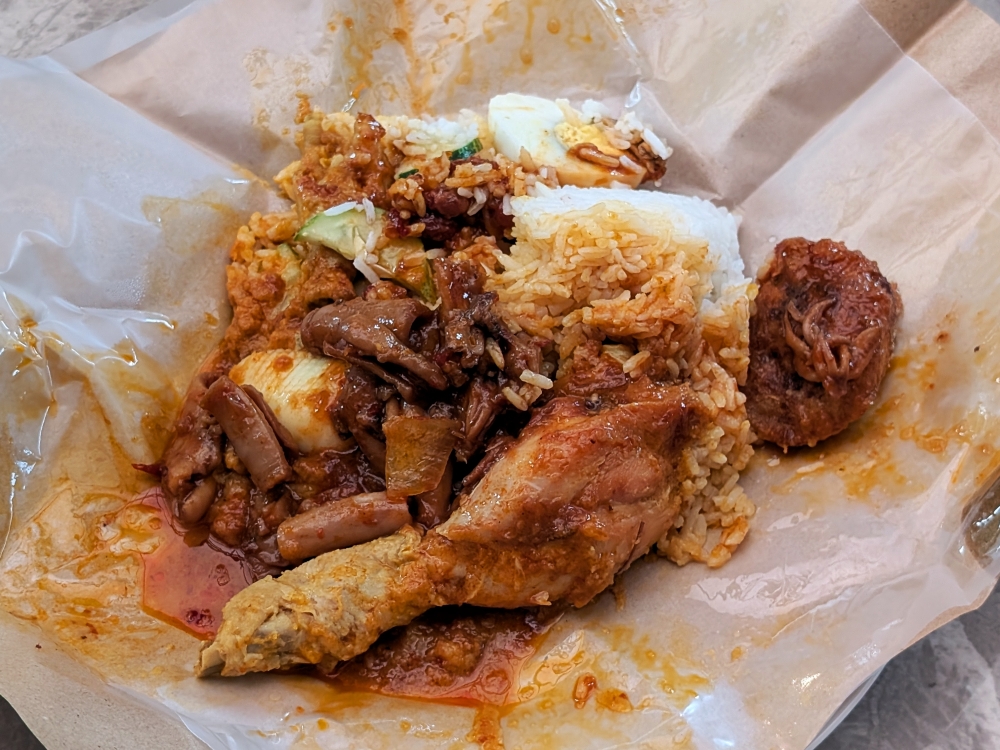
I set an alarm and returned the following day, and happily headed home with my bags of nasi lemak ayam masak merah, paru goreng and begedil and nasi lemak ayam rendang, sambal sotong and begedil for RM21.
The rice is fragrant enough to smell before you’ve unwrapped the parcel, rich with coconut milk and still fluffy after sitting tightly packed for the better part of an hour.
The sambal is legitimately pedas, cut with enough sweetness from the onions and a savoury backbone that keeps it from being one-note.
Even if they served nothing else, Abu is one of the few nasi lemak stalls still worth the detour for the quality of their rice and sambal alone.
And yet, the lauk impresses too. The ayam masak merah is nothing like the cloyingly sweet versions that pass for masak merah elsewhere; instead, it packs real heat and oomph.
The paru goreng is crisp without the pieces of lung drying out; the begedil are soft, small potato fritters done right, and the sotong in the sambal is cooked to just springy, avoiding the rubber-band texture squid usually turns into.
But the rendang — my goodness, the rendang! Despite the light colour of the gravy, the depth of flavour it holds is crazy, with lemongrass and galangal doing the heavy lifting. Many places can’t hold a candle to this.
The encouraging, yet simultaneously frustrating truth about these insular eating bubbles is that the lines often aren’t physically tangible, geographic boundaries.
They’re preferences that turn into habits, and habits that turn into implicit bias. Nasi Lemak Abu isn’t some out-of-the-way, inconvenient trek from the rest of these hyped-up spots.
They’re all, more or less, in the same vicinity. If anything, it serves as a reminder of how we often live shared, but very parallel lives.
We occupy the same Malaysia, but don’t experience it the same way.
I don’t know what to do about that. But we can at least try to meet one another at the dinner table.
I’m reminded of a line uttered by a security guard, Mr Singh, in P. Ramlee’s 1961 film, Seniman Bujang Lapok.
“Lu punya nasib, lu makan. Dia punya nasib, dia makan. Apa salah lu makan sama-sama?”
Nasi Lemak Abu
(in front of Qualitas, Dataran Glomac)
Open Monday to Saturday, 6.15am — 10.30am
Tel: 012-353 8708
* This is an independent review where the writer paid for the meal.
* Follow us on Instagram @eatdrinkmm for more food gems.
* Follow Ethan Lau on Instagram @eatenlau for more meditations on nasi lemak.


