


KAJANG, July 4 — The first thing I noticed was not the wok hei.
There was plenty of that, certainly: the fire-kissed edge that clings to flat rice noodles after a brief, violent encounter with a hot wok.
Maybe it was the sweetness of the prawns or the crunch of bean sprouts? Lovely, but not these either.
It was the name of the stall.
Located inside Restoran Double Six in Bandar Teknologi Kajang, the stall is called Penang Lang Char Kuey Teow. That is as bold a declaration as one can make in the food business.
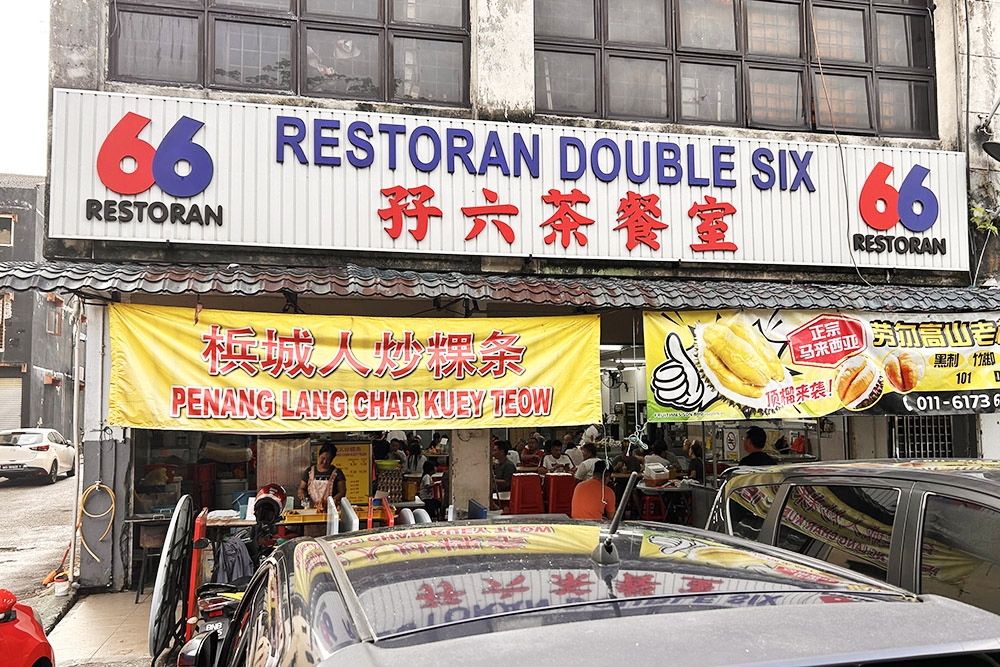
Penang Lang – Penang person, in Hokkien – is not merely branding. It is a claim.
It says: the hands that wield this wok knows what they are doing. They carry years of toiling over a hot stove. They carry the knowledge of a place renowned for its street food.
Specifically Penang char kway teow.
Before I even had a taste, I was suitably impressed. Bravado is worth applauding these days when everyone seems to try to please everyone else. (Never forget Aesop’s fable of the farmer, his son and their donkey.)
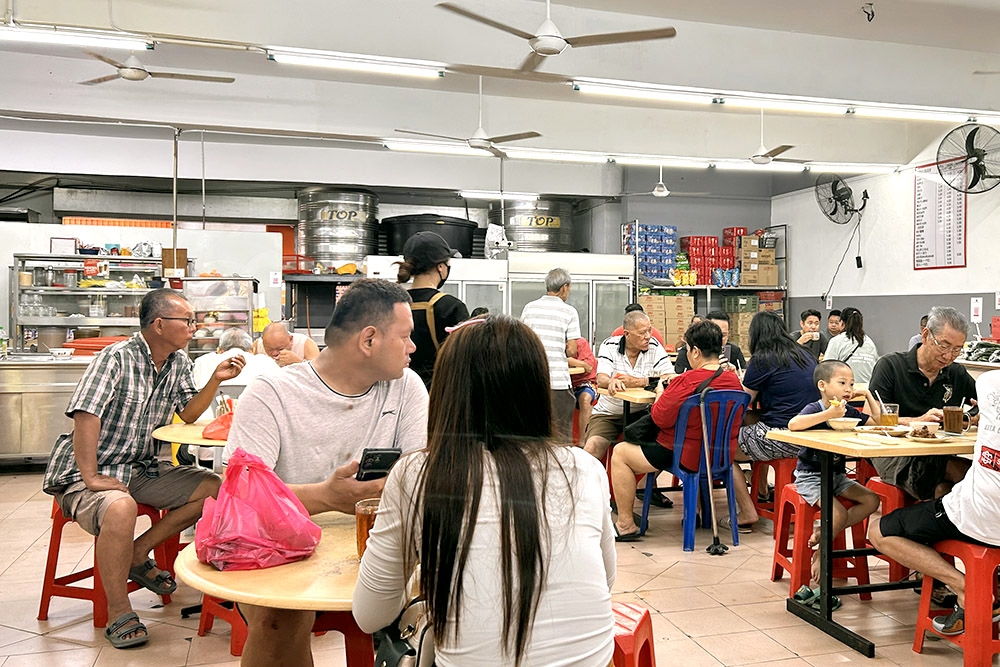
Certainly enough people have been equally won over; many customers in the kopitiam also ordered char kway teow.
Bombast aside, I couldn’t help but wonder: What happens when a dish from Penang is transplanted hundreds of kilometres from home?
Does it taste like the original (though the definition of that particular taste may vary greatly). Or does it taste like something else entirely?
Funnily enough, our first hint of how flavours travel came not from Penang (as you might imagine, given the direction of my ramblings thus far) but from Hong Kong.
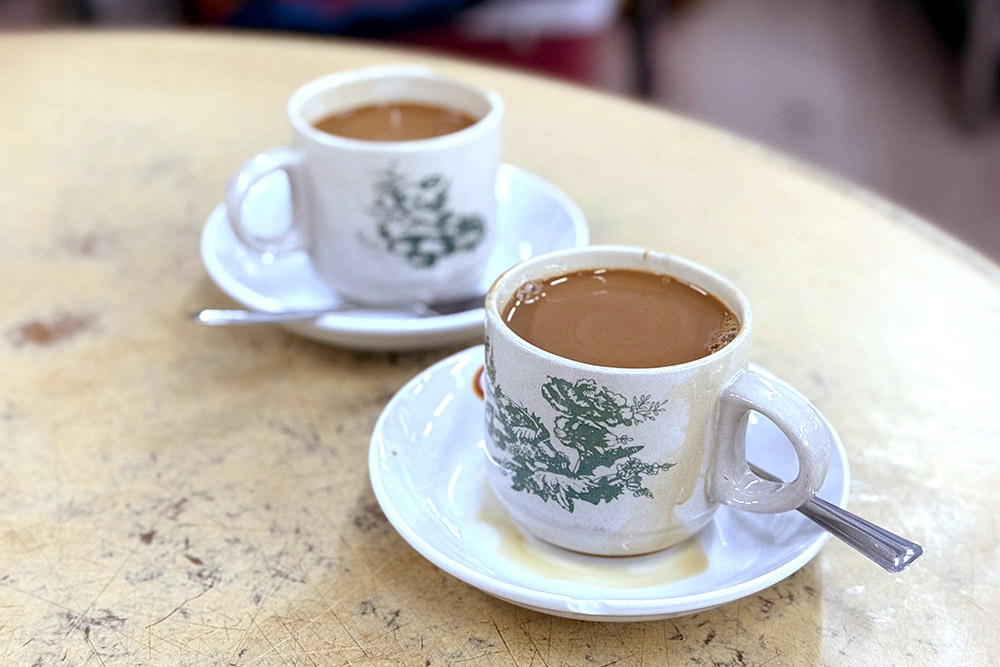
Instead of our regular cups of cham, we ordered teh today. The milk tea looked ordinary enough when it arrived at the table.
Yet – rather than the lighter, sweeter profile common to many kopitiam drinks – the first sip revealed a more assertive tea flavour and a creamier body. It called to mind nai cha, the milk tea of Hong Kong cha chaan tengs, with its stronger tannic backbone and richer texture.
Maybe this resemblance, this happy coincidence, is all in my mind. (It often is.)
Still, how very appropriate, no?
For regional foods rarely remain fixed in one place, no matter how various tourism boards might proclaim otherwise.
(Perhaps, as we often observe, nearly always in spite of their best efforts.)
Recipes travel with cooks. Techniques migrate with communities. Flavours cross borders, settle into new surroundings and gradually adapt.
Call it culinary wanderlust.
So when our plates of char kway teow arrived at our table, we were in full detective mode: Does this taste authentic?
(Though part of me greatly loathes the word “authentic” — what does it even mean any more?)
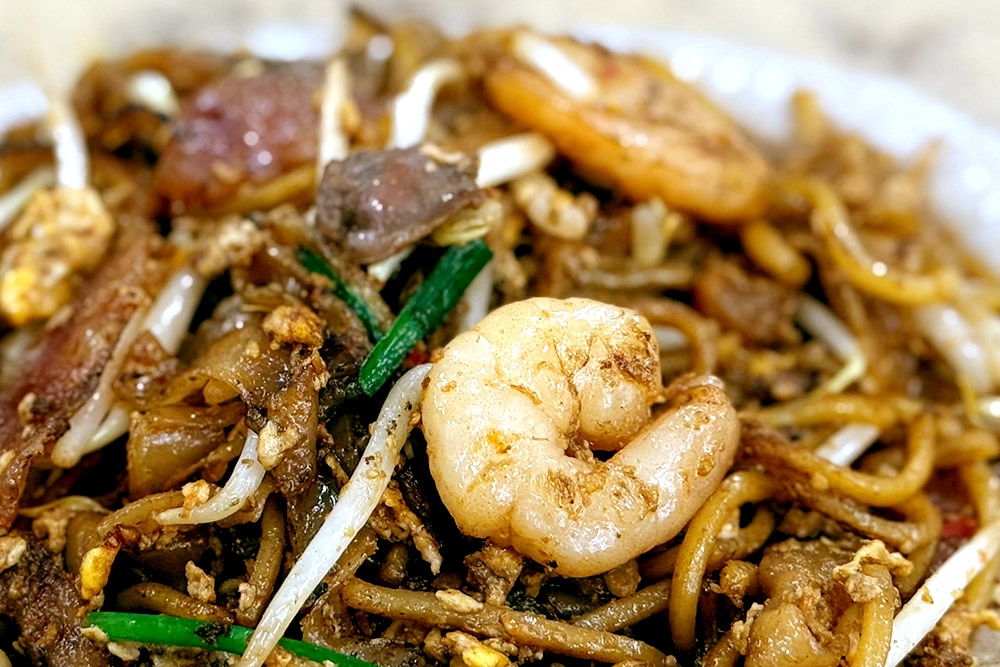
The noodles were supple, absorbing enough seasoning without clumping. Every strand remained distinct from one another. Every forkful blessed by the wok’s heat, infused with pleasantly scorched notes.
The prawns were a decent size, not too small or large. Still plump and naturally sweet. The waxy bite of Chinese sausages, sliced on a bias. Bean sprouts provided crispness, a touch of chilli paste some welcome spice. Seehum for one of us; the other begged off.
No idea if this was authentic but it tasted fantastic.
Don’t blame us for our lack of a definitive answer. Authenticity, after all, is an unreliable measurement.
Every diner carries a different memory of Penang. Some remember charcoal-fired woks. Others remember particular hawkers, specific neighbourhoods or late-night suppers by the roadside.
The “real” version, I would wager, exists less on the plate than in the mind.
As if to compound our confusion further, midway through the meal, I remembered the fried eggs.
Or rather, I remembered that I had forgotten to order one for each plate.
Ordinarily, I would not consider char kway teow complete without a fried egg perched on top, its yolk waiting to spill across the noodles.
On the bright side, my careless omission became part of the meal’s meaning. Helped to answer the unanswerable question, after a fashion.
Can a Penang dish truly arrive intact after travelling so far from home?
Perhaps not.
Something is always lost. A particular ingredient. A familiar setting. The memory attached to a place. Even the most faithful recreation cannot transport an entire city onto a plate.
Yet perhaps complete replication was never the point.
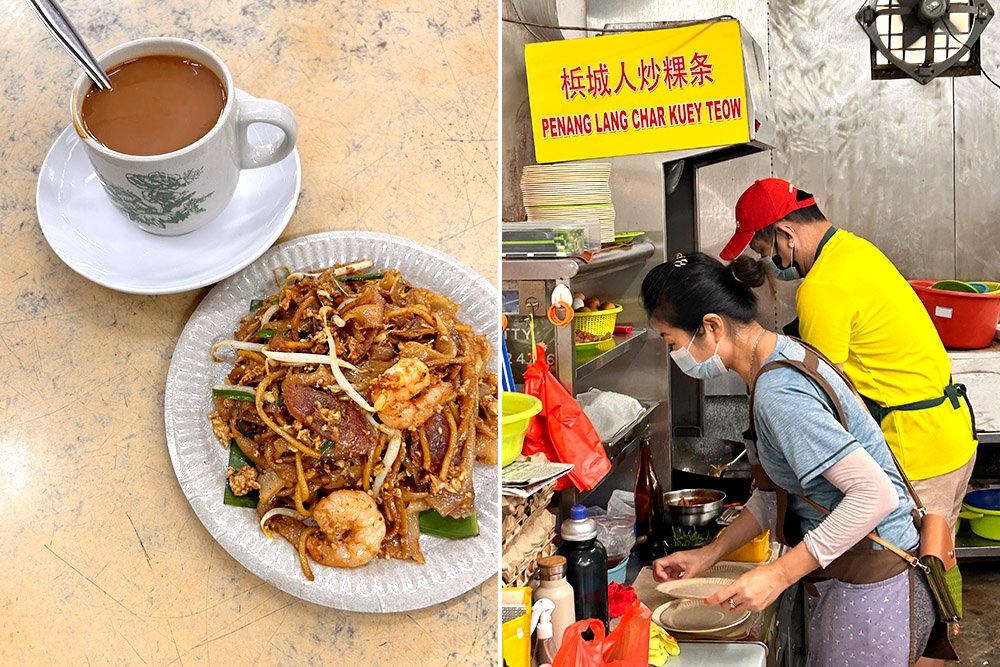
The char. The salt. The prawns. The noodles, neither too soft nor chewy. The chilli, fiery in the way only we Malaysians can appreciate. The bean sprouts, sweet and crunchy.
What I cannot tell you is whether char kway teow in Penang would have tasted this way, because Penang – my idea of Penang, the one built from scattered meals at various times in my life – is also partly a construction.
A memory reshaped by distance and desire until I can no longer separate it from my longing for that idealised plate. Not fully, anyway.
What I can tell you is this: the char kway teow here is well-made and well-seasoned. Made by someone who clearly knew the difference between a dish done correctly and a dish merely done satisfactorily. A true Penang lang.
You might ask whether I was transported to Penang.
Not entirely. No plate outside the Pearl of the Orient could, not fully.
Kajang remained Kajang. Penang remained Penang.
Yet somewhere between the smoky noodles, the sweetness of the prawns, the crunch of bean sprouts and those forgotten fried eggs, the distance between them seemed smaller than the map might suggest.
No, I am not transported to Penang. But somewhere between these bites, Penang comes briefly, imperfectly, deliciously, to me.
And that is authentic enough for me.
Penang Lang Char Kuey Teow
(Inside Restoran Double Six)
68 & 70, Jalan 1/2,
Bandar Teknologi Kajang,
Selangor.
Open daily 8am-2pm
Phone: 016-622 4796
For more tales of wok hei and wanderlust, visit lifeforbeginners.com.
* This is an independent review where the writer paid for the meal.
* Follow us on Instagram @eatdrinkmm for more food gems.


