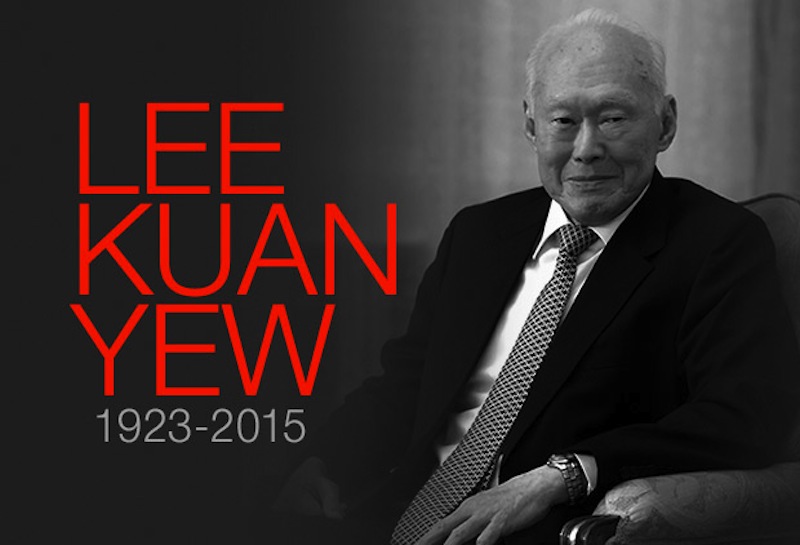
SINGAPORE, March 23 — In 2011, a CCTV News anchor had an interview with former Singaporean Prime Minister Lee Kuan Yew, during which he shared his view on the political legacies he left for Singapore and the vision for the future of Asia.
The former Singaporean prime minister and the founding father of the city-state Singapore died at 91 on early morning in a hospital in Singapore.
When asked what his expectation of Singapore’s ruling People’s Action Party to inherit from his political legacies after he stepped down in 1990, Lee said Singapore’s political model should be continued to secure the achievements it has made in the past decades.
“I took this country from a very low base in the third world, and in 30 to 40 years gradually transformed it into a first world country, and now it’s gone on to a different leadership. And new problems pop up, because people believe that what has been achieved is already secure.” he said.
“I don’t believe that is so. I believe once you have a weak and ineffective government, the whole progress you’ve made will spiral downwards, but the majority of people believe it is secure for them. So now they have ideas about the West’s two-party system. Their argument is simple, a first world country must have a first world parliament, a first world parliament must have first a world opposition, than you can change sides. I think, if ever we go down that road, I’d be very sorry for Singapore.”
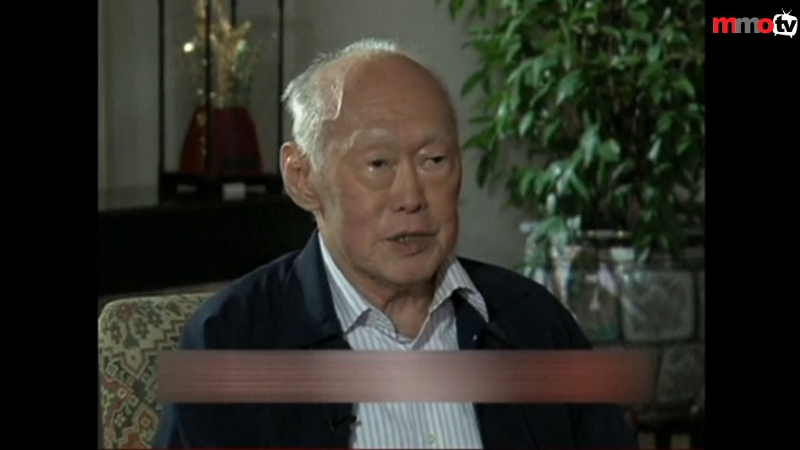
Lee said Singapore is so small and open, and therefore vulnerable to the outside world, and it’s this sense of constant insecurity that shapes his view on the path Singapore must choose to take.
“So it is always to be alert to whichever forces are at work, and when the forces are in your favour, use it, take the wind and sail with it. And if it is against you, bring your sails down, and wait for the wind to pass,” he said.
Regarding the future of Asia, Lee believed the world will become increasingly integrated and he compares the globalisation as all countries in one boat but only occupy different decks.
“I think the future will be increasingly one which the world is integrated as a whole and not just East Asia, and whatever happens in China will affect America and Europe,” he said. “It’s not a separate world. It’s one world which is interrelated and this is the new format and context in which we have to see how things really evolve in the world.” — Reuters