


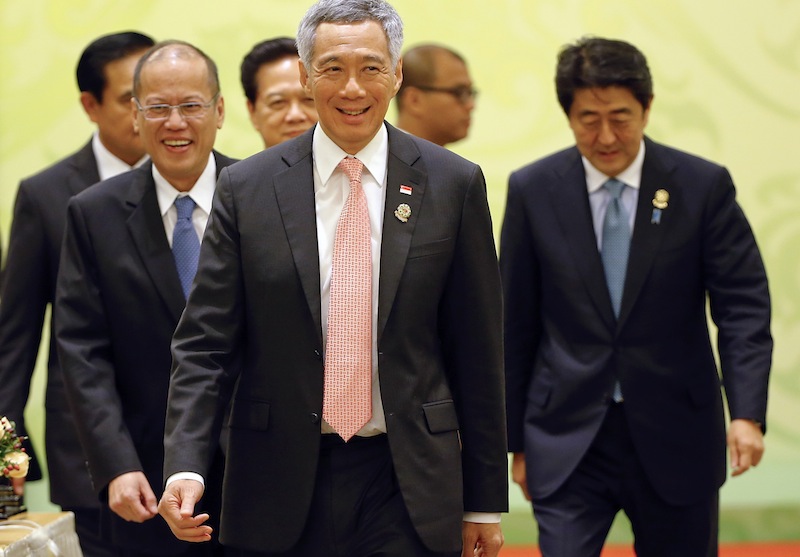


BRISBANE, Nov 17 — While the priority of the G20 leaders is sustaining global growth, countries must not leave out structural reforms, as it can hurt nations if issues go unresolved, said Prime Minister Lee Hsien Loong.
Addressing the G20 leaders at the closing session yesterday, Lee noted that not all structural issues that surfaced during the economic crisis in 2008 have been solved, although it has been six years. In an interview with the Singapore media at the end of the summit yesterday, Lee said countries have to put their own houses in order. Without national reforms, no amount of cooperation or consensus would succeed in boosting growth, he said.
He also suggested that countries complete the 2010 International Monetary Fund (IMF) reforms, which were agreed upon to reflect the increasing importance of emerging market countries. The reforms would change how the IMF’s quotas — financial stakes that determine voting power in the institution — are structured, such that voting shares would be shifted towards dynamic emerging market and developing countries.
The reforms are awaiting United States ratification.
“(US President Barack Obama said) if it cannot be done by the end of this year, he fully understands if the IMF must make alternative arrangements in order to adjust the ownership and share holdings in the IMF in the quotas ... to reflect the way today’s global economy is,” said Lee.
“With the emerging markets having gained a lot of heft, with China developing, there has to be a readjustment of the IMF in order to reflect this reality, it cannot reflect the old reality.”
Lee said although the G20’s target of promoting growth is ambitious, it is something the group should aim for.
“The countries variously agree that they ought to be investing more, but investing in what, and who’s to pay, and when, and how does that square with their budget, there are many imponderables,” he said. “I think we know what we need to do and that is to take the actions which will foster more dynamic economies in Europe, in Japan, in America, in Asia.”
Singapore is not a member of the G20, but was invited to participate in the meetings as a key member of the global economic system by Australia, the grouping’s current President.
Lee said the inclusion of a passage in climate change in the G20 communiqué was a “key first step” that would make it more likely for a deal to be reached when countries convene in Paris next year to hammer out an international agreement on carbon emissions.
Under the communiqué, the practical measures that countries could take were spelt out and a reference to contributing to the Green Climate Fund — which Mr Obama committed US$3 billion (RM10.04 billion) to on Saturday — was included.
“The Americans, having worked out something with the Chinese ... that was a key first step that makes it more likely that we can reach a deal in Paris. Because without an America-China deal, nobody else is going to volunteer to do anything,” Lee said, referring to the historic deal between the two nations to curb emissions at the Asia-Pacific Economic Cooperation summit last week.
“These are the two biggest emitters in the world. And if they can work something out, I think the rest of the pieces have a chance of falling into place,” he added.
Lee also expressed hope that the US mid-term elections — which went the way of the Republican party — will be favourable for trade and help move the Trans-Pacific Partnership (TPP) agreement, given that the Republicans are generally more inclined towards free trade.
On the sidelines of the summit, Mr Lee met Saudi Arabia’s Crown Prince Salman Abdul Aziz Al Saud and Queensland Premier Campbell Newman and reaffirmed strong ties. — TODAY


