


NOVEMBER 5 — Artificial intelligence (AI) is rapidly changing the way we seek and receive information, including information about our health. Today, many people use AI-powered applications to ask questions about symptoms, interpret medical reports and understand possible health conditions. Some even upload photographs of skin problems, dental conditions or medical images to obtain an instant assessment. Although this technology offers exciting possibilities, we need to pause and ask an important question: Can we really trust AI to diagnose our medical and dental conditions?
There is no doubt that AI has the potential to improve healthcare. It can analyse large amounts of information, recognise patterns and assist healthcare professionals in interpreting medical images. In medicine, AI systems are being developed to help detect abnormalities in X-rays, CT scans and other diagnostic images. In dentistry, AI can assist in identifying possible tooth decay, bone loss associated with gum disease and other abnormalities in dental X-rays. For example, an AI system may highlight an area on a dental X-ray that could indicate tooth decay, helping a dentist identify areas that require closer examination. When used appropriately, these tools may improve efficiency, support clinical decision-making and contribute to earlier detection of certain conditions.
However, there is another side to the story. AI is not a doctor or dentist, and it can get things wrong. An AI application may provide an answer that sounds confident and convincing but is inaccurate or incomplete. Consider someone experiencing severe toothache. After uploading a photograph, an AI application suggests that the problem is simply tooth decay. However, the actual cause could be a dental abscess, a cracked tooth or an infection involving the surrounding tissues. These conditions may require further investigations and different treatments. If the person relies entirely on the AI-generated answer, they may delay seeking proper dental care, potentially allowing the condition to worsen.
Another important point to remember is that AI does not always provide the same answer to every question. Different AI applications may generate different responses, even when given the same symptoms or photographs. Sometimes, the answer may also change depending on how the question is asked. This is because AI generates responses based on patterns in the information it has learned, rather than examining a patient in the same way a healthcare professional would. Therefore, receiving a consistent or convincing answer does not necessarily mean that the information is correct.
Why does this happen? A proper medical or dental diagnosis involves much more than looking at a photograph or prompting a list of symptoms. Doctors and dentists consider the patient’s medical history, conduct clinical examinations and, when necessary, request additional investigations before deciding on the most appropriate diagnosis and treatment. AI may not have access to all this information and cannot replace the professional judgement and clinical experience required to assess each individual patient.
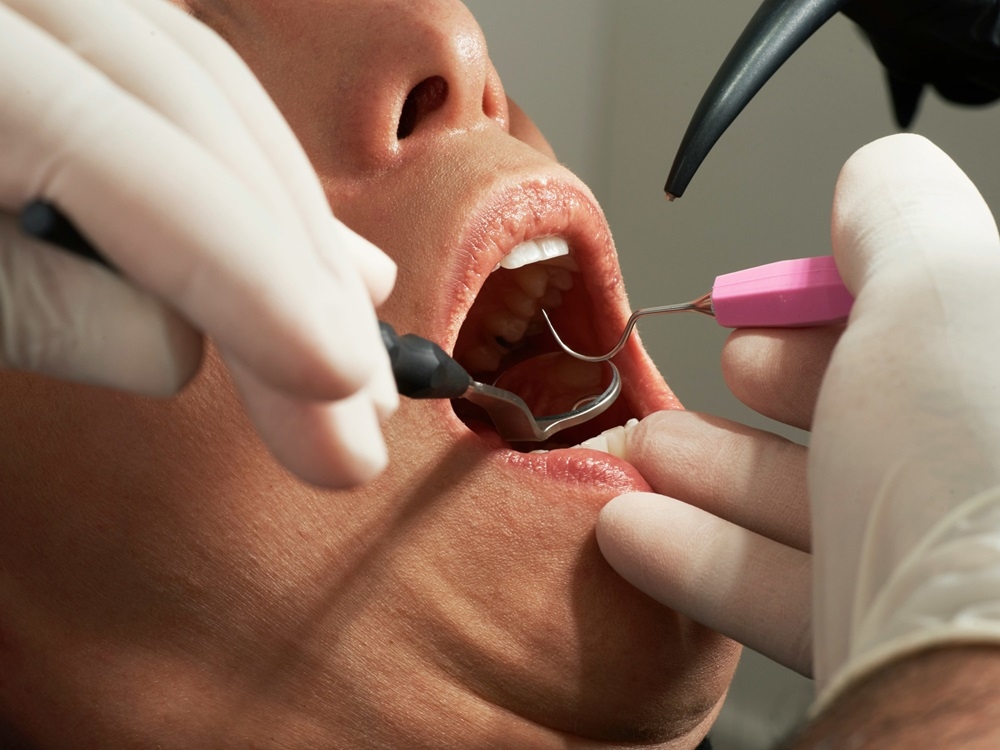
Furthermore, every patient is different. Two people may have similar symptoms but completely different underlying conditions. For example, a white patch in the mouth may be caused by something harmless, such as irritation, but it could also be associated with an infection or a potentially serious oral condition. A dentist needs to consider factors such as the patient’s age, medical history, habits, duration of the lesion and clinical appearance before reaching a diagnosis. A photograph alone may not provide enough information to distinguish between these conditions.
Another issue that deserves attention is personal privacy. When using AI applications, people may upload medical reports, dental X-rays, photographs and other sensitive health information without fully understanding how their data will be collected, stored or used. Before sharing such information, users should check the platform’s privacy policies and avoid uploading identifiable personal or medical details unnecessarily. We should also be cautious about following treatment recommendations generated by AI. For instance, someone experiencing toothache may be advised to take certain medications or try home remedies based on the symptoms provided. However, not all medications are suitable for everyone, and some conditions require urgent treatment rather than temporary relief. Taking medication without proper advice or delaying treatment because an AI application suggests that the condition is not serious may put one’s health at risk. AI can provide general information, but decisions about medication and treatment should always be discussed with a qualified healthcare professional.
Does this mean we should avoid using AI for health information? Not at all! AI can be a useful starting point for understanding unfamiliar medical terms, learning about general health conditions and preparing questions before visiting a healthcare professional. We should also learn to use AI appropriately by asking questions that help us understand health information rather than seeking a diagnosis. For example, we can use AI to explain medical terms, understand common symptoms or prepare questions for our dentist. The important thing is to use it wisely. Treat AI-generated responses as general information rather than a confirmed diagnosis. Always verify information through reliable health sources and consult a qualified doctor or dentist for professional assessment and treatment. Most importantly, persistent pain, swelling, bleeding, fever or other concerning symptoms deserve professional attention.
As AI becomes increasingly accessible, it is important for the public to develop the ability to use this technology responsibly. It can be a helpful assistant, but it should never become our sole healthcare adviser. After all, your health is too important to leave to an algorithm. When in doubt, consult your doctor or dentist. Let AI inform you but let healthcare professionals care for you.
* The authors are Assoc Prof. Dr. Nor Azlida Binti Mohd Nor from the Department of Community Oral Health & Clinical Prevention, Faculty of Dentistry, Universiti Malaya, and Assoc. Prof. Dr. Goh Yet Ching from the Department of Oral & Maxillofacial Clinical Sciences, Faculty of Dentistry, Universiti Malaya.
** This is the personal opinion of the writer or publication and does not necessarily represent the views of Malay Mail.


