


OCTOBER 24 — A student sits quietly in a Mathematics classroom, copying formulas from the board. The teacher explains, gives examples and assigns exercises. The student follows every instruction but understands very little. When the examination comes, the formulas are forgotten, the questions seem unfamiliar, and Mathematics becomes another subject to fear.
How many Malaysian children are experiencing this? More importantly, how long will we continue blaming students for poor Mathematics performance without questioning how we teach them? For years, improving Mathematics achievement has been an important educational priority in Malaysia. Yet we often respond to weak performance with more exercises, additional tuition and repeated examinations. Perhaps we have been asking children to work harder when we should be asking teachers and schools to teach differently.
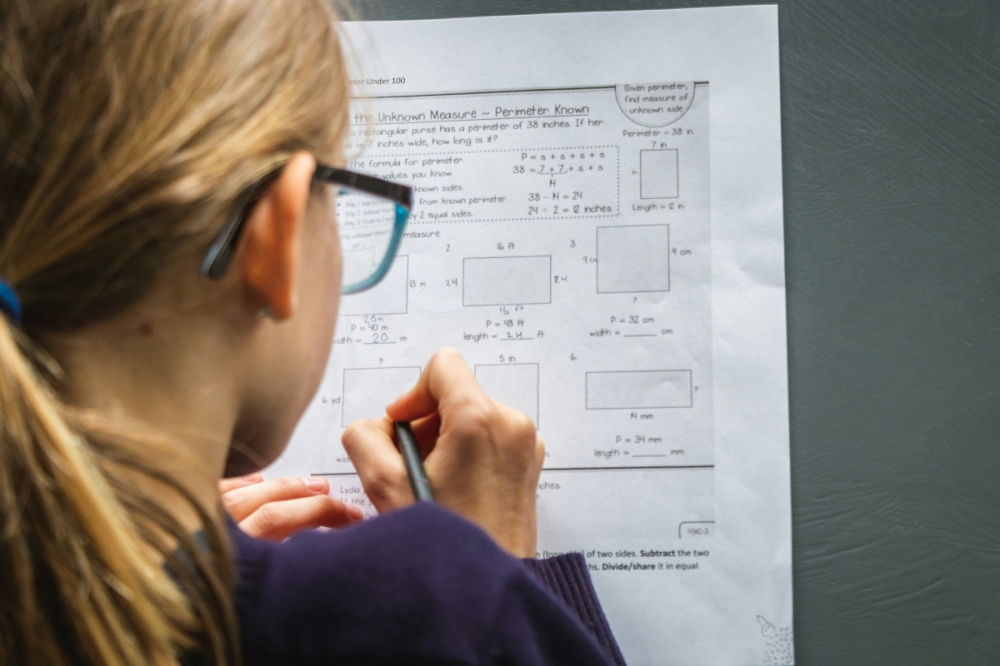
A recent study conducted by researchers from Universiti Utara Malaysia, Universiti Islam Antarabangsa Sultan Abdul Halim Mu’adzam Shah (UniSHAMS) and Universiti Teknologi Malaysia offers an important lesson. Published in the International Journal of Education, Psychology and Counselling in March 2026, the research examined whether changing classroom teaching could improve Mathematics achievement among students in religious tahfiz secondary schools.
The findings deserve serious attention. Students who experienced Quantum Learning recorded an average Mathematics score of 68.22, compared with 55.90 among students taught conventionally. That is a difference of 12.32 marks. Further statistical analysis confirmed a significant difference between the groups even after accounting for their initial performance. But the most important finding goes beyond examination scores. Students reported feeling more confident, motivated and interested in Mathematics. Some who previously struggled to understand mathematical concepts found learning easier when they could discuss problems with friends, use physical materials and participate in classroom activities.
For example, students learned about polygons by folding paper, discussed mathematical solutions in groups and participated in activities outside the classroom. These were not simply games to entertain students. They were carefully planned experiences that helped students connect abstract mathematical ideas with things they could see, touch and understand. This finding is particularly important for tahfiz students, who must balance academic subjects with demanding Quranic memorisation schedules. Their learning environment requires teaching approaches that recognise their academic and personal needs. The study suggests that a more interactive classroom can support Mathematics learning without compromising the distinctive purpose of religious education.
Another interesting finding concerned motivation. Positive relationships with classmates emerged as the strongest predictor among the three motivational dimensions examined. In other words, learning Mathematics is not necessarily an individual struggle. Students may learn better when they feel supported, included and comfortable asking questions. This should challenge our traditional understanding of classroom discipline. A quiet classroom is not necessarily a productive classroom. Students sitting silently in straight rows may appear attentive, but silence does not guarantee understanding. Sometimes meaningful learning is accompanied by discussion, movement, disagreement and even laughter.
Nevertheless, the study also identified challenges. Some students struggled with technology, while others experienced difficulties during group activities. This reminds us that no teaching approach works automatically for everyone. Teachers still need proper training, clear instructions and careful classroom management. Although the research involved only two schools over eight weeks, its findings provide a compelling reason to examine similar approaches in other Malaysian classrooms.
The immediate priority should not be another expensive educational programme. Schools can begin by encouraging Mathematics teachers to use simple materials, practical problems, purposeful group discussions and short reflective activities. School leaders should also provide teachers with opportunities to experiment, observe one another and improve their teaching practices. Parents must reconsider their expectations too. A good Mathematics lesson is not necessarily one where children complete the most worksheets. It is one where they can explain their answers, recognise mistakes and apply what they have learned.
Malaysia cannot afford to produce another generation of students who associate Mathematics with anxiety, memorisation and failure. Mathematics is essential for problem-solving, logical thinking and making informed decisions in everyday life. The warning from this research is clear that when students struggle with Mathematics, changing the teaching may be just as important as improving the students. Perhaps the real Mathematics problem in our schools is not that children cannot learn. It is that we have become too comfortable teaching them in ways that do not always help them understand.
* By Dr Zurina Hamid & Assoc. Prof. Dr. Muhammad Noor Abdul Aziz, School of Education, Universiti Utara Malaysia
** This is the personal opinion of the writer or publication and does not necessarily represent the views of Malay Mail.


