


OCTOBER 16 — Anyone who has spent time in manufacturing knows that even the best-laid plans can change overnight.
A supplier revises its prices, a shipment arrives late, or a customer changes an order at short notice, leaving the production team to work out how best to keep things moving.
For Malaysian manufacturers, these everyday realities now sit alongside shifting trade policies, geopolitical tensions and changing customer expectations.
It is understandable that business leaders are keeping a close eye on what might happen next.
But there is another question worth asking: how well do we understand what is happening within our own businesses today?
Malaysia’s manufacturing sector generated RM1.97 trillion in sales in 2025, up 4.2 per cent from the previous year, according to the Department of Statistics Malaysia (DOSM).
With 2.4 million people employed in the sector, there is plenty of reason to be optimistic about its contribution to the economy.
The opportunity now is to build on that foundation by helping manufacturers make confident decisions, even when conditions are less predictable.
The value of knowing where you stand
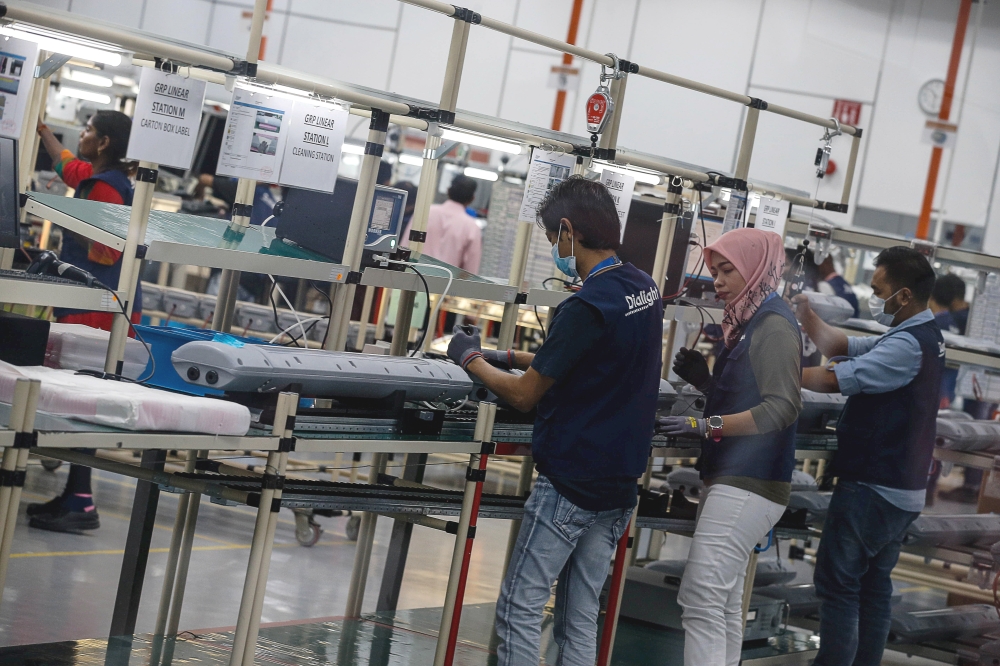
For manufacturers serving overseas markets, developments thousands of kilometres away can have very real consequences on the factory floor.
A change in demand can alter order volumes, higher freight costs can eat into margins, and a delayed component can hold up an entire production run.
Of course, no business can control everything happening around it. What it can do, however, is get a clearer view of how these changes affect its operations.
Take a new customer order, for instance. The revenue might look attractive, but can the factory accommodate it without disrupting existing commitments? Are the necessary materials available, and do the original cost estimates still hold?
These are straightforward questions, yet answering them can be surprisingly difficult when information about inventory, production, purchasing and finances sits in different places.
When teams have a shared, up-to-date picture of the business, these conversations become much easier.
Managers can spot potential constraints earlier, explore alternatives and make decisions based on what is actually happening, rather than what they assume is happening.
That does not remove the uncertainty, but it does give businesses more room to respond thoughtfully.
Busy does not always mean better
One thing worth remembering is that growth and profitability do not always move in tandem.
A factory can be running at full capacity while some jobs deliver thinner margins than expected, or an increase in orders can leave too much cash tied up in inventory.
For business leaders, the question is not simply how to secure more orders, but how to make sure those orders contribute to a healthier business.
Having a clearer view of costs and margins by product, customer or job can help management decide which opportunities make commercial sense, where efficiencies might be found and when pricing arrangements need another look.
Monthly reports remain useful, but business rarely waits for the end of the month.
When costs change or a delivery is delayed, being able to understand the implications promptly can make a meaningful difference to the decisions that follow.
Better decisions start with a shared picture
Production needs to know what can realistically be delivered, purchasing needs to understand supplier availability, and finance needs to see how decisions affect costs and cash flow.
These priorities are connected, yet teams can easily end up working with different versions of the same picture.
When information flows across the business, teams can spend less time reconciling numbers and more time deciding what to do next.
A potential delay becomes a chance to explore alternatives early, while a change in material costs can prompt a timely conversation about pricing.
The value lies not simply in having better information, but in giving people the context to act on it.
Confidence comes from being prepared
For Malaysian manufacturers, opportunities remain to explore new markets, improve productivity and move into higher-value activities.
Making the most of them does not require a perfect forecast, but it does require an honest understanding of what the business can deliver and where it can improve.
Unexpected changes will always be part of manufacturing. What matters is how quickly businesses recognise them, understand their implications and respond.
That hinges on having a clear view of increasingly complex, interconnected operations, so manufacturers can make better decisions, improve productivity and move up the value chain in line with the ambitions of Malaysia’s New Industrial Master Plan (NIMP) 2030.
* Ben Lim is the regional sales director for Epicor, South-east Asia.
** This is the personal opinion of the writer or publication and does not necessarily represent the views of Malay Mail.


