


SEPTEMBER 29 — One government armed the Tigers to drive India out. Decades later, another has taken away the statue of the Tamil hunger striker who died asking India to keep its promises.
The police came to Nallur after the commemorations were over. They removed Thileepan’s statue and carried it away.
The official explanation was law and public order. But politics is not only what a government says. It is what people hear. And many Tamils heard the old message again: Your grief is a problem. Your dead are inconvenient. Your memory needs our permission.
Thileepan was twenty-three when he died. Born Rasaiah Parthipan, he had been a medical student before joining the LTTE. By 1987, he was one of its political leaders. On 15 September, he began a fast in Nallur that would end with his death twelve days later.
His demands were directed at India: release Tamil political prisoners; stop state-backed settlement in Tamil areas; halt rehabilitation schemes until an interim administration was established; stop building police stations in the North and East; disarm home guards and remove security forces from schools and colleges. He was asking India to honour promises Tamils believed the Indo-Sri Lanka Accord had made. India expressed sorrow after he died. The demands remained.
A young man lay before the people, refusing food and water, growing weaker by the hour. The politics can be argued. The human cost is harder to dismiss.
And then comes the fact that unsettles every neat version of the story: in 1989, President Ranasinghe Premadasa’s government secretly armed the LTTE to fight the Indian Peace Keeping Force and help drive Indian troops out of Sri Lanka. A former Sri Lankan army general described the weapons transfers; the Institute of Peace and Conflict Studies records Premadasa’s decision to work with the LTTE against the IPKF.
Read that again. Colombo armed the very movement it would later call its mortal enemy because, at that moment, India was the power it wanted gone.
Governments make alliances when it suits them, then rewrite the story when the alliance expires. But history remembers the bargain. Yesterday’s enemy becomes today’s instrument. Yesterday’s ally becomes tomorrow’s threat. Sri Lanka’s own leaders helped arm the LTTE — and then expected the world to forget that when the weapons changed hands.
So what did removing Thileepan’s statue accomplish? A cleared patch of ground. A few days of headlines. Another reason for people in Jaffna to wonder why their grief is treated as a threat.
And remember the kanji. In May 2024, police arrested four Tamils, three of them women, for preparing and distributing Mullivaikkal kanji. This simple rice porridge had been a source of sustenance for civilians trapped in the war’s final months; Tamils now share it in memory of those who endured and died. The arrests came under a court order banning the distribution. Tamil and Muslim lawyers challenged it, and the Muttur court later rescinded the ban. Think about the obscenity of it: a pot of rice water, made in memory of the hungry, treated as a threat to public order. If people can be arrested for cooking the food that kept their families alive, what exactly does the state think it is protecting?
Look at Gaza. The histories are not identical, and no honest writer should pretend they are. But the warning is familiar: when power treats a people’s memory and mourning as an inconvenience, it does not erase their pain. It deepens it. You can demolish buildings, remove symbols, clear a square. You cannot order the bereaved to forget. You cannot make the world unsee what it has seen.
Sri Lanka should know how this works. In 1956, Sinhala became the sole official language. Tamil gained official-language status only in 1987. Policies on education and settlement in Tamil-majority areas added to grievances that politicians should have met with fairness and courage. These histories do not explain every act of violence. They do explain why a statue can mean far more than bronze.
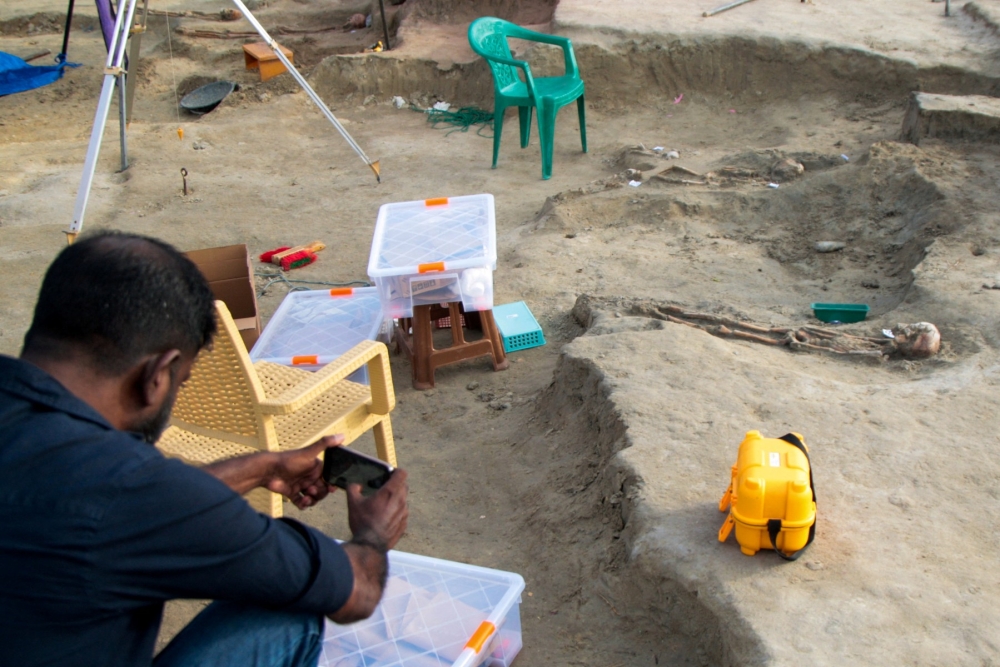
And still the earth is giving up its dead. At Chemmani, excavators have recovered 583 sets of human remains. Their identities, dates and causes of death have yet to be established through the forensic work still pending. Allegations of cluster-munition use during the war remain disputed; Sri Lankan officials deny the military used such weapons. These are reasons to investigate, not to look away.
A UN-appointed panel reported credible allegations of serious violations by both the government and the LTTE, and said civilian deaths could have reached 40,000. That was an estimate, not a final count or a court judgment. But behind every number is a person someone is still waiting for.
Then there is the old story of Dutugemunu and Elara. The Mahavamsa says Dutugemunu defeated Elara, the Tamil king, but arranged his funeral rites, built a monument where he fell and ordered that the place be honoured. The victor did not need to pretend the defeated had never existed.
A candle would have cost the modern state nothing. A moment of silence, less than nothing. Instead, the statue was taken away — and the wound was made public all over again.
No one has to agree with Thileepan’s politics to understand why he is mourned. A confident country does not need to police every act of remembrance. It can tell the truth about its past, even when that truth is uncomfortable. It can let people grieve without treating grief as sedition.
Dutugemunu knew how to honour an enemy. Premadasa knew how to arm one when it suited him. Modern politicians should be able to manage at least this much: leave the statue, light a candle, and let the dead be mourned.
The statue is gone. The history is not.
What kind of country fears a grieving people more than it fears its own past?
* This is the personal opinion of the writer or publication and does not necessarily represent the views of Malay Mail.


