


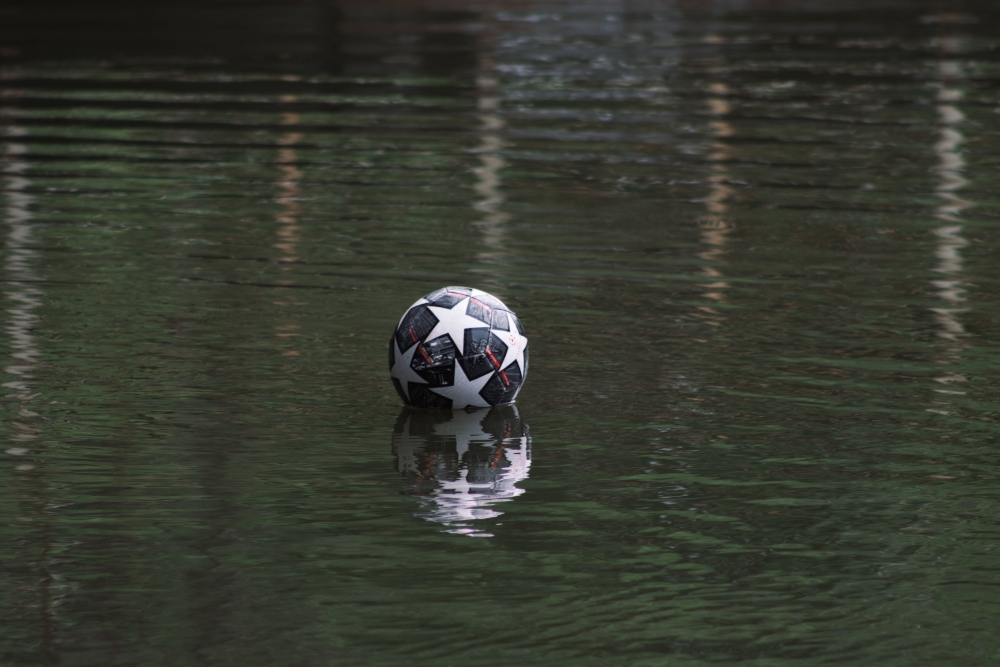
SEPTEMBER 17 — A football falls into a drain.
For a child, it may seem like a small problem. Just get the ball back and continue playing.
But in Taman Desa Kayangan, Sungai Karangan, Kulim, what began with a football ended with the deaths of four boys, aged between eight and 12, on September 14. The drain was reported to be about 10 feet deep and six feet wide.
I keep thinking about the football.
There is nothing unusual about a child wanting to get his ball back. Children play. Balls roll into places they should not. Children also make decisions without fully understanding what might happen next.
We know this. Yet we still tell them to be careful. We tell them not to go near drains, not to play near water, and not to do things that might put them in danger. Of course we should.
But is telling someone to be careful always enough?
Perhaps that is the question we need to ask.
Most of us hardly notice the drains around our neighbourhoods. They are simply part of the landscape, built to carry rainwater away from our homes and roads. A child may see something else. A ball has fallen inside. The ball needs to be retrieved. The danger may not seem obvious.
This is where I think we need to look at safety a little differently.
We often ask why someone went near a hazard. Perhaps we should also ask whether the environment was safe enough for the people who were likely to encounter it.
That is not about blaming the children. And it is certainly not about blaming anyone before the facts of the incident are established. It is about prevention.
A deep drain may be necessary. It has a purpose, and it needs to remain accessible for maintenance. But if it is located in a residential area, shouldn’t we also think about who is likely to be around it?
How deep is it? Can someone easily get into it? What happens if they fall? Can they get out? How close is it to homes or places where children play? And if the risk is significant, what can we do to make sure an accident does not become something much worse?
Perhaps it is a barrier. Perhaps a cover or grate. Perhaps another way of controlling access. The answer will depend on the circumstances.
But one thing seems clear. Safety cannot depend entirely on people always making the right decision. A warning tells us what not to do. A physical safeguard can protect us when we make a mistake. There is a difference.
As a mother, I know how often we say those two words: “Be careful.” We say them almost automatically. Be careful crossing the road. Be careful near the water. Be careful climbing that wall. We say them because we want our children to recognise danger.
But perhaps there is another responsibility. The people who design and manage the places where children live and play also need to think about what children are actually likely to do, not only what we hope they will do.
Children will play. They will chase a football. They will be curious. And sometimes, they will make a decision that an adult would never make. That is part of being a child.
Perhaps our environments need to account for that.
This does not mean every drain should be covered or every hazard removed. Infrastructure has to function, and safety measures have to be practical. But the protection should match the risk.
And the lesson from this tragedy should not stop at one drain.
Are there other deep drainage structures in residential areas that need a second look? Are there places where someone could fall in and find it difficult to escape? Have we become so used to these structures that we no longer really see them?
These are uncomfortable questions. But sometimes prevention begins with asking uncomfortable questions.
We tend to notice safety most when something has already gone wrong. Rescue teams arrive. Investigations begin. Warnings are issued. The more important work may be the work nobody sees. Someone notices a hazard. Someone asks whether it is safe. Someone does something about it. And nothing happens.
No rescue. No investigation. No family waiting for news that will change their lives forever.
“Be careful” will always be something we tell our children. And it should be. But perhaps we also need to ask ourselves whether we have done enough to make the places where they live and play safe when, for one brief moment, they forget to be careful.
Because children should not have to understand every hazard around them before they are allowed to play. And good safety should not require people to behave perfectly.
Sometimes, it begins with simply looking at an ordinary place and asking:
What could happen here, and what can we do before it does?
* Amalina Mohd Roze is a senior lecturer in School of Business Management, Universiti Utara Malaysia, specialising in Occupational Safety and Health, occupational health services, psychosocial health and workplace risk assessment and management.
** This is the personal opinion of the writer or publication and does not necessarily represent the views of Malay Mail.


