


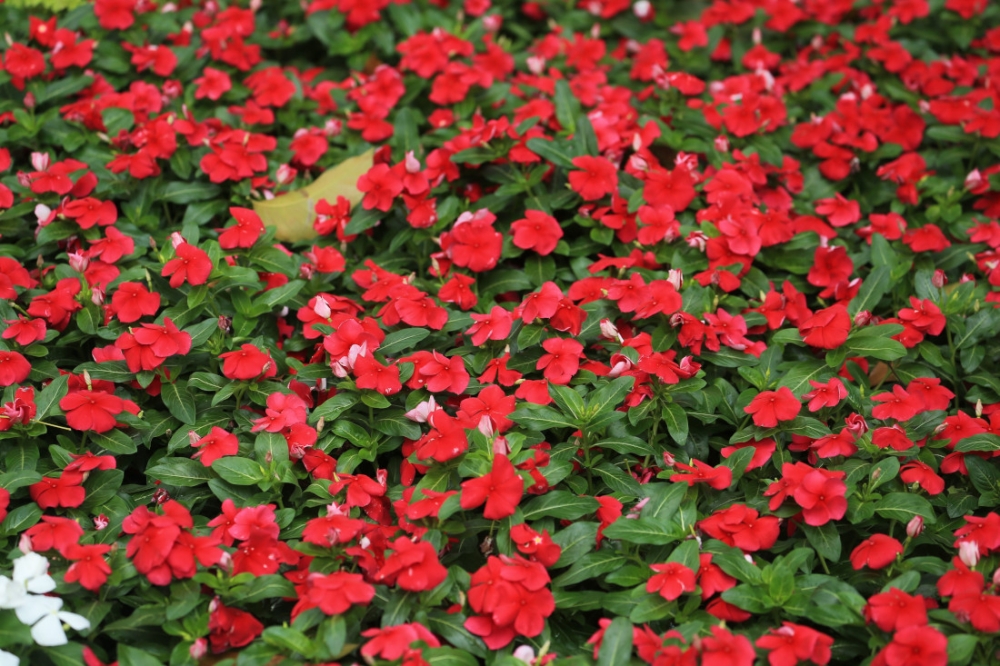
SEPTEMBER 2 — Have you ever noticed the colourful flowers that brighten Jalan Parlimen on the approach to Parliament House? Or the beautifully landscaped roads along Jalan Tun Razak, Jalan Ampang, Jalan Sultan Ismail and many of Kuala Lumpur’s other main thoroughfares?
They soften the city’s concrete landscape, transforming busy roads into welcoming avenues and reminding us why Kuala Lumpur has long been known as a Garden City. We admire the colours that change with the seasons and the greenery that provides a sense of calm amid the constant movement of traffic.
Yet for a long time, I never stopped to ask a simple question: Who keeps the flowers blooming?
Over the past few years, during my morning drives along Jalan Parlimen, I have often found myself behind a DBKL water tanker moving slowly along the roadside. Workers stand at the back, guiding long hoses towards flower beds and shrubs, patiently ensuring that every plant receives enough water before the day’s heat arrives. On other mornings, I see different crews trimming hedges, replacing flowering plants or clearing away fallen leaves. Their work begins while much of the city is still asleep. By the time traffic reaches its morning peak, the roadsides have already been quietly prepared for another day.
Like many people, I used to notice only the flowers. Gradually, however, my attention shifted towards the people caring for them.
It occurred to me that we naturally admire the finished result. We notice the vibrant colours, the neatly trimmed hedges and the pleasant drive through the city. Rarely do we notice the countless hours of patient work that make such beauty possible. Perhaps this is because successful maintenance has a curious quality: when it is done well, it becomes almost invisible. Only when it stops do we suddenly become aware of its importance.
If these workers did not report for duty, the change would not take long to appear. Flower beds would begin to dry out. Shrubs would become overgrown. Fallen leaves would accumulate. Before long, the city would lose much of the warmth and beauty that we now take for granted. Ironically, the first time many of us would notice their work would be when it was no longer being done.
The more I reflected on this, the more I realised that this quiet pattern extends far beyond our gardens and roadsides.
Much of society depends on people whose contributions are most visible only in their absence. We admire students who excel academically, yet we seldom see the years of patient preparation invested by teachers long before examination results are announced. Every lesson carefully planned, every assignment thoughtfully marked and every word of encouragement offered to a struggling student becomes part of a success that others eventually celebrate.
The same may be said of researchers. A scientific breakthrough may attract headlines, but behind every published discovery lie years of careful experiments, repeated failures, revised hypotheses and countless hours spent asking questions whose answers were never guaranteed. Much of that work passes unnoticed because research advances through small, steady steps rather than dramatic moments. Yet without those years of patient effort, many of the advances we now take for granted would never have come into being.
There is something quietly admirable about work of this nature. It is carried out not for applause, but because someone understands that certain responsibilities simply need to be fulfilled. The landscape workers tending Kuala Lumpur’s flower beds may never meet the thousands of people who enjoy their work each day. The teacher may never know how a simple conversation shaped a student’s future. The researcher may never meet the patients whose lives are improved by a discovery made years earlier.
Yet each continues, trusting that faithful work has value even when its rewards are neither immediate nor widely recognised.
Perhaps we are naturally drawn to outcomes because they are easy to see. Flowers in bloom, successful students and scientific discoveries all provide visible evidence of achievement. Maintenance, teaching and research, however, remind us that lasting outcomes are rarely accidental. They are usually the product of quiet, consistent effort carried out long before anyone notices the results.
These days, whenever I drive along Jalan Parlimen, I still admire the colourful flowers lining the roadside. But before I notice the blossoms, I often find myself looking for the water tanker moving patiently ahead and the workers tending each flower bed with unhurried care.
The flowers remain beautiful, but they have also become a quiet reminder that behind almost everything we admire are hands that have been faithfully at work long before we arrived to enjoy the result.
Perhaps that is the lesson the flowers have been teaching me all along. Their beauty does not lie only in what blooms before our eyes, but also in the unseen dedication of the hands behind the flowers.
* The author is an emeritus professor of Biomedical Imaging at the Faculty of Medicine, Universiti Malaya. A 2020 Merdeka Award recipient, he is a medical physicist by training but also enjoys writing, drawing, listening to classical music, and bridging the gap between older and younger generations. He may be reached at [email protected]
** This is the personal opinion of the writer or publication and does not necessarily represent the views of Malay Mail.


