


AUGUST 10 — One of my happiest childhood memories was accompanying my mother to the old Central Market in Kuala Lumpur during the 1960s. Long before it became the cultural landmark we know today, it was the bustling wet market where families gathered every morning to buy fresh food for the day.
Whenever my mother asked, “Would you like to come to the market?” my answer was always an enthusiastic “Yes!” At that age, I thought I was simply following her on a shopping trip. Only much later did I realise that those mornings were quietly teaching me lessons that no classroom ever did.
Even before we reached the entrance, the aroma of fresh vegetables and spices mingled with the salty scent of seafood. As we walked further in, the air grew heavier with the smell of fish and prawns resting on melting ice, freshly butchered meat and damp concrete floors that were constantly being hosed down.
The market was alive with movement and sound. Vendors called out the freshness of their produce while customers bargained enthusiastically over prices. From the poultry section came a chorus of clucking chickens, quacking ducks and the occasional flutter of wings from caged birds. Nearby, butchers worked with astonishing speed, their heavy cleavers producing a steady thwack... thwack... thwack... against thick wooden chopping blocks.
To a young boy, everything seemed fascinating. The fish stalls especially captured my imagination. Large fish glistened on beds of crushed ice while tanks teemed with live groupers, snakeheads, catfish and freshwater prawns. Customers simply pointed to the fish they wanted, and the vendor would deftly scoop it out, weigh it and prepare it for cooking.
Buying chicken was another unforgettable experience. My mother would carefully choose a live chicken from a cage. The vendor would skilfully slaughter it, drain the blood, feed it through a de-feathering machine and clean it, all within a few minutes. At first, I did not dare watch. It felt too cruel. Gradually, however, curiosity overcame hesitation, and I began to understand that the neatly cooked chicken on our dining table had a beginning that I had never thought about before.
Today we simply pick up a neatly packaged frozen chicken from a supermarket freezer. It is undoubtedly more convenient, but it also means that many children grow up without ever seeing where their food comes from. Looking back, I realise that the wet market was quietly teaching me respect, not only for food itself, but also for the labour behind it.
Walking through the narrow aisles required its own kind of skill. We stepped around puddles splashed from the fish stalls, while workers pushing heavily laden trolleys stacked with baskets of vegetables or seafood called for people to make way. The crowd instinctively parted before closing in again, as though everyone understood their part in an unspoken choreography.
I noticed something else as well, although I did not appreciate its significance until much later.
The market was never just about buying and selling. Friends met unexpectedly and chatted in the middle of the aisles. Younger shoppers quietly helped elderly people carry heavy baskets. Vendors knew many of their customers by name and often kept aside the freshest produce for those who returned week after week. Occasionally, voices were raised over prices or someone accidentally bumped into another shopper, but the disagreement rarely lasted. Before long, everyone returned to what they had been doing, as though they understood that tomorrow they would meet again.
The market reflected the Malaysia I knew as a child. Malay, Chinese and Indian traders worked side by side, each offering their own produce and specialties. Customers rarely thought about ethnicity. We simply bought from the stall that sold the freshest fish, the best vegetables or offered the fairest price. Trust was earned through honesty, quality and years of familiarity rather than race or religion.
None of these lessons were taught deliberately.
My mother never stopped to explain the dignity of honest work, the importance of trust or the value of living harmoniously with people from different backgrounds. She simply took me with her to the market, and I learnt by watching, listening and absorbing the world around me.
Perhaps that is how some of life’s deepest lessons are acquired. They are not delivered through lectures or written in textbooks. They are woven quietly into ordinary experiences, waiting patiently until we are old enough to recognise what they have been teaching us all along.
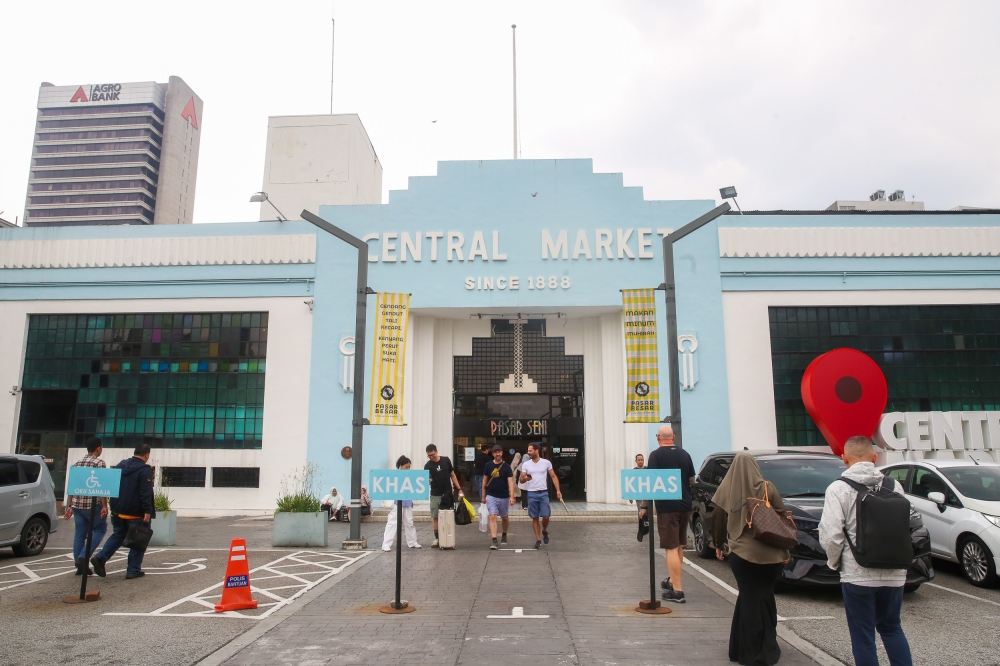
The old Central Market still stands proudly today as Pasar Seni, one of Kuala Lumpur’s best-known cultural landmarks. Having witnessed more than 140 years of history, it has evolved from a bustling wet market into a vibrant centre for arts, crafts and Malaysian heritage. Whenever I visit, I still picture my mother carrying her rattan shopping basket from stall to stall, pausing here, smiling there, deciding carefully what to buy for the family.
For many years, I believed those mornings were simply errands. Looking back now, I realise they were among the earliest classrooms of my life. My mother probably never imagined she was giving me an education simply by asking, “Would you like to come to the market?” Yet every visit quietly shaped the way I would later understand work, community, trust and gratitude.
Perhaps that was the greatest gift of the old wet market. It did not merely feed our families. It also taught us, often without our realising it, that some of life’s most enduring lessons are learned long before we know we are being taught.
* The author is an Emeritus Professor of Biomedical Imaging at the Faculty of Medicine, Universiti Malaya. He may be reached at [email protected]
** This is the personal opinion of the writer or publication and does not necessarily represent the views of Malay Mail.


