


AUGUST 10 — The statement by Barisan Nasional chairman Datuk Seri Ahmad Zahid Hamidi that Melaka BN is prepared to hold discussions with any coalition ahead of the coming state election deserves more attention than the usual arithmetic of seat allocation.
Zahid has reportedly authorised Melaka BN chairman Datuk Seri Ab Rauf Yusoh to negotiate with other coalitions.
He has also acknowledged the obvious: seat allocation is invariably one of the most difficult parts of any electoral negotiation, although differences can be overcome through serious discussion.
The larger question is therefore not whether BN can negotiate. It is what kind of Malaysia BN wants those negotiations to produce.
This matters especially as Malaysia approaches Merdeka Day on August 31 and Malaysia Day on September 16.
These two national occasions should remind every political party that electoral tactics cannot be completely divorced from the historical foundations of the country.
Merdeka was not achieved by one community alone.
Nor was Malaysia formed in 1963 as an exclusively communal enterprise.
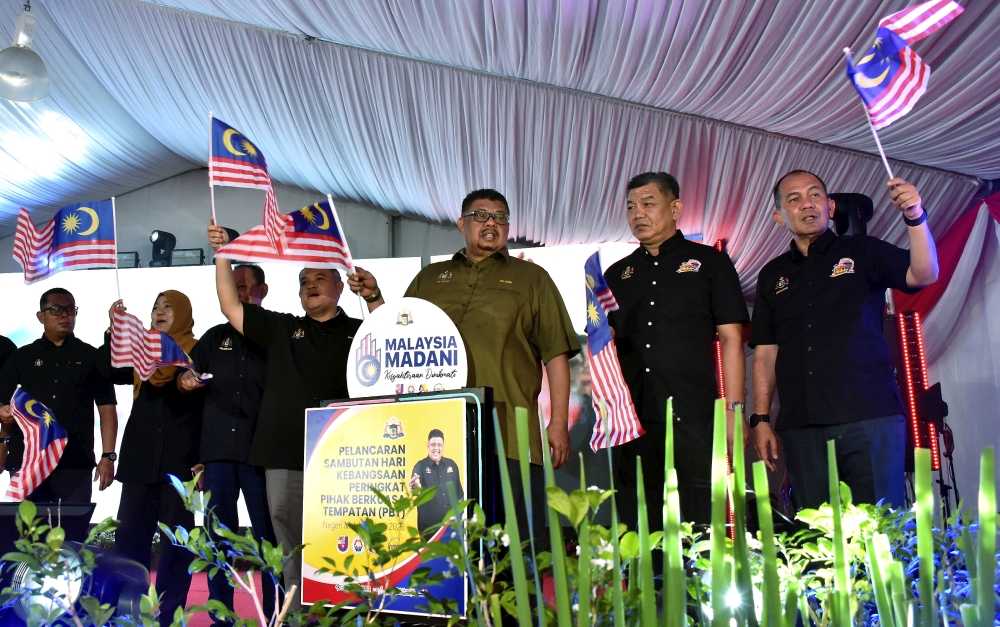
Both were products of negotiation, accommodation and political compromise among communities, territories and political leaders who frequently disagreed with one another.
BN, as the institutional descendant of the Alliance that played the central political role in achieving independence, should understand this better than most.
That is why negotiations between Melaka BN and the local leadership of Pakatan Harapan should remain firmly on the table.
This does not mean that BN must surrender its identity to PH. Neither does it mean that PH should dictate the distribution of seats.
Political negotiations are precisely about recognising differences while finding sufficient common ground to prevent those differences from becoming destructive.
The alternative is to reduce Malaysian politics increasingly to one overriding proposition: that Malay-Muslim parties must combine against everyone else.
That proposition may occasionally appear electorally attractive. But strategically, it contains enormous risks for BN.
BN has historically been successful precisely because it attempted — however imperfectly — to build a coalition extending beyond one ethnic or religious constituency.
Umno worked with MCA and MIC, and the wider BN eventually incorporated parties representing different regional and communal interests.
If BN gradually transforms itself into an appendage of an exclusively Malay-Muslim electoral configuration, it risks abandoning the very political architecture that once made it Malaysia’s dominant national coalition.
This is where Melaka becomes important.
A negotiation between BN and PH in Melaka would demonstrate that political cooperation need not be governed entirely by communal arithmetic.
It would also demonstrate that state politics can retain some autonomy from the ideological pressures generated at the national level.
There is another strategic consideration. Malaysia does not end at the Peninsula.
Sabah and Sarawak remain indispensable pillars of the federation.
Any political configuration in Peninsular Malaysia that appears increasingly organised around an exclusive conception of Malay-Muslim political consolidation will inevitably be watched carefully across the South China Sea.
Malaysia Day should therefore weigh heavily on BN’s calculations.
September 16 reminds Malaysians that the federation is larger and more complicated than the politics of any single community, party or peninsula.
The political centre of Malaysia cannot remain stable indefinitely if Sabah and Sarawak begin to believe that national politics is moving towards an ideological arrangement fundamentally different from their own plural traditions.
BN should therefore think beyond the next state election.
The immediate temptation after recent electoral setbacks and shifting voting patterns may be to construct whatever alliance appears capable of delivering the largest number of seats.
But winning an election and building a sustainable national coalition are not necessarily the same thing.
A coalition can win overwhelmingly in one state and simultaneously weaken its acceptability elsewhere.
This is why Zahid’s willingness to allow negotiations should be treated as an opening rather than a tactical footnote.
Ab Rauf and the Melaka BN leadership should explore seriously whether a workable understanding with the local PH leadership can be reached.
Both sides will have demands. Both will have seats they regard as non-negotiable. Both will face grassroots resistance.
That is normal. BN feels it has trigger a Blue Wave in Johor and Negeri Sembilan. PH meanwhile does not mind miniaturizing it to allow the Unity Government to last a full term.
What matters is whether negotiations begin from the premise that neither coalition needs to destroy the other in order to survive.
Indeed, BN and PH have already demonstrated at the federal level that parties with long histories of rivalry can cooperate when circumstances require political stability. The arrangement has never been frictionless, nor should anyone pretend otherwise.
But democracy does not require political partners to love one another. It requires them to recognise when compromise serves a larger constitutional purpose.
The approaching Merdeka and Malaysia Day celebrations offer BN an appropriate moment to rediscover this instinct.
Umno does not have to stop being Umno. BN does not have to become PH. Nor does PH have to abandon its own political identity.
But all of them should remember that Malaysia itself was constructed through negotiation.
The Federation survives because its different communities, states and political traditions repeatedly find ways — sometimes awkwardly — to coexist.
Melaka therefore presents BN with something more consequential than another opportunity to maximise seats. It presents BN with a choice about the kind of coalition it intends to become.
It can move deeper into a politics where electoral cooperation is increasingly organised around communal consolidation.
Or it can preserve its ability to negotiate across Malaysia’s political divide and remain a coalition capable of speaking to Malays, Chinese, Indians, Sabahans and Sarawakians alike.
For a party whose history is inseparable from Merdeka, the latter course should not appear alien.
It should appear familiar.
And as Malaysia prepares to celebrate August 31 and September 16, perhaps that is the most important political lesson of all: Merdeka was achieved through negotiation, Malaysia was created through negotiation, and Malaysia’s future will also have to be negotiated.
Melaka would be a good place to remember it.
* Phar Kim Beng is a professor of Asean Studies and a director at the Institute of International and Asean Studies, International Islamic University Malaysia.
** This is the personal opinion of the writer or publication and does not necessarily represent the views of Malay Mail.


