


AUGUST 9 — There is a fundamental problem confronting PAS under Tan Sri Abdul Hadi Awang. It wants to become sufficiently powerful to govern Malaysia, yet it continues to struggle to convince substantial numbers of non-Malays and non-Muslims that they would have an equal and secure political place under a government in which PAS exercises dominant influence.
PAS itself has acknowledged the electoral dimension of this weakness. Hadi conceded after GE15 that the party had failed to attract sufficient non-Muslim support and needed to overcome this problem before GE16.
But recognising an electoral problem is different from confronting its political causes.
This is where the emergence of Parti Wawasan Negara under Datuk Seri Hamzah Zainudin becomes important.
The central question is not whether Wawasan is moderate. Nor should Wawasan automatically be condemned merely because it cooperates with PAS.
The question is whether PAS is attempting to use Wawasan’s more conventional political language to soften PAS’s image without undertaking an equivalent transformation within PAS itself.
That would be political whitewashing rather than political moderation.
And Malaysians should understand the difference.
Hadi’s PAS is not simply Nik Aziz’s PAS
The late Datuk Nik Abdul Aziz Nik Mat was certainly an Islamist. There should be no historical romanticism about this. PAS under Nik Aziz remained socially conservative and committed to an Islamic political programme.
Yet Nik Aziz gradually recognised an unavoidable Malaysian reality: PAS could not hope to become a genuinely national political force by speaking principally to Muslims.
That understanding helped make possible PAS’s cooperation with DAP and PKR.
It was an extraordinary experiment precisely because the ideological differences between PAS and DAP were enormous.
Yet Nik Aziz was prepared to work across that divide.
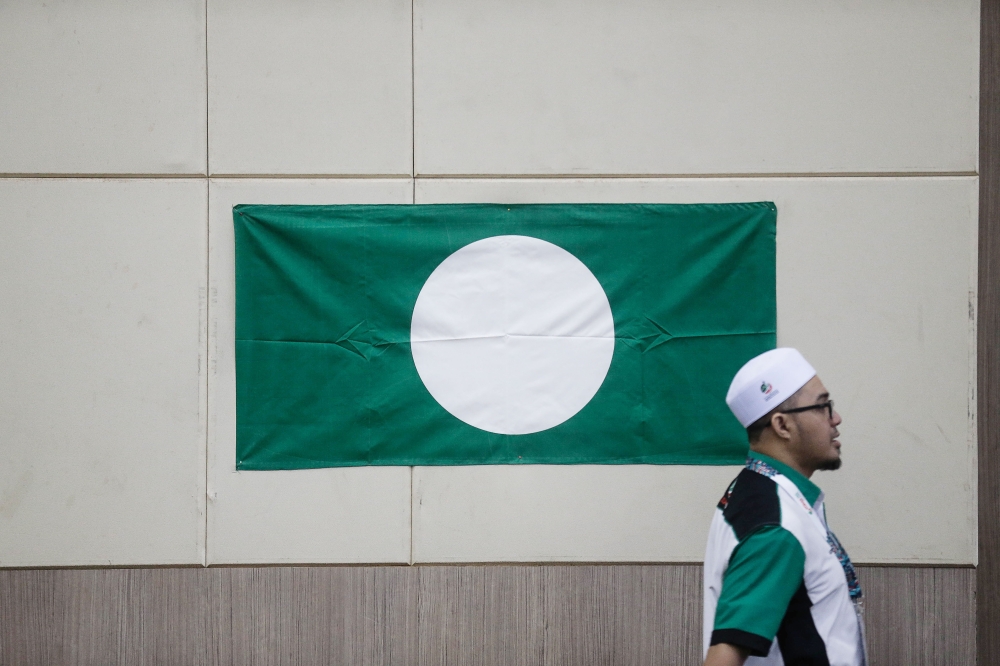
The significance was not that PAS suddenly became secular or liberal. It did not.
The significance was that PAS accepted the discipline of coalition politics in a plural society. It had to persuade Malaysians outside its natural constituency. It had to defend Islamic politics in the language of justice. It had to reassure people who did not share its theological assumptions.
The burden of moderation rested on PAS itself.
That is the important distinction.
Under Hadi, the trajectory has changed.
The emphasis has increasingly shifted towards the consolidation of Malay-Muslim political strength. Political competition is consequently liable to be framed not merely as a disagreement over taxation, investment, education, healthcare or governance, but as a struggle over who possesses sufficient political power to protect Islam and the Malays.
This is dangerous territory in a plural federation.
Malay and Muslim interests are entirely legitimate subjects of democratic politics. So are Chinese, Indian, Dayak, Kadazan-Dusun, Iban, Orang Asli and every other Malaysian community’s interests.
The problem begins when democratic politics becomes an arithmetic exercise in communal consolidation.
Once politics is framed primarily around ensuring that one community possesses sufficient political power, every other community is eventually forced to ask: sufficient power against whom?
That is precisely the question PAS must answer.
Enter Wawasan
Parti Wawasan Negara presents an intriguing solution to PAS’s political predicament.
Hamzah’s new party speaks more naturally in the vocabulary of governance, development, national reconstruction and political pragmatism.
But its relationship with PAS was close from birth.
When Hamzah announced Parti Wawasan Negara in June, he publicly said that the party’s very name had been suggested by Hadi. He also spoke of the need for the fledgling party to receive Hadi’s guidance and direction, while declaring that Wawasan would work with PAS, Gerakan and other parties.
This is politically significant.
Nobody should therefore analyse Wawasan as though it appeared independently of PAS’s larger political strategy.
The relationship immediately raises a simple question:
Is Wawasan pulling PAS towards the centre, or is Wawasan making PAS appear closer to the centre than PAS actually is?
There is an enormous difference between the two.
If Hamzah and Wawasan persuade PAS to adopt a genuinely more inclusive Malaysian political vocabulary, that should be welcomed.
If PAS begins unequivocally reassuring non-Muslims, defending constitutional pluralism, reducing inflammatory racial and religious rhetoric and demonstrating through policy that every Malaysian possesses an equal stake in the country’s future, then cooperation with Wawasan may indeed have produced something constructive.
But the evidence must come from PAS.
A political party cannot outsource moderation.
Changing the wrapper is not changing the product
This is the main criticism that should be directed towards Hadi-led PAS.
PAS cannot answer criticism of its politics merely by displaying moderate allies.
Having Gerakan beside PAS does not automatically make PAS moderate.
Working with Wawasan does not automatically make PAS moderate.
Cooperating electorally with MCA or MIC would not automatically make PAS moderate.
And reaching tactical arrangements with UMNO and Barisan Nasional certainly does not automatically make PAS moderate.
Indeed, PAS has previously invoked its cooperation with non-Muslim parties as evidence against accusations that it is extremist.
In 2022, Hadi pointed to Gerakan and support from MCA and MIC when rebutting such criticism.
That demonstrates precisely why Malaysians should distinguish between coalition composition and ideological transformation.
A party’s moderation must ultimately be judged from its own rhetoric, policies and behaviour.
The distinction becomes even more important because Wawasan has quickly become part of the opposition’s electoral machinery. Hamzah played a prominent role in the recent Negeri Sembilan arrangements and in explaining the opposition’s electoral cooperation with BN.
Thus Wawasan potentially gives PAS something politically valuable.
It provides a bridge.
PAS has enormous organisational machinery and a substantial Malay-Muslim electoral base. What it has historically struggled to acquire is comparable confidence among Malaysian Chinese, Indians, Sabahans and Sarawakians, as well as sections of the moderate urban electorate.
Wawasan can potentially enter political spaces where PAS encounters resistance.
Hamzah can speak the language of governmental competence and administrative experience.
Wawasan can interact with BN.
Gerakan can provide a multiracial component.
Together they can construct a political exterior broader than PAS itself.
That is sophisticated coalition politics.
But Malaysians must ask what sits at the centre of the coalition.
Who moderates whom?
This is ultimately the test.
Coalitions inevitably change their members.
When PAS worked closely with DAP and PKR during the Pakatan Rakyat period, PAS was exposed continuously to political constituencies very different from its own.
There was friction — sometimes enormous friction — but there was also constraint.
PAS had to negotiate.
PAS had to compromise.
PAS had to explain itself to non-Muslims.
PAS had to confront the reality that governing Malaysia required more than winning overwhelmingly Malay constituencies.
Eventually those contradictions contributed to Pakatan Rakyat’s collapse.
But the experiment nevertheless demonstrated something valuable about Malaysian politics: parties with dramatically different ideological foundations could attempt to construct a common democratic platform.
The present arrangement surrounding PAS appears different.
PAS is increasingly the organisational and electoral heavyweight.
Wawasan therefore faces the opposite danger.
Instead of Wawasan moderating PAS, PAS may gradually determine the political boundaries within which Wawasan operates.
This is especially worth remembering because Wawasan’s connection with PAS is not speculative. Hamzah himself credited Hadi with naming the party and spoke at its launch about Hadi’s guidance.
That does not make Wawasan a PAS puppet.
But it makes scrutiny entirely reasonable.
Islam is not the problem
None of this criticism should be transformed into criticism of Islam.
Malaysia is a Muslim-majority country. Islam occupies a constitutionally recognised position in the Federation and has profoundly shaped Malay civilisation and Malaysian political history.
Nor should criticism of PAS become a euphemism for Islamophobia.
The issue is political, not theological.
The question is how a political party translates religion into the exercise of democratic power in an extraordinarily diverse federation.
Islam does not require Malaysians to be permanently divided into mutually suspicious political camps.
Nor should political Islam be reduced to electoral calculations about which combination of Malay parties can accumulate the largest bloc of Muslim votes.
Malaysia needs something larger.
The country needs a politics capable of reassuring a Malay farmer in Kelantan, a Chinese shopkeeper in Johor, an Indian professional in Negeri Sembilan, an Iban family in Sarawak and a Kadazan-Dusun family in Sabah that all of them belong completely to the same federation.
That is the standard against which any party aspiring to govern Malaysia should be judged.
PAS included.
Wawasan cannot become a political detergent
There is therefore nothing wrong with PAS working with Wawasan.
The problem arises if Wawasan becomes political detergent—a means of washing away PAS’s harder image while leaving the underlying political formulation substantially untouched.
Malaysians should demand something more meaningful.
If PAS wants to become a national governing party, let PAS itself demonstrate its transformation.
Let its leaders speak consistently about equal citizenship.
Let PAS explain precisely what political rights and cultural confidence Malaysian Chinese and Indians would enjoy under a PAS-dominant government.
Let it reassure Sabah and Sarawak that their distinctive religious and cultural traditions will remain protected.
Let PAS demonstrate that disagreement with the party is not disagreement with Islam.
And let it show that Malay-Muslim political strength does not require other Malaysians to become politically peripheral.
These are not unreasonable demands.
They are the minimum requirements of governing Malaysia.
Nik Aziz increasingly understood that PAS had to cross communal boundaries itself.
The danger today is that Hadi-led PAS believes political partners can cross those boundaries on its behalf. They cannot.
Wawasan cannot manufacture moderation for PAS. Only PAS can change PAS.
That is why the difference between Nik Aziz’s trajectory and Hadi’s trajectory is no pebble in the shoe.
It concerns the direction in which one of Malaysia’s largest political movements wants to take the federation.
If PAS wants Malaysians to believe that direction has changed, it must demonstrate the change from within. That’s impossible when Hadi-led PAS insists on a Malay Muslim Unity front.
Otherwise, Wawasan risks becoming not the instrument through which PAS becomes moderate, but the attractive shop window through which an essentially unchanged PAS is presented to a much larger Malaysian market.
Changing the window display is easy. Changing the political product behind it is much harder.
And that is the transformation Malaysia should demand before entrusting Hadi-led PAS with substantially greater national power.
* Phar Kim Beng is a professor of Asean Studies and a director at the Institute of International and Asean Studies, International Islamic University Malaysia.
** This is the personal opinion of the writer or publication and does not necessarily represent the views of Malay Mail.


