


JULY 29 — Former DAP Member of Parliament Ronnie Liu sparked public debate through a post on his official Facebook page on 26 July 2026, in which he claimed that “Every ethnic group in Malaysia has origins outside this land, except the Orang Asli.” He further argued that the Malays, like the Chinese and Indians, trace their ancestry from outside this land, and that only the Orang Asli are indigenous to the country. His remarks subsequently received media attention, including a Sinar Harian report titled “PERKASA Rejects Misleading Narrative on Indigenous Status and the History of Malaysia’s Formation,” published on 26 July 2026.
There is no dispute that the Orang Asli are the earliest known inhabitants of Peninsular Malaysia. This is a well-established historical and anthropological fact. However, does that automatically mean that the Malays are not indigenous to the Malay Peninsula? The answer is clearly no.
If the logic advanced by Ronnie Liu were to be applied consistently, then it should also be applied to other countries. China, for example, officially recognises 56 ethnic groups. Besides the Han, there are Tibetans, Uyghurs, Mongols, Zhuang, Miao and Yi, all of whom have long-standing historical roots in the country. Yet the existence of these communities has never led historians to conclude that the Han have no deep historical connection with China.
The same applies to Japan. The Ainu and the Ryukyuan peoples inhabited parts of the Japanese archipelago long before the emergence of the modern Japanese state. Nevertheless, no serious historian argues that the Japanese are therefore not indigenous to Japan simply because other communities settled there earlier.
Taiwan presents a similar picture. Indigenous Taiwanese communities lived on the island long before large-scale Han migration. Yet Taiwan’s history is not interpreted solely through the lens of who arrived first.
Thailand offers another useful example. Historical records demonstrate the long-standing presence of Mon, Khmer and Malay communities in different parts of the kingdom. Yet this has never resulted in the conclusion that the Thai people are not indigenous to Thailand.
Vietnam provides another useful example. The Cham people established the Kingdom of Champa and have inhabited parts of present-day central Vietnam for centuries. Yet the historical presence of the Cham has never led to the conclusion that the Kinh (Viet), who constitute the overwhelming majority of Vietnam’s population today, are not indigenous to Vietnam.
The question is therefore straightforward: why should a line of reasoning that is not applied to China, Japan, Taiwan, Thailand or Vietnam suddenly become acceptable when discussing the history of Malaysia?
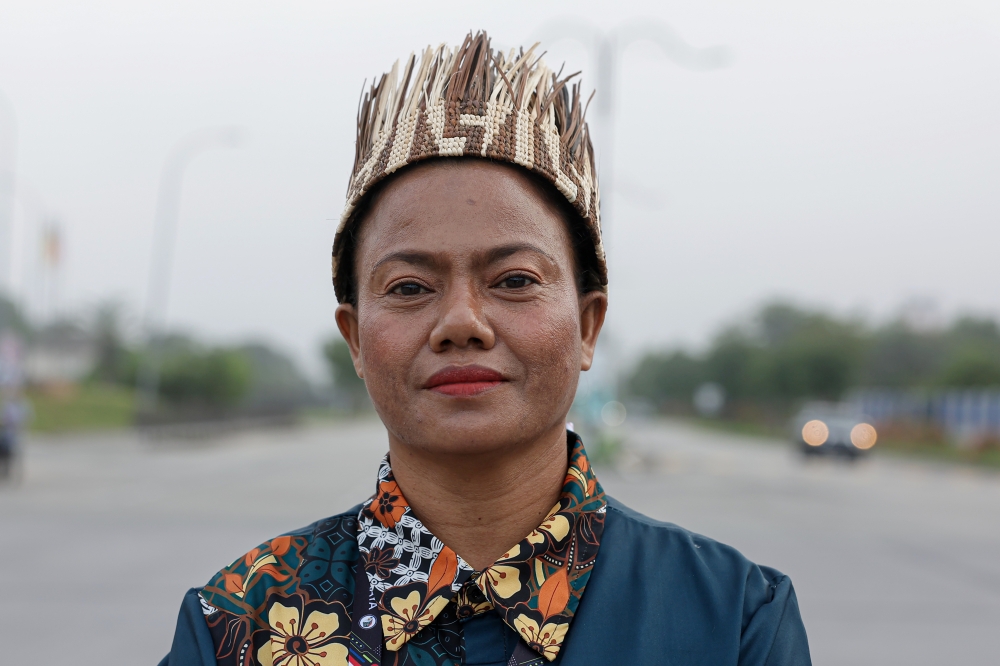
History cannot be reduced to the simplistic question of who arrived first. Almost every modern nation has been shaped through centuries, if not millennia, of migration, assimilation, state formation and the development of political institutions.
Malaysia is no exception. Long before the arrival of Western colonial powers, the Malays had established sovereign kingdoms such as Kedah, Melaka, Johor, Perak, Kelantan, Terengganu and Pahang. The terms Tanah Melayu (Malay Land) and the Malay Peninsula have appeared in historical records for centuries, reflecting the deep historical association between the Malay people and this region. More importantly, the continuity of the Malay Sultanates, which endures to this day, forms a fundamental pillar of Malaysia’s constitutional monarchy, including the institution of the Yang di-Pertuan Agong.
From a constitutional perspective, Article 153 of the Federal Constitution safeguards the special position of the Malays and the natives of Sabah and Sarawak, while Article 160(2) defines who qualifies as a “Malay” for constitutional purposes. Although the term Bumiputera does not appear in the Constitution itself, it has since evolved into a widely used policy and administrative term referring to the Malays and the indigenous peoples of Sabah and Sarawak.
Interestingly, Article 152 of the Constitution of the Republic of Singapore expressly recognises the Malays as “the indigenous people of Singapore”. Constitutional recognition in both countries underscores the fact that the historical status of the Malays in this region cannot be assessed solely by asking who arrived first.
Recognising the Orang Asli as the earliest inhabitants does not require us to deny the deep historical connection between the Malays and the Malay Peninsula. Both realities can coexist.
Historical debates should be grounded in evidence and rigorous scholarship rather than broad generalisations. Malaysia’s history is far more complex than a simple contest over who came first.
In the age of social media, statements made by politicians can shape public perception almost instantly. It is therefore essential that public comments on history and national identity are made carefully, based on facts and with due respect for established academic scholarship.
The history of Malaysia is not merely about who arrived first. It is the story of the long evolution of civilisation, institutions and statehood, which deserves to be understood in its full historical complexity rather than being oversimplified for contemporary political purposes.
*Mohd Hazmi Mohd Rusli is a lecturer at the Faculty of Syariah and Law, Universiti Sains Islam Malaysia (USIM), and a research fellow at the Asian Institute of International Affairs and Diplomacy (AIIAD), Universiti Utara Malaysia (UUM).
** This is the personal opinion of the writer or publication and does not necessarily represent the views of Malay Mail.


