


JULY 26 — Few characters in Malaysian cinema evoke as much contempt as Buang in P. Ramlee’s classic Sarjan Hassan. He is remembered as the collaborator who sided with the Japanese occupation during one of the darkest chapters in Malaya’s history.
Over the decades, Buang has often been portrayed as the archetype of the Malay traitor — a man who betrayed his own race.
Yet that interpretation, while understandable, is incomplete.
Buang did not merely betray the Malays. He betrayed everyone who lived under occupation. His treachery was directed not at one ethnic community but at society itself. His loyalty was transferred from his own people to an occupying force that ruled through fear, violence and coercion.
In doing so, he became an enemy not just of the Malays but of every civilian whose freedom and dignity were placed at risk.
This distinction matters because history should not be reduced to ethnic narratives when the suffering was shared by all.
The Japanese Occupation affected Malays, Chinese, Indians, Eurasians and the indigenous peoples of Sabah and Sarawak in different ways but with one common denominator: all experienced hardship, insecurity and the loss of freedom.
Collaboration with an occupying regime therefore injured the broader national community.
Buang represents precisely this danger.
His actions were motivated neither by patriotism nor by concern for public welfare.
Instead, he chose personal advantage over collective survival. Such individuals appear throughout history.
They thrive whenever fear replaces courage and opportunism replaces principle.
That is why Buang remains relevant today.
His character reminds Malaysians that betrayal is defined not by ethnicity but by conduct.
A person’s race does not determine whether he or she is loyal to the country. Actions do.
This is an important lesson in a society that occasionally falls into the trap of viewing loyalty through communal lenses. Patriotism cannot be monopolised by any one ethnic group, nor can treachery be confined to another.
Every community has produced patriots willing to sacrifice for the nation, just as every society has known individuals willing to sell out their fellow citizens for personal gain.
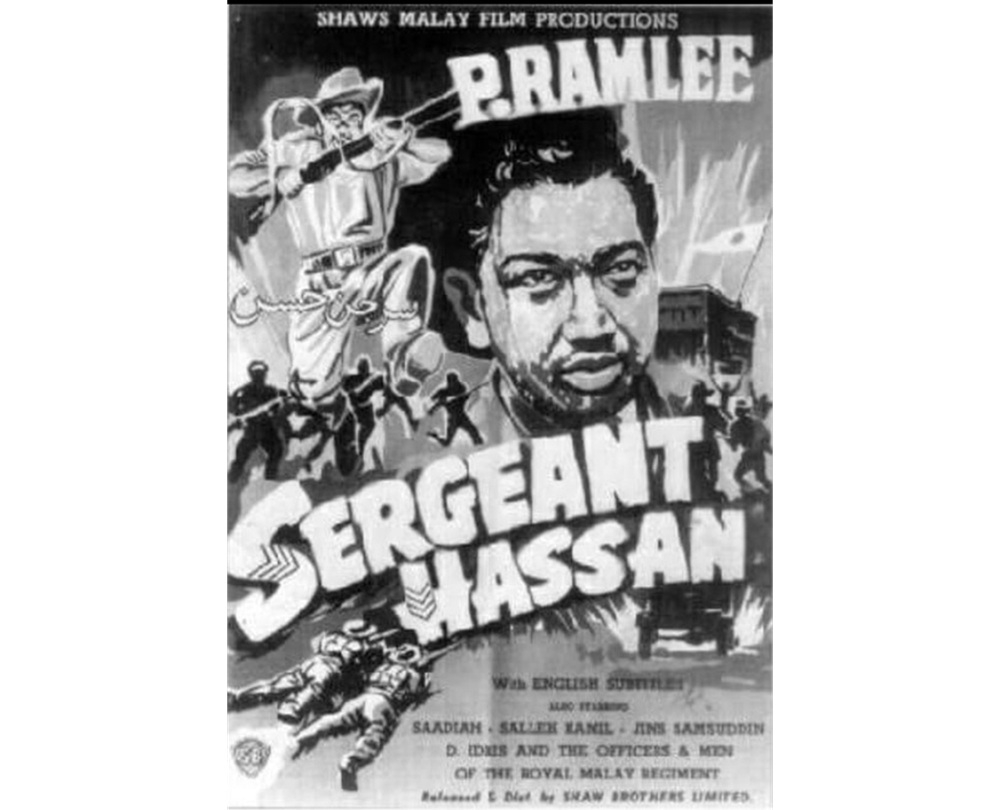
P. Ramlee understood this moral complexity. Although Sarjan Hassan revolves around the Malay Regiment and Malay society, its ethical message transcends race.
It celebrates courage, integrity and sacrifice while condemning collaboration with oppression regardless of who commits it.
Indeed, Sarjan Hassan’s heroism shines not because he is simply defending Malays but because he embodies the values of honour, duty and service. Those ideals belong to all Malaysians.
Modern Malaysia should therefore resist simplistic readings of Buang.
To cast him solely as a betrayer of the Malays inadvertently narrows the universal warning embedded in the film.
The greater lesson is that collaborators weaken the entire nation.
The same principle applies today.
Whenever individuals place personal ambition above constitutional government, social harmony or national unity, they repeat Buang’s mistake in a different form.
Whenever politics becomes an excuse to demonise fellow citizens instead of strengthening the nation, society edges closer to the divisions that opportunists exploit.
Malaysia’s diversity is not its weakness. It is its greatest source of resilience.
Throughout the country’s history, Malays, Chinese, Indians, Orang Asli and the peoples of Sabah and Sarawak have repeatedly demonstrated that they can work together during moments of crisis.
That shared experience is what ultimately defeats those who seek to divide.
Buang failed because he misunderstood where true strength lies. He believed power came from serving the occupier. In reality, enduring strength comes from standing with one’s fellow citizens.
That is why Sarjan Hassan continues to resonate decades after its release. It is not merely a war film. It is a moral reflection on loyalty, courage and the price of betrayal.
The enduring message is therefore clear. Buang did not betray only the Malays. He betrayed the very idea of a united Malaya. In today’s Malaysia, that lesson deserves to be remembered in its fullest sense.
The opposite of Buang is not simply a loyal Malay. It is a loyal Malaysian — someone who places country above self, principle above expediency and humanity above division.
That is the patriotism P. Ramlee ultimately asked us to embrace.
* Phar Kim Beng, PhD is the Professor of Asean Studies at International Islamic University of Malaysia and Director of Institute of International and Asean Studies (IINTAS).
** This is the personal opinion of the writer or publication and does not necessarily represent the views of Malay Mail.


