


JULY 20 — Malaysia’s ambition to become a high-income, innovation-driven nation depends not only on advanced laboratories, sophisticated hospitals or cutting-edge technologies.
It begins much earlier in classrooms where young minds first discover that science is more than a school subject. It is a way to solve problems, improve lives and shape the nation’s future.
Yet convincing young people to pursue science is becoming increasingly challenging.
Many students continue to perceive STEM (Science, Technology, Engineering and Mathematics) as difficult, abstract or reserved only for exceptionally gifted learners.
This perception threatens Malaysia’s long-term capacity to produce the scientists, healthcare professionals, engineers and innovators needed to support a rapidly evolving economy.
One effective way to change this mindset is by taking science beyond textbooks and bringing students face-to-face with the people who use science every day.
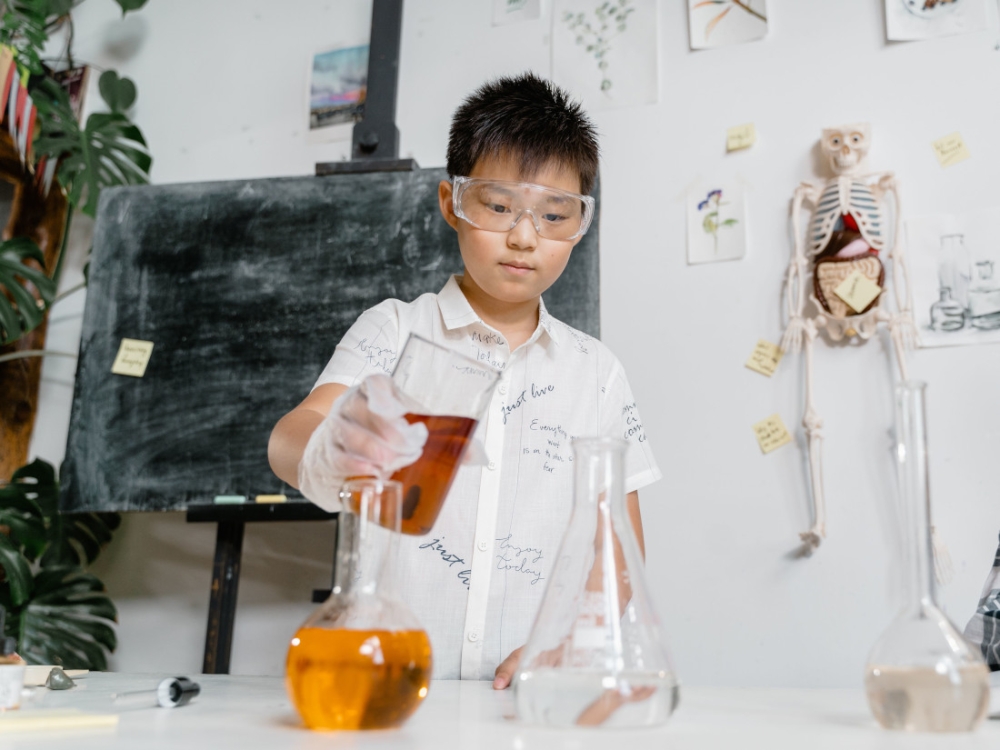
This was the objective of the recent STEAM and Career Day at Sekolah Menengah Kebangsaan Bukit Gambir, where lecturers and students from Pusat Kanser Tun Abdullah Ahmad Badawi (PKTAAB), Universiti Sains Malaysia, joined educators to introduce secondary school students to careers in Biomedical Science, Medical Physics and Dental Sciences through interactive activities and hands-on learning experiences.
The programme demonstrated an important educational principle: curiosity grows when students actively participate rather than passively receive information.
At the Biomedical Science booth, students solved scientific puzzles, explored biological models and engaged directly with researchers.
Rather than memorising scientific facts, they were encouraged to think critically, ask questions and appreciate how laboratory discoveries contribute to disease prevention, diagnosis and treatment.
Many realised for the first time that biomedical scientists play an essential role behind every medical breakthrough, from developing diagnostic tests to supporting cancer research and precision medicine.
Equally inspiring was the Medical Physics exhibition, which introduced students to one of healthcare’s least understood but fastest-growing professions.
Medical physicists apply physics and advanced technology to improve medical imaging, optimise radiation therapy and ensure that cancer patients receive safe and accurate treatment.
Through accessible demonstrations, students discovered how mathematics and physics extend far beyond classroom equations and directly contribute to saving lives.
The exhibition also raised awareness about radiation safety and its importance in modern healthcare.
The Dental Sciences exhibition offered another perspective on healthcare by emphasising prevention rather than treatment alone.
Interactive displays, educational materials and engaging activities encouraged students to appreciate the importance of oral health while learning about careers in dentistry and community healthcare.
By presenting dental education in an approachable and enjoyable manner, the exhibition helped remove common misconceptions surrounding the profession and highlighted its significant contribution to public health.
These activities may appear simple, but their educational value is profound.
Research consistently shows that early exposure to STEM significantly influences students’ academic interests and future career choices.
When students interact with scientists, healthcare professionals and university educators, STEM becomes more tangible, relatable and achievable.
This is particularly important as Malaysia continues to strengthen its innovation ecosystem under national initiatives such as the National Policy on Science, Technology and Innovation (DSTIN) and the aspirations of the Malaysia Education Blueprint.
Achieving these ambitions requires more than investment in infrastructure; it demands sustained investment in human capital.
Today’s secondary school students will become tomorrow’s researchers, clinicians, engineers, entrepreneurs and technology leaders.
Universities therefore have a responsibility that extends beyond teaching and research.
Community engagement should not be viewed as an additional activity but as a core mission of higher education. By collaborating with schools, universities can bridge the gap between academic knowledge and career aspirations while nurturing scientific literacy among younger generations.
Such partnerships also benefit universities themselves. Engaging directly with students allows academics to better understand public perceptions of science, communicate complex ideas in accessible ways and inspire future generations of researchers.
It reinforces the idea that universities exist not only to educate enrolled students but also to contribute meaningfully to society.
The enthusiastic response from students at SMK Bukit Gambir demonstrated that young Malaysians remain naturally curious about science when learning is engaging, interactive and connected to real-world applications.
Their questions reflected genuine interest not only about university life, but also about how scientific knowledge can improve healthcare, develop new technologies and address global challenges.
That curiosity deserves to be nurtured. Every medical breakthrough begins with someone asking a question.
Every innovative technology begins with an idea. Every scientist, engineer and healthcare professional was once a school student wondering how the world works.
If Malaysia is serious about building a competitive knowledge economy and strengthening its healthcare system, inspiring students to embrace STEM cannot remain an occasional school event.
It must become a sustained national effort involving schools, universities, industries and government agencies working together.
The future of Malaysian science will not be determined solely inside research laboratories. It will be shaped in school halls where curiosity is ignited, confidence is built and young people begin to believe that they, too, can become the scientists and innovators our nation needs.
* Assoc Prof Dr Shahrul Bariyah Sahul Hamid is an Associate Professor at the Pusat Kanser Tun Abdullah Ahmad Badawi, Universiti Sains Malaysia.
** This is the personal opinion of the writer or publication and does not necessarily represent the views of Malay Mail.


