


JULY 6 — When Mum chose to enrol me in an English-medium school in 1963, I faced the biggest challenge of my life as my class teacher was an Indian woman.
As I spoke only a couple of Chinese dialects, we could hardly communicate with each other but it didn’t take long for us to break the communication barrier.
Why did Mum choose not to enrol me in a Chinese vernacular school?
As fate would have it, I fell in love with Mandarin movies and songs during my teens, heavily influenced by my Chinese-educated friends.
It took me at least two years of constant practice, singing along and copying down Mandarin song lyrics, before I could finally pen a simple Chinese letter to my mother years later.
I felt incredibly proud that I could read and write simple Chinese, especially since I couldn’t even write my own Chinese name when I was 16.
Early in my hospitality career, Mandarin wasn’t strictly necessary, but it later opened doors for me.
For example, it led to a 2001 assignment in Shanghai, where I managed the successful rollout of a hotel system for a sister property.
Looking at the explosive growth of China’s hospitality market today, being Chinese literate offers a massive competitive advantage.
Former Singaporean diplomat and UN Security Council President Kishore Mahbubani, author of Has China Won?, argues that China’s rise was inevitable.
He projects that China’s Gross Domestic Product (GDP) will overtake that of the United States by the mid-2030s. Notably, when measured by Purchasing Power Parity (PPP), China’s economy already eclipsed the US in 2014.
China’s rapid economic expansion is attracting people worldwide to learn Mandarin.
Even US President Donald Trump’s granddaughter, Arabella Kushner, is proficient in the language.
Taught by a private tutor, she famously recited ancient Chinese poetry and sang the traditional folk song “Mo Li Hua” (Jasmine Flower) during a 2017 visit to Beijing, delighting Chinese President Xi Jinping.
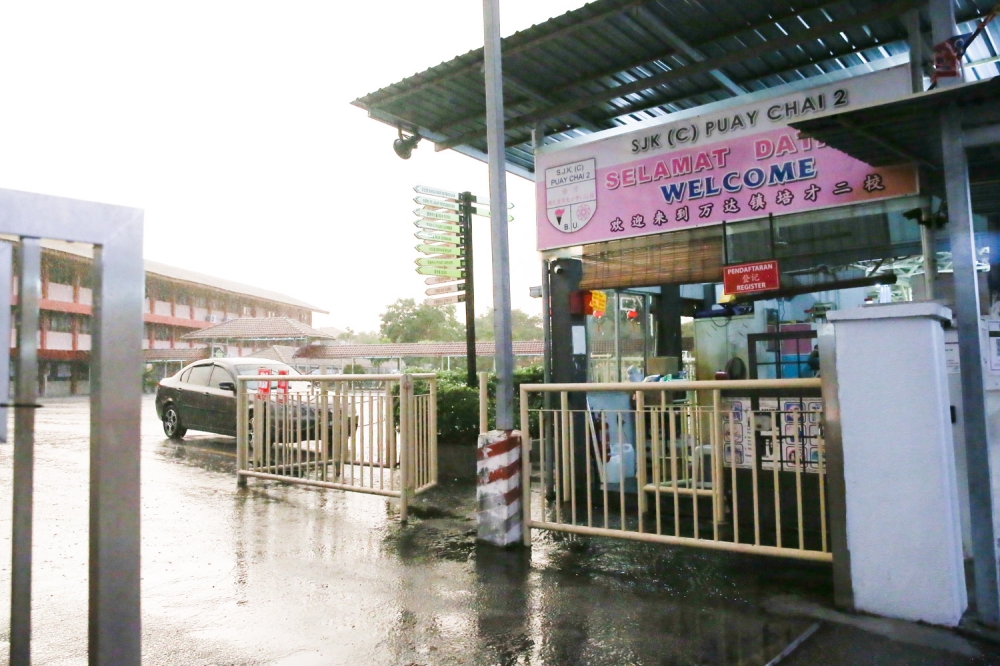
According to a recent report by Education Minister Fadhlina Sidek, the current enrolment of Malay students in Chinese vernacular schools (SJKC) has reached 41,133, surpassing last year’s figure of 40,035 by over a thousand.
Parents who enrol their children in SJKC display great foresight, as these students stand to benefit immensely in their future career pursuits.
When my children were around the age of three, they were trilingual (Bahasa Malaysia, English, and Mandarin). By the time they were five, they had mastered at least three Chinese dialects.
Children have powerful linguistic abilities; hence, it is a great waste if parents are content with only exposing their kids to a single language.
* This is the personal opinion of the writer or publication and does not necessarily represent the views of Malay Mail.


