


JUNE 29 — A patient lies unconscious in an intensive care unit. Days have passed without improvement. An artificial intelligence system, having analysed thousands of similar cases, indicates that the likelihood of recovery is extremely low. It recommends withdrawing life support.
The medical team reviews the analysis. The data is comprehensive. The reasoning is clear. The conclusion appears statistically sound. Yet standing at the bedside, the decision does not feel complete. What remains is not a question of accuracy, but of responsibility.
In moments like this, the limits of artificial intelligence become more visible. AI is capable of processing vast amounts of information and identifying patterns that would be difficult for any individual to discern. It can suggest what appears to be the most optimal course of action based on available data. In many fields, from medicine to finance to public policy, such capabilities have brought tremendous benefits.
However, decisions are not defined by correctness alone. They carry consequences that extend beyond the immediate outcome. They affect lives, relationships and, at times, the moral integrity of those who must act upon them. In the case of the patient in the intensive care unit, the question is not only whether the recommendation is statistically justified, but who is prepared to accept what follows from that decision.
This distinction is important. Artificial intelligence can recommend. It can analyse. It can even predict with remarkable precision. But it does not bear the weight of the decisions it informs. It does not stand beside the patient’s family. It does not experience doubt, nor does it live with the consequences of what is decided. That responsibility remains with human beings.
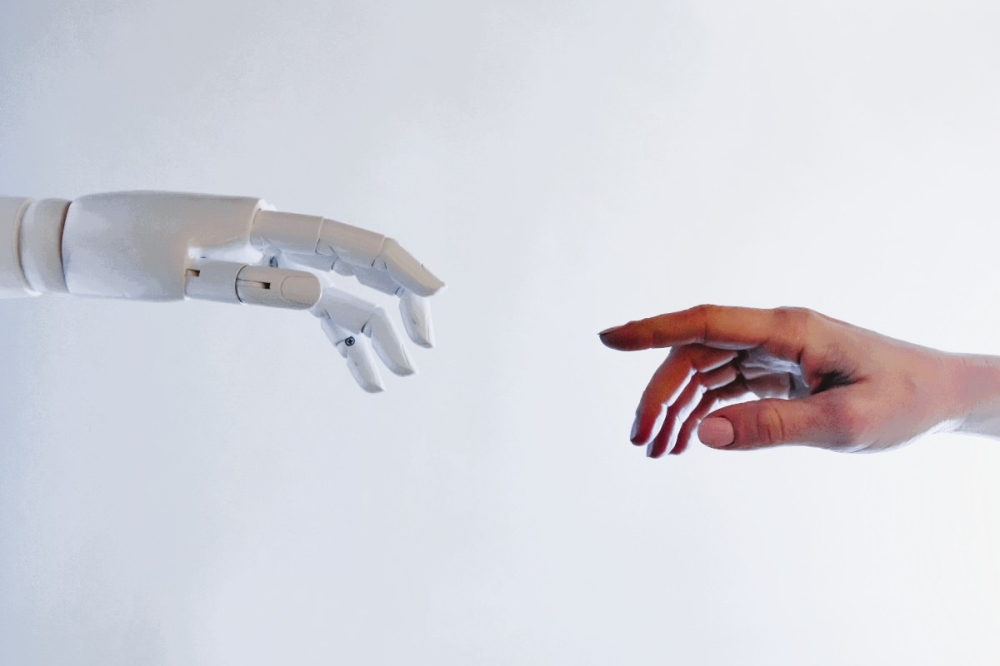
Not long ago, the relationship between judgement and responsibility was more clearly aligned. A physician made a diagnosis and stood by it. A judge delivered a verdict and accepted accountability for the decision. A manager made a hiring choice and carried the implications. Their decisions were shaped by knowledge and experience, but also by an awareness that they would be answerable for the outcomes.
Today, this alignment is becoming less distinct. As algorithms become more influential, there is a growing tendency to treat their recommendations as objective or neutral. Because they are derived from large datasets and complex models, they can appear authoritative. Yet every system reflects human choices, from the data it is trained on to the objectives it is designed to optimise. These choices shape the recommendations that emerge.
More importantly, the system itself remains detached from what follows. This raises a subtle concern.
When decisions are increasingly guided by systems that do not share in their consequences, there is a risk that human beings may begin to distance themselves from the weight of those decisions. The process becomes more efficient, but the sense of ownership may become less immediate.
This is not a dramatic shift, but a gradual one. In professional life, this can be subtle. A recommendation is accepted because it is supported by data. A course of action is taken because it aligns with what the system suggests. Over time, the act of deciding may begin to feel less like a personal responsibility and more like the execution of a recommendation.
Yet some decisions cannot be reduced in this way. In medicine, a patient is not merely a set of clinical variables. In law, a case is not simply a collection of precedents. In everyday life, choices about relationships, family and responsibility rarely present themselves as clear optimisations. They involve competing values, uncertainty and, often, the recognition that there is no perfect answer.
What is required in such situations is not only intelligence, but judgement. Judgement develops through experience, through reflection, and through an awareness of the human implications of a decision. It involves not only asking what can be done, but also considering what ought to be done and who will be affected by it. It carries with it a willingness to accept responsibility, even when the outcome is uncertain.
These are qualities that cannot be delegated. Artificial intelligence can support human judgement by providing insights that might otherwise be overlooked. It can broaden our understanding and sharpen our analysis. But it cannot replace the responsibility that accompanies decision-making, because it does not share in the consequences.
As the mathematician Norbert Wiener observed many years ago, we must be certain that the purposes we embed in our machines are truly the purposes we intend to serve. His warning remains relevant not only at the level of system design, but also in how we relate to the systems we use.
The question before us is therefore not whether artificial intelligence should be used, but how it should be situated within human decision-making.
If we treat its recommendations as substitutes for judgement, we risk diminishing our own role in the decisions that shape lives. If, however, we use it as a tool to inform, rather than replace, our thinking, we retain the essential link between decision and responsibility.
Returning to the patient in the intensive care unit, the presence of advanced analysis does not remove the need for human judgement. It may inform the discussion, but it cannot conclude it. The final decision must still be made by those who are willing to stand by it, to explain it, and to live with its consequences.
That is the burden, and the responsibility, of being human.
As artificial intelligence continues to evolve, the challenge before us is not simply to build more capable systems, but to remain attentive to what those systems cannot do. They can guide, support and recommend. But they cannot carry what follows.
And in the end, it is in that willingness to bear the weight of our decisions that we understand what it truly means when AI can recommend, and humans must decide.
* The author is an Emeritus Professor of Biomedical Imaging at the Faculty of Medicine, Universiti Malaya.
** This is the personal opinion of the writer or publication and does not necessarily represent the views of Malay Mail.


