


JUNE 26 — For many outside Europe, there is a growing temptation to believe that the war in Ukraine is slowly winding down.
After all, the conflict has entered its fifth year. International attention has shifted intermittently toward tensions in West Asia, maritime insecurity in the Strait of Hormuz, and intensifying strategic competition in the Indo-Pacific. Fatigue has inevitably set in.
Yet recent developments suggest precisely the opposite.
The Ukraine-Russia war is becoming more technologically sophisticated, geographically expansive and strategically dangerous.
Ukrainian President Volodymyr Zelenskyy recently announced that after consultations with the head of Ukraine’s security services, he had authorised a forty-day campaign against targets deep inside Russian territory designed to pressure Moscow into negotiations and an eventual end to hostilities.
This is not merely another round of drone attacks.
It represents the institutionalisation of long-range strategic strikes against Russia’s economic arteries.
Among the targets struck were two major oil refineries in Ufa, approximately 1,500 kilometres from the front line, as well as the Poltavskaya oil depot in Russia’s Krasnodar region, some 300 kilometres from Ukrainian positions. Local Russian officials acknowledged that the depot had indeed been hit.
The significance of these attacks lies not only in the damage inflicted but in what they reveal about the evolution of warfare itself.
The traditional distinction between front lines and rear areas is disappearing.
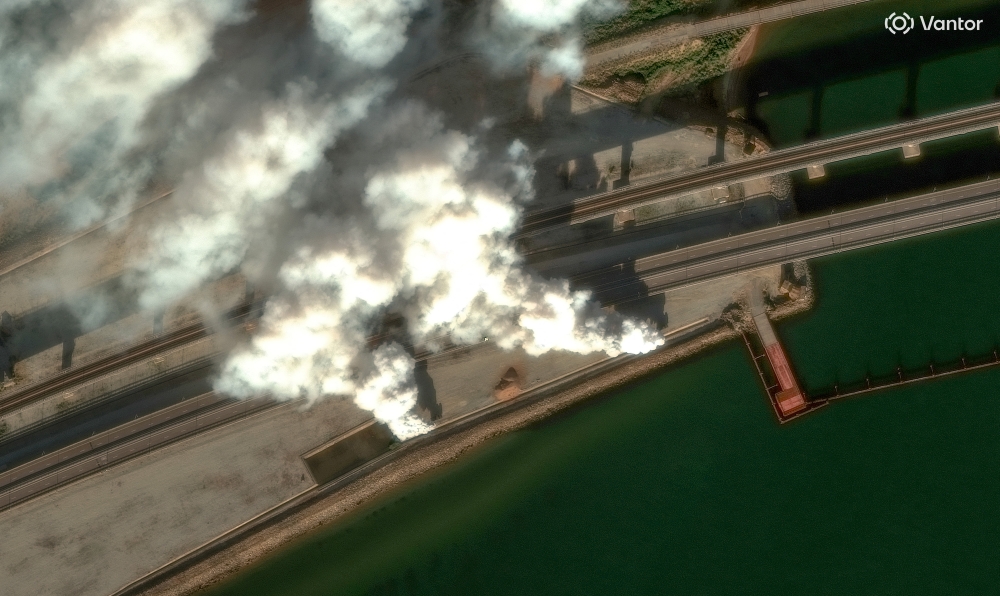
Industrial facilities once considered safely beyond the reach of artillery and missiles are now vulnerable to relatively inexpensive long-range drones equipped with artificial intelligence-assisted navigation systems, satellite guidance and increasingly sophisticated electronic warfare countermeasures.
The battlefield has expanded from trenches in eastern Ukraine to energy installations thousands of kilometres away.
For Russia, this presents a profound strategic dilemma.
Oil and gas exports remain among the principal sources of revenue supporting military expenditures and social spending. Repeated attacks on refineries, storage depots and transportation infrastructure gradually erode Moscow’s ability to sustain both its economy and military operations at current levels. Reports of fuel shortages in parts of Russia and interruptions in refining capacity indicate that these attacks are beginning to have cumulative effects.
Yet the danger lies in the likely Russian response.
Wars rarely remain static.
Escalation tends to invite counter-escalation.
If Ukrainian drones can reach Ufa, Moscow and Siberia, Russian planners may conclude that stronger retaliatory measures are required to restore deterrence. Such measures may include larger missile barrages, intensified attacks on Ukrainian infrastructure or the expansion of cyber operations against Ukrainian and European targets.
The danger of miscalculation therefore rises substantially.
Throughout history, conflicts become particularly unstable when both sides believe time is no longer on their side.
Ukraine seeks to increase the costs of war for Russia and compel meaningful negotiations.
Russia, meanwhile, may interpret these strikes as evidence that compromise will only invite further attacks on its strategic assets.
Such dynamics often create what military historians describe as an escalation trap.
Neither side necessarily desires wider war, yet both become drawn toward it through a cycle of action and reaction.
The implications extend well beyond Eastern Europe.
Energy markets remain highly sensitive to disruptions involving Russia, one of the world’s largest exporters of hydrocarbons.
Repeated attacks on refining facilities can affect global fuel prices, insurance premiums and maritime transportation costs.
For South-east Asia, where imported energy remains crucial to economic growth, such developments carry immediate consequences.
Countries such as Malaysia, Indonesia, Thailand and the Philippines may find themselves facing renewed inflationary pressures should disruptions intensify.
This is especially true at a time when global energy markets are already under strain from instability in West Asia and concerns over the security of maritime chokepoints.
The overlap between the Ukraine war and tensions elsewhere creates a dangerous multiplication effect rather than isolated crises.
The military dimension is equally concerning.
The conflict has become a laboratory for twenty-first century warfare.
Artificial intelligence-enabled drones, autonomous reconnaissance systems, satellite-linked targeting and electronic warfare capabilities are being tested and refined under combat conditions on an unprecedented scale.
Lessons learned in Ukraine will inevitably shape future military doctrines from Europe to the Indo-Pacific.
Military planners in Asia are already studying these developments carefully.
The conflict is no longer merely a European war.
It is becoming the defining military experiment of our era.
Diplomatically, prospects for peace remain elusive.
Negotiations require both parties to believe that compromise offers more benefits than continued fighting.
At present, neither Kyiv nor Moscow appears to hold that view.
Instead, both sides seem convinced that additional pressure may yet improve their bargaining position.
This is precisely why the danger is increasing rather than diminishing.
Many wars become most dangerous not at their beginning but during the phase when both sides seek a decisive advantage before entering negotiations.
The first World War demonstrated this tragic logic.
So too did many conflicts during the Cold War.
The assumption that wars naturally exhaust themselves into peace is historically inaccurate.
Some wars escalate before they conclude.
Others widen geographically.
A few fundamentally reshape international order.
The Ukraine-Russia conflict increasingly displays characteristics associated with all three possibilities.
For the international community, the lesson is straightforward.
Complacency is not strategy.
The world cannot assume that this war is slowly fading into the background of international politics.
The opposite may be true.
The war is becoming deeper, longer, more technological and more unpredictable.
That is precisely why the dangers are increasing, not relenting.
* Phar Kim Beng is a professor of Asean Studies and director, Institute of Internationalisation and Asean Studies, International Islamic University of Malaysia.
** This is the personal opinion of the writer or publication and does not necessarily represent the views of Malay Mail.


