


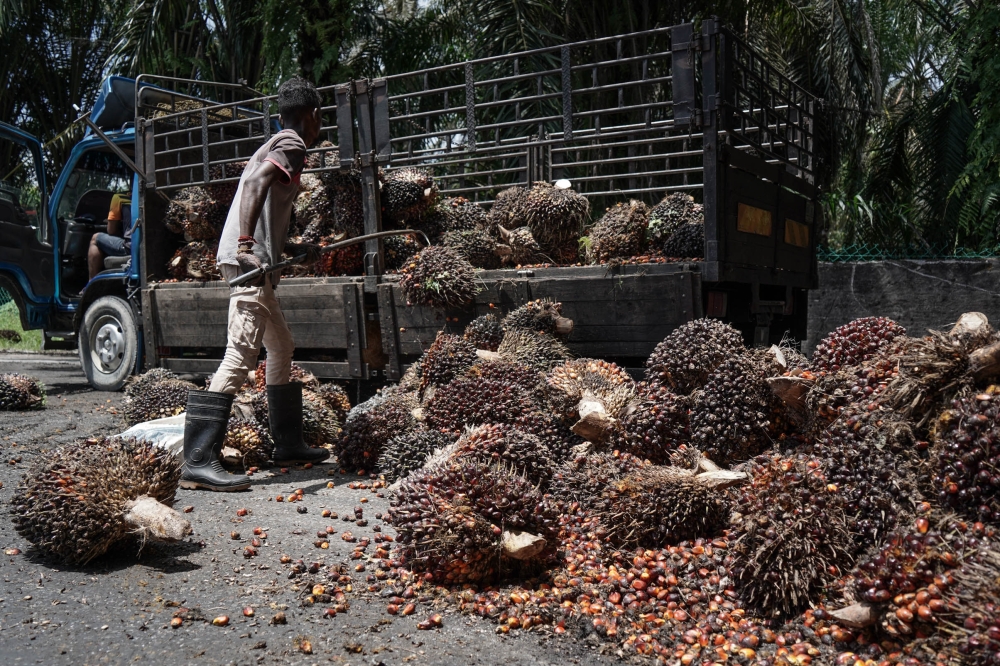
MARCH 31 — For years now, Malaysia has championed a visionary National Biomass Action Plan, aiming to transform agricultural residue – particularly from the palm oil industry – into a goldmine of bioenergy, biochemicals, and sustainable products. At the heart of this strategy was the creation of biomass collection centres, intended to efficiently gather, pre-process, and supply empty fruit bunches (EFBs), palm kernel shells, and other waste streams to downstream industries. Yet, today, these centres remain largely unrealised, and mountains of EFBs are still often left to decay or burned haphazardly. What went wrong, and how can we break this deadlock as the urgency for green growth intensifies?
Many are asking, what is the root of the stalemate? First, the economic equation has rarely stacked up. Establishing collection centres requires significant capital for machinery, storage, and logistics, but the returns are uncertain. The market for biomass products – while growing – has been volatile, with prices for biomass pellets or biogas often failing to justify large upfront investments. Many plantation owners, especially smaller players, see biomass as a waste disposal problem rather than a revenue stream. Without a stable offtake agreement or guaranteed pricing, the risk outweighs the incentive.
Second, the logistics are daunting. Palm oil mills are scattered across rural and remote areas, and EFBs are bulky, wet, and costly to transport. Centralised collection centres would need an efficient, cost-effective network of transportation, which is absent. The sheer volume of biomass – Malaysia produces over 20 million tonnes of EFBs annually – is also a blessing and a curse: without streamlined handling, it becomes a logistical nightmare.
Third, policy alignment has been inconsistent. While the federal plan exists, execution falls to state authorities and private actors, leading to fragmented implementation. Regulations on waste disposal are not stringent enough to force change, and incentives – such as subsidies, tax breaks, or green procurement policies – have been insufficient to catalyse investment. Moreover, energy and agricultural policies sometimes operate in silos, missing the intersectoral synergy needed.
Finally, technological readiness and market maturity have lagged. While EFBs can be used for composting, bioenergy, fibre products, or even advanced biofuels, the local ecosystem for high-value applications remains underdeveloped. Many centres, where they exist, focus on low-value products like mulch or basic pellets, limiting profitability. Breaking the deadlock calls for a multi-pronged approach. To transform this stagnant plan into action, Malaysia needs a renewed, pragmatic strategy built on four pillars:
De-risking investment through public-private partnerships (PPPs) and offtake guarantees. The government, via agencies like Green Technology Malaysia Corporation or MPOB, should co-invest in pilot collection hubs in key palm oil clusters, sharing initial capital risks. More crucially, it can anchor demand by mandating biomass co-firing in industrial boilers or power plants, and by securing long-term offtake agreements with bio-refineries or export markets. A “biomass premium” or carbon credit mechanism could also improve returns.
Next, building agile, distributed networks. Instead of waiting for large centralised centres, encourage smaller, modular pre-processing units near mills. These can partially dry and compact EFBs, reducing transport costs and enabling easier storage. Leveraging existing mill infrastructure and encouraging millers to form cooperatives can spread costs and improve economies of scale.
And strengthening policy coherence and enforcement. Align state and federal regulations to create a unified biomass economy roadmap. Enforce stricter environmental rules on open burning and waste disposal to push mills toward sustainable disposal solutions. Introduce graduated incentives: for example, tax incentives for mills that supply biomass to certified collection centres, and grants for technology adoption.
Not to mention, catalysing high-value applications and innovation. Invest in R&D for EFB valorisation – such as producing bio-composites, cellulose, or sustainable aviation fuel – and support pilot projects to commercialise these technologies. Create special economic zones for biomass-based industries near feedstock sources, attracting downstream players and closing the loop from waste to worth.
We need to look at the bigger picture. Valorising biomass is not just an economic opportunity; it’s an environmental and social imperative. It can reduce greenhouse gas emissions from waste, generate rural jobs, and bolster Malaysia’s circular economy credentials. The stalled collection centre plan reflects a classic gap between policy ambition and ground reality. By addressing the economic, logistical, and regulatory bottlenecks head-on, Malaysia can finally unlock the value of its agricultural residues – turning what is now largely waste into a cornerstone of a greener, more resilient future.
The time for revisiting the blueprint is now. With concerted will and smart collaboration, those uncollected heaps of EFBs can indeed become the fuel for a new bio-industrial revolution. There is an urgent need to empower a national entity to drive this agenda. Unless this is done soon, the country will miss out on the vast economic opportunity ahead.
* The author is affiliated with the Tan Sri Omar Centre for STI Policy Studies at UCSI University and is an adjunct professor at the Ungku Aziz Centre for Development Studies, Universiti Malaya. He can be reached at [email protected] .
** This is the personal opinion of the writer or publication and does not necessarily represent the views of Malay Mail.


