


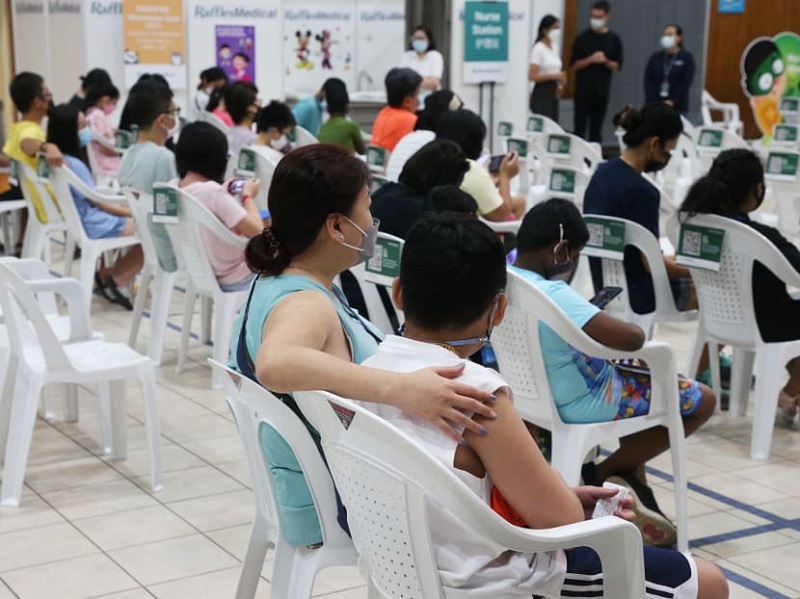


SINGAPORE, Feb 23 — Ten cases of “serious adverse events” due to the Covid-19 vaccination had been reported among children aged five to 11 as of January 31, the Health Science Authority (HSA) said today, the first time that such events have been reported among the age group.
These effects include seizures (fits), appendicitis, drop in blood pressure, allergic reaction, abnormal renal function and swelling of small blood vessels.
The 10 are among 280 reports of adverse events among this age group, representing 0.12 per cent of the 238,253 doses administered.
In its tenth safety report on the Covid-19 vaccination exercise, HSA said that the reporting rates of serious adverse events in children is similar to that observed in adolescents and adults at 0.004 per cent of administered doses.
An adverse event is any undesirable medical condition that occurs after vaccination and does not necessarily mean that the vaccine caused it.
Serious adverse events may result in hospitalisations, a significant reduction in functioning level, a life-threatening illness, a birth defect or death.
“HSA is closely monitoring the adverse events reported in children and is assessing them in the context of background incidence rates,” HSA said.
Common adverse events
As of January 31, 12,755,259 doses of the Pfizer-BioNTech and Moderna mRNA vaccines have been administered across Singapore.
Of this number, HSA received 15,655 adverse event reports, which made up 0.12 per cent of the doses administered.
The most commonly reported ones include allergic reactions, dizziness, shortness of breath, chest discomfort or pain, palpitations, fever, headache, muscle aches and pain and swelling at the injection site.
These reported effects generally resolved within a few days, said HSA.
Of the 15,655 suspected adverse event reports received for the mRNA vaccines, 820, or 0.006 per cent of the reports were assessed as serious.
The most frequently reported ones were anaphylaxis while other severe allergic reactions include rheumatoid arthritis, chest pain and nerve damage.
Adverse events with booster doses
3,194,494 individuals have received their booster dose as of January 31, since the national Covid-19 booster vaccination programme was rolled out on September 15 last year.
There were 553 adverse event reports associated with the use of Pfizer-BioNTech vaccine and 289 adverse event reports with the Moderna vaccine as booster doses.
73 cases of serious adverse events were reported, making up 0.002 per cent of administered doses. 15 of these cases were myocarditis and pericarditis.
“Overall, the adverse event reports with the booster doses described similar adverse events associated with Dose 1 and Dose 2 of the mRNA vaccines and there was no observed increase in frequency,” said HSA.
Sinovac and Sinopharm
Out of 369,083 Sinovac vaccine doses administered here so far, there have been 299 reports of adverse events.
This made up 0.08 per cent of the doses administered.
The commonly reported ones were rash, hives, angioedema, shortness of breath, chest discomfort and dizziness.
22 serious adverse events, which made up 0.006 per cent of all administered doses were reported.
This included 12 cases of anaphylaxis, which HSA said “had occurred in individuals who had previous allergic reactions with the mRNA vaccines or had multiple drug allergies”.
The other reports include Bell’s Palsy, blood clots and numbness.
The Sinopharm vaccine was rolled out on August 30, 2021 and 89,350 doses were administered as of 31 January
HSA has received 41 suspected adverse event reports, making up 0.05 per cent of doses administered.
The non-serious ones include rash, angioedema, shortness of breath, numbness, syncope, chest discomfort and tinnitus.
There were six serious adverse event reports including low platelet count, syncope with muscle jerks and frequent palpitations. These made up 0.007 per cent of doses administered. — TODAY


