KUALA LUMPUR, Nov 18 — After exploring grief, love and family in WandaVision and Agatha All Along, Marvel’s VisionQuest brings its television trilogy to a satisfying close, this time turning the spotlight on Vision’s search for identity.The eight-episode Disney+ series also serves as a lighter follow-up to 2015’s Avengers: Age of Ultron, revisiting familiar characters and complicated relationships without relying on the usual superhero spectacle.Paul Bettany returns as Vision, alongside James Spader as Ultron, rekindling their uneasy creator-and-creation dynamic more than a decade after their big-screen encounter.Their reunion is one of the show’s biggest draws, with Vision forced to confront his origins while figuring out who he is beyond the circumstances of his creation.Rather than packing every episode with elaborate battles, VisionQuest leans into character-driven storytelling, blending humour, science fiction and emotional depth.Bettany and Spader make the most of their unusual relationship, delivering some of the series’ most entertaining exchanges as they wrestle with questions of humanity, free will and the responsibilities of creation.The result is a Marvel series that finds plenty of appeal in conversation and character development, even when the action takes a back seat.*Spoilers ahead for VisionQuest.The series also digs deeper into Marvel lore, introducing an intriguing twist that connects Vision to the company’s earliest comic-book history.In episode seven, viewers learn that J.I.M. (Joule Individual Machine), an artificial humanoid created by Dr Phineas Horton in 1939, provided the original source code for Vision.But J.I.M.’s inability to process complex emotions led to a catastrophic malfunction, causing him to burst into flames.The revelation pays tribute to Marvel Comics No. 1, published in 1939, which introduced Jim Hammond, the original Human Torch.It’s a clever nod to Marvel’s roots that adds another dimension to Vision’s backstory without overshadowing the series’ central themes.More importantly, VisionQuest gives its title character something he has long needed: room to exist beyond Wanda Maximoff.Instead of defining Vision through his relationship with Wanda, the series allows him to confront his past, make his own choices and discover what it means to have a purpose of his own.That sense of independence gives the story its emotional weight, even if VisionQuest never quite reaches the heartbreaking intensity of WandaVision.Its lighter touch, engaging performances and moments of humour nevertheless make it a refreshing addition to Marvel’s increasingly sprawling television universe.As the trilogy draws to a close, VisionQuest brings its interconnected stories together while allowing Vision’s journey to reach a meaningful conclusion.At its heart is a simple but effective idea: humanity is defined not by how someone is made, but by the choices they make and the connections they forge.The finale has also delivered strong numbers for Disney+.According to Disney, the final episode attracted 3.7 million views worldwide in its first 24 hours, making it Marvel’s most-watched series finale since the second season of Loki in 2023.And while VisionQuest provides a satisfying ending to its television trilogy, it also looks towards the wider Marvel Cinematic Universe, setting the stage for Avengers: Doomsday.For Vision, one chapter may be over. For Marvel, the next is already taking shape.
Marvel’s ‘VisionQuest’ trades superhero spectacle for heart in a satisfying trilogy finale


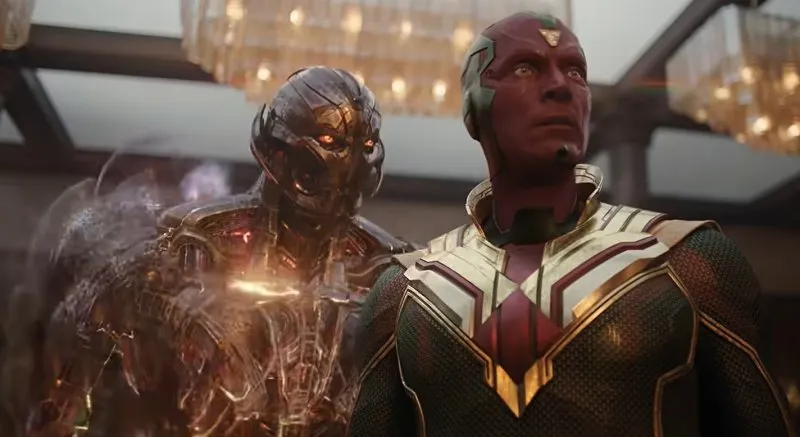
Paul Bettany reprises his role as Vision in ‘VisionQuest’, alongside James Spader, who returns as Ultron. — Picture courtesy of Disney
Stay updated on the latest news and insights. Subscribe to our newsletter here
 Make Malay Mail your preferred source on Google Giving you news that matter to Malaysians. Make Malay Mail your preferred source when you search for news on Google.
First Published: Wednesday, 18 Nov 2026 9:32 AM MYT